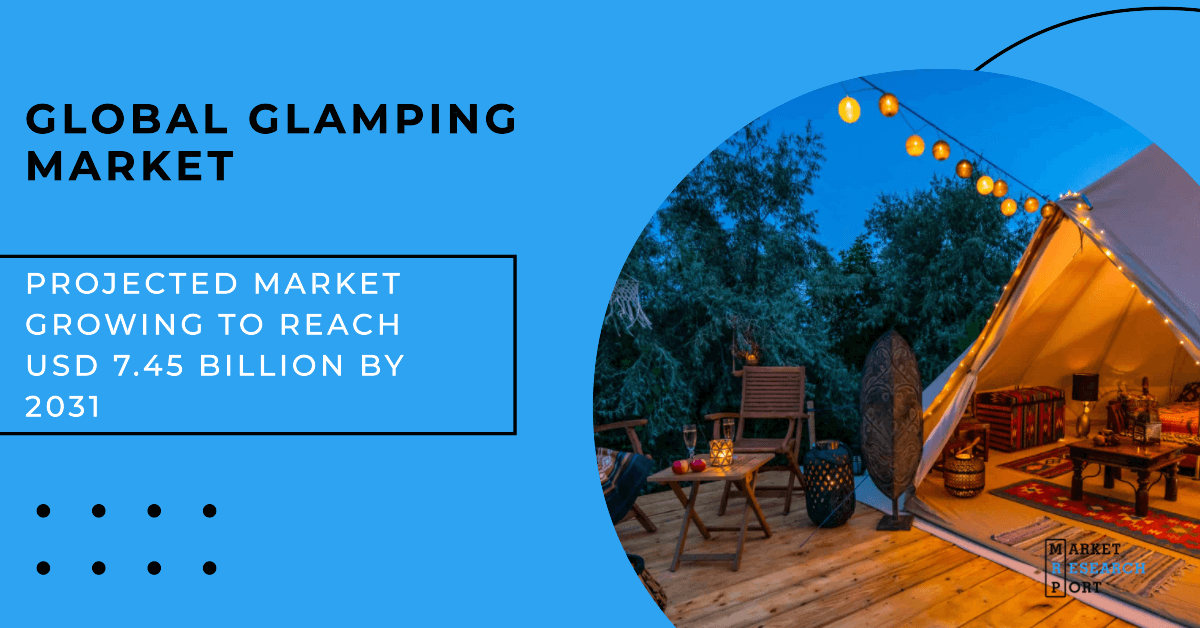
The global glamping market has steadily evolved into a structured and premium segment within the broader hospitality industry. Once viewed as a niche alternative to traditional camping, glamping now represents a refined blend of outdoor immersion and luxury comfort. The market is estimated to reach approximately USD 3.95 billion in 2025 and is projected to grow to nearly USD 4.40 billion in 2026. Over the forecast period from 2026 to 2031, the industry is expected to expand at a compound annual growth rate (CAGR) of around 11%, ultimately approaching a valuation of nearly USD 7.45 billion by 2031. This sustained expansion reflects shifting traveler preferences toward experiential tourism, increased disposable income levels, and the strategic participation of global hospitality brands in curated outdoor lodging concepts.
The transformation of glamping into a recognized hospitality tier is being shaped by structured investments, land development clarity, and premium brand integration. Major hotel groups have entered the space through alliances and loyalty integrations, encouraging mainstream luxury travelers to explore outdoor accommodation formats. Purpose-built infrastructure, controlled land assets, and long-term lease models are strengthening operational consistency, elevating service standards, and enabling premium pricing strategies. As a result, glamping is no longer positioned merely as upscale camping; it is emerging as a standalone experiential lodging category within the global tourism ecosystem.
| Growth Catalyst | Estimated Impact on CAGR | Regional Influence | Time Horizon |
|---|---|---|---|
| Increasing preference for immersive and experiential travel | +3.0% | Global, particularly North America & Europe | Medium term (2–4 years) |
| Expansion of eco-conscious and sustainable tourism | +2.2% | Europe & North America, expanding in Asia-Pacific | Long term (4+ years) |
| Acceleration through digital marketing and social media engagement | +2.0% | Global, strongest in Asia-Pacific | Short term (≤2 years) |
| Growth in domestic tourism and staycation trends | +1.7% | Global markets | Short term (≤2 years) |
| Adoption of smart and sustainable infrastructure technologies | +1.5% | North America & Europe | Medium term (2–4 years) |
| Supportive tourism policies and structured guidelines | +0.9% | Asia-Pacific focus | Long term (4+ years) |
Modern travelers increasingly prioritize distinctive and memorable stays over conventional hotel accommodations. Glamping properties that integrate natural landscapes with high-end amenities, curated local experiences, and architectural uniqueness are commanding premium nightly rates. Limited inventory, remote scenic locations, and personalized programming enhance perceived exclusivity. This experiential value proposition strengthens revenue potential and supports the market’s upward trajectory.
Online booking channels now represent the dominant distribution mechanism for glamping operators. More than half of industry revenue flows through digital platforms, supported by visually compelling content that performs strongly on social media. Treehouses, geodesic domes, luxury tents, and floating lodges generate organic exposure through traveler-generated imagery and reviews. While aggregator platforms provide reach and demand aggregation, operators are increasingly investing in direct booking channels to retain customer data, enhance loyalty engagement, and improve margin efficiency.
Environmental responsibility has become central to purchasing decisions. Travelers expect renewable energy integration, low-impact site development, water conservation systems, and community-focused tourism practices. Many operators deploy solar installations, energy-efficient climate systems, and modular construction techniques that minimize ecological disruption. Regulatory frameworks in mature tourism economies are further reinforcing sustainability benchmarks, pushing operators to meet higher compliance standards while enhancing brand credibility.
| Restraining Factor | Estimated Impact on CAGR | Regional Exposure | Time Horizon |
|---|---|---|---|
| High upfront capital expenditure for infrastructure | -1.9% | Global, especially remote destinations | Short term (≤2 years) |
| Zoning and land-use regulatory constraints | -1.5% | North America & Europe | Long term (4+ years) |
| Seasonal demand volatility and weather disruptions | -1.3% | Cold and temperate climates | Medium term (2–4 years) |
| Workforce shortages in rural hospitality markets | -1.0% | Developed regions | Medium term (2–4 years) |
Developing glamping destinations often requires substantial investments in utilities, access infrastructure, waste management systems, and environmentally compliant construction. Remote locations further increase logistical complexity and capital intensity. Seasonality introduces revenue variability, particularly in colder climates where operations may pause during winter months. These challenges are accelerating consolidation trends, favoring well-capitalized operators capable of diversifying across geographies and smoothing occupancy cycles.
Cabins and pods remain the dominant accommodation type, accounting for nearly 45% of total revenue in 2025. Their appeal lies in climate protection, structural durability, and private amenities such as bathrooms and insulation, making them attractive to families and multi-season travelers. Treehouses and elevated canopy suites are experiencing the fastest growth, driven by their distinctive architectural design and strong social media resonance. Additional formats including yurts, safari tents, transparent domes, floating structures, and eco-lodges expand the experiential diversity of the market and allow operators to target varied traveler motivations.
Young adults aged 18–32 currently represent the largest consumer base, reflecting a generational preference for experience-centric spending. However, the 33–50 age segment is demonstrating consistent growth as family-oriented travel increases. Operators are adapting by introducing multi-room layouts, curated children’s activities, and enhanced comfort features. Gradual accessibility improvements are also encouraging participation from older traveler segments.
Online reservation systems dominate bookings and are projected to maintain double-digit growth rates. Aggregators provide price transparency and convenience, particularly for international travelers. At the same time, larger operators are strengthening proprietary booking platforms to cultivate loyalty ecosystems and reduce commission costs.
Family travel represents the largest use case, accounting for nearly half of industry demand. Parents are drawn to controlled natural environments that combine safety with experiential learning opportunities. Wellness and retreat-focused stays are expanding rapidly, incorporating yoga platforms, meditation spaces, and holistic programming. Romantic escapes, corporate retreats, and remote-work packages further diversify revenue streams and help offset seasonal occupancy fluctuations.
North America maintains the largest share of global revenue due to its established outdoor recreation culture, vast protected landscapes, and structured permitting systems. Integration with hotel loyalty programs and brand alliances continues to stimulate premium demand.
Asia-Pacific records the fastest growth rate, supported by domestic tourism expansion, rising middle-class income levels, and structured government guidelines for tented accommodations. Favorable climates in several Southeast Asian destinations mitigate seasonal disruptions.
Europe demonstrates a balanced combination of regulatory clarity, sustainability leadership, and mature camping heritage. Institutional capital continues to flow into eco-certified and open-air hospitality platforms, reinforcing the region’s competitive positioning.
(Note: Any competitor can be included upon request at the time of report purchase.)
August 2025: Collective Retreats announced the launch of a new waterfront glamping concept in Southern Europe, featuring modular luxury tents, locally sourced construction materials, and curated culinary partnerships with regional chefs to enhance destination-driven experiences.
June 2025: Getaway introduced an AI-enabled reservation and dynamic pricing system across its North American portfolio to optimize occupancy rates, personalize guest communication, and improve operational efficiency during peak travel seasons.
April 2025: Huttopia expanded its presence in Central Europe by securing long-term land leases for forest-based eco-retreats, integrating low-impact infrastructure and biodiversity conservation initiatives into its development blueprint.
February 2025: Under Canvas unveiled upgraded climate-controlled safari suites equipped with advanced solar energy storage systems and water-recycling technologies, reinforcing its sustainability commitment while enhancing year-round operational capability.
The market is expanding due to rising demand for immersive travel, increased disposable incomes, sustainability awareness, and strong digital marketing visibility that enhances global reach.
Cabins and pods hold the largest revenue share because they provide comfort, insulation, privacy, and suitability for families across multiple seasons.
Asia-Pacific is projected to grow at the fastest pace, driven by expanding domestic tourism, supportive regulations, and improving tourism infrastructure.
Digital channels are critical as they account for the majority of bookings, enhance visibility through social media, and simplify global customer acquisition.
High infrastructure costs, regulatory compliance requirements, seasonal occupancy variability, and rural labor shortages remain the key challenges affecting profitability.