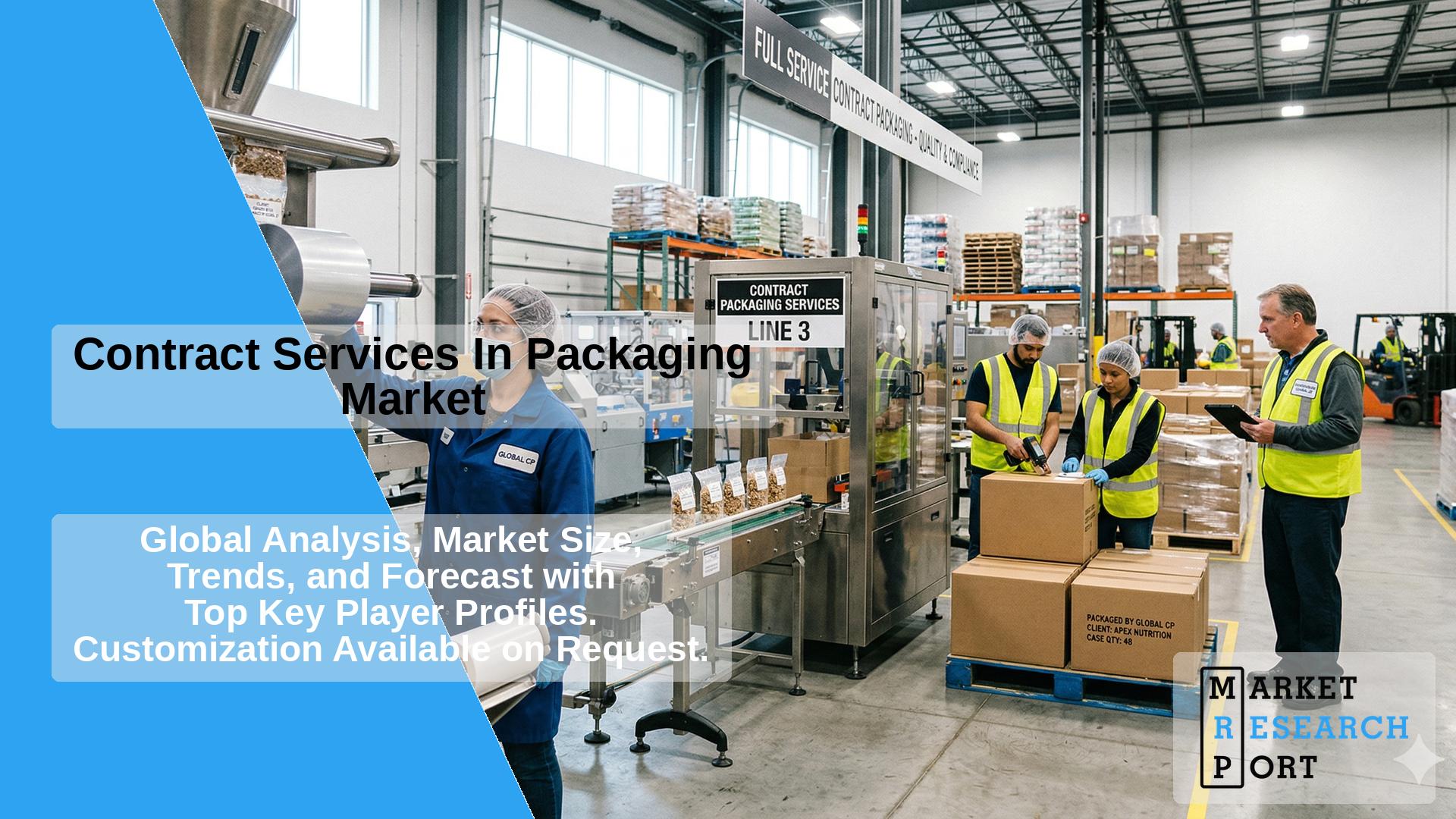
The global contract services in packaging market size was valued at USD 58.2 billion in 2024 and is projected to reach USD 68.5 billion by 2026. Looking further ahead, the market is anticipated to expand to USD 165.4 billion by 2036, exhibiting a compound annual growth rate (CAGR) of 9.2% during the forecast period from 2026 to 2036. This robust expansion is primarily driven by the increasing trend among consumer-packaged goods (CPG) companies to outsource their packaging operations to focus on core competencies like product development and marketing. Additionally, the rise of e-commerce, the need for specialized pharmaceutical packaging, and the growing demand for sustainable packaging solutions are significant catalysts for market growth.
The global landscape for contract packaging services is undergoing a transformative shift as manufacturers seek to mitigate risks and reduce capital expenditure. By leveraging the expertise of third-party providers, companies can access advanced packaging technologies without the need for heavy upfront investment in machinery and facilities. This asset-light model is particularly attractive in volatile markets where demand fluctuations require high levels of operational flexibility. Furthermore, the integration of automation and robotics in contract packaging facilities has significantly improved throughput and accuracy, making outsourcing a more competitive option than in-house operations. The move toward circular economies is also pushing contract packagers to innovate with biodegradable materials and refillable packaging systems, aligning with global sustainability goals.
However, the market is not without its challenges. One of the primary hurdles is the maintenance of quality control and brand consistency across outsourced partners. As products move through third-party facilities, ensuring that every unit meets the brand’s exact specifications requires rigorous auditing and real-time data sharing. Supply chain disruptions, often caused by geopolitical tensions or climate-related events, can also impact the availability of raw materials like plastics, paperboard, and glass, leading to price volatility. Additionally, the increasing complexity of international regulations, particularly in the healthcare and food sectors, necessitates constant compliance updates, which can be costly for smaller contract packaging firms. Despite these obstacles, the efficiency gains and scalability offered by contract packagers continue to outweigh the risks for most global brands.
The shift toward greener chemistries and sustainable practices presents a substantial opportunity for growth. Contract packagers that invest in eco-friendly infrastructure, such as solar-powered facilities or closed-loop recycling systems, are becoming preferred partners for environmentally conscious brands. There is also a growing niche for ‘clean-label’ packaging in the food and personal care sectors, where consumers demand transparency in both ingredients and the materials used to house them. Innovation in smart packaging, including QR codes for traceability and NFC tags for consumer engagement, is another area where contract services can provide high-value additions. As the digital and physical worlds of retail continue to merge, the role of the contract packager is evolving from a simple service provider to a strategic partner in the brand’s overall supply chain strategy.
The global contract services in packaging market is characterized by a mix of large-scale multinational corporations and numerous specialized regional players. While the top-tier companies command a significant portion of the market through extensive global networks and diverse service portfolios, the market remains relatively fragmented due to the localized nature of many packaging requirements. Large players like Amcor, Sonoco, and WestRock have expanded their reach through strategic acquisitions, allowing them to offer end-to-end solutions from design to distribution. This consolidation trend is expected to continue as firms seek to achieve economies of scale and provide a ‘one-stop-shop’ experience for global CPG brands. Smaller, niche packagers often thrive by focusing on specific high-growth sectors like biologics, organic foods, or luxury cosmetics, where specialized equipment and certifications are required.
Market characteristics also include a high degree of technological integration. Modern contract packaging facilities are increasingly adopting Industry 4.0 technologies, including the Internet of Things (IoT) for real-time tracking, artificial intelligence (AI) for quality inspection, and advanced robotics for high-speed pick-and-place operations. This technological edge allows contract packagers to handle complex tasks such as multi-component kitting, serialization for pharmaceuticals, and customized labeling for different regional markets. The demand for speed-to-market is another defining feature, with brands requiring faster turnaround times for seasonal promotions and new product launches. Consequently, contract packagers are locating their facilities closer to major distribution hubs to minimize lead times and transportation costs.
The secondary packaging segment accounted for a major revenue share in 2024. This dominance is attributed to the high demand for retail-ready packaging, display units, and promotional kitting. Secondary packaging serves as the second layer of protection and is often the first thing a consumer sees on a retail shelf. As brands compete for attention in crowded marketplaces, the need for high-quality printing, unique structural designs, and sustainable outer boxes has surged. Contract packagers provide the expertise and equipment needed to assemble these complex units efficiently. The growth of club stores and warehouse retailers, which require specific bulk packaging formats, has further bolstered the demand for secondary contract packaging services.
The primary packaging segment is expected to grow at a significant CAGR through 2036. Primary packaging involves the direct contact between the product and the packaging material, such as bottles, blisters, pouches, and tubes. This segment is highly sensitive, particularly in the pharmaceutical and food industries, where sterility and barrier properties are paramount. The rise of unit-dose packaging in healthcare and the popularity of flexible pouches in the food sector are key drivers. Contract packagers are investing in cleanroom environments and specialized filling lines to meet the stringent safety standards required for primary packaging. The ability to handle diverse materials, from glass and metal to advanced polymers, makes contract packagers indispensable for brands looking to innovate their primary containers.
The food and beverage segment led the market in 2024, representing the largest application area for contract packaging services. This is driven by the sheer volume of consumer goods and the constant need for packaging innovation. From snack foods and beverages to frozen meals and dairy products, the variety of packaging formats is immense. Contract packagers help food brands navigate seasonal demand spikes and experiment with new packaging designs without disrupting their main production lines. The trend toward portion-controlled packaging and on-the-go formats has also increased the complexity of food packaging, favoring the specialized capabilities of contract service providers. Furthermore, the implementation of food safety regulations like FSMA in the U.S. has made the compliance expertise of contract packagers even more valuable.
The pharmaceutical and life sciences segment is projected to be the fastest-growing end-use category. The increasing complexity of drug formulations, including biologics that require cold-chain packaging, has created a high demand for specialized contract services. Serialization requirements, such as those mandated by the Drug Supply Chain Security Act (DSCSA), require sophisticated tracking and labeling technologies that many pharmaceutical companies prefer to outsource. Additionally, the rise of clinical trials and the need for small-batch packaging for personalized medicine are perfectly suited for the flexible nature of contract packaging. As the global population ages and healthcare spending increases, the reliance on contract packagers for safe, compliant, and efficient drug delivery systems will continue to intensify.
North America dominated the global market in 2024, with the United States being the primary contributor. The region’s leadership is supported by a highly developed retail sector, a massive pharmaceutical industry, and a strong presence of global CPG companies. The ‘Amazon Effect’ has fundamentally changed packaging requirements in North America, with a greater emphasis on ‘frustration-free’ packaging and durable shipping containers for the e-commerce channel. High labor costs in the U.S. and Canada have also encouraged companies to outsource packaging to specialized firms that utilize high levels of automation. The region is also at the forefront of the sustainability movement, with many contract packagers transitioning to 100% recyclable or compostable materials to meet consumer and regulatory demands.
The European market is heavily influenced by the European Green Deal and the Circular Economy Action Plan. These regulations are forcing a massive shift toward sustainable packaging, creating opportunities for contract packagers that specialize in eco-design and material recovery. Germany, the UK, and France are the key markets in this region. The European pharmaceutical sector is also a major driver, with strict EU Falsified Medicines Directive (FMD) requirements necessitating advanced serialization services. The region’s focus on high-quality, premium packaging for the luxury goods and cosmetics sectors also supports a robust contract packaging ecosystem. Strategic partnerships between European retailers and co-packers are common, aimed at reducing plastic waste and improving supply chain transparency.
Asia Pacific is set to experience the highest growth rate during the forecast period. The region’s expansion is fueled by the rapid growth of the middle class in China, India, and Southeast Asia, leading to increased consumption of packaged food, beverages, and personal care products. China’s role as a global manufacturing hub has made it a central player in the contract packaging market, with massive facilities capable of handling high-volume orders for international export. In India, the pharmaceutical sector’s growth is a major catalyst, as the country is a leading producer of generic medicines. The rise of organized retail and e-commerce in the region is also creating a need for more sophisticated packaging solutions, moving away from traditional bulk formats to branded, consumer-friendly units.
The competitive landscape is dominated by players who can offer a combination of scale, technological innovation, and geographic reach. Leading companies are increasingly focusing on sustainability as a core differentiator, investing in R&D to develop new materials and more efficient processes. The following list includes the major players and researchers identified in the global market:
Amcor plc is a global leader in developing and producing responsible packaging for food, beverage, pharmaceutical, medical, home- and personal-care, and other products. The company has a significant presence in the contract services market, offering specialized solutions that leverage its vast material science expertise. Amcor’s focus on sustainability, including its pledge to make all its packaging recyclable or reusable by 2025, has made it a preferred partner for brands looking to reduce their environmental footprint. Their global footprint allows them to serve multinational clients with consistent quality across different regions.
Sonoco Products Company offers a diverse range of consumer and industrial packaging products and services. Their contract packaging division provides end-to-end solutions, including point-of-purchase display design, kitting, and fulfillment. Sonoco’s ‘i6 Innovation Center’ focuses on consumer insights and structural design, helping brands create packaging that stands out on the shelf. The company’s ability to integrate primary and secondary packaging services provides a streamlined supply chain for its customers, reducing complexity and cost.
This report provides a comprehensive analysis of the market segments, forecasting growth at global, regional, and country levels from 2024 to 2036.
Service Type Outlook (Revenue, USD Million, 2024 – 2036)
Material Outlook (Revenue, USD Million, 2024 – 2036)
End-Use Industry Outlook (Revenue, USD Million, 2024 – 2036)
Region Outlook (Revenue, USD Million, 2024 – 2036)
1. What is the current market size of the global contract services in packaging industry?
The global market size was estimated at USD 58.2 billion in 2024 and is projected to reach USD 68.5 billion by 2026.
2. What is the projected growth for the market by 2036?
The market is expected to reach a value of USD 165.4 billion by 2036, growing at a CAGR of 9.2% from 2026 to 2036.
3. What are the primary drivers of the contract packaging market?
Key drivers include the trend toward outsourcing to reduce capital expenditure, the rapid growth of e-commerce, and the need for specialized packaging in the pharmaceutical and food sectors.
4. Which region is expected to lead the market in terms of growth?
The Asia Pacific region is anticipated to be the fastest-growing market due to increasing industrialization, a rising middle class, and the expansion of the pharmaceutical sector in India and China.
5. How is sustainability impacting the contract packaging market?
Sustainability is a major trend, with brands demanding eco-friendly materials like PCR plastics and paperboard. Contract packagers are investing in green technologies and circular economy practices to remain competitive.
6. What is the difference between primary and secondary contract packaging?
Primary packaging involves the direct container that holds the product (like a bottle or pouch), while secondary packaging refers to the outer layer used for grouping, protection, and branding (like a retail box or display unit).
7. Why do pharmaceutical companies outsource their packaging?
Pharmaceutical companies outsource to access specialized technologies for serialization, cold-chain management, and compliance with strict global regulations, which are often too costly to maintain in-house.
8. Who are the major players in this market?
Key players include Amcor, Sonoco, WestRock, CCL Industries, Berry Global, and Sharp Packaging Services, among others.
9. What role does automation play in contract packaging?
Automation is crucial for increasing throughput, reducing labor costs, and improving accuracy in high-speed packaging lines, particularly for complex tasks like kitting and labeling.
10. How has e-commerce changed the packaging service landscape?
E-commerce has increased the demand for durable, right-sized, and frustration-free packaging that can withstand the rigors of the shipping process while minimizing material waste.