
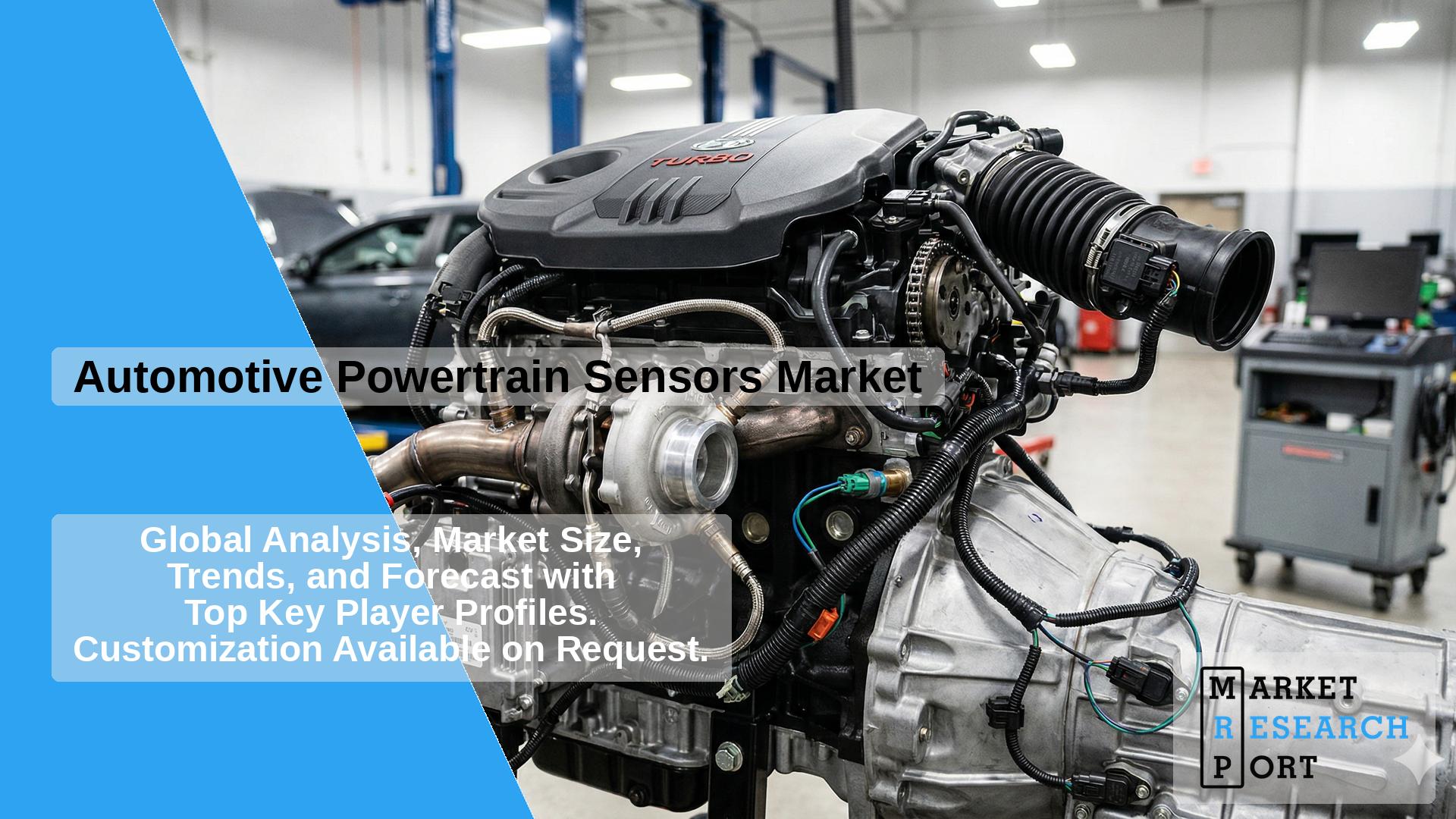
The global automotive powertrain sensors market size was estimated at USD 22,500.0 million in 2024 and is projected to reach USD 58,420.2 million by 2036, growing at a CAGR of 8.3% from 2026 to 2036. The market’s expansion is fundamentally driven by the escalating integration of electronic control units in modern vehicles, the global transition toward electric and hybrid propulsion systems, and the implementation of stringent emission standards such as Euro 7 and China 6b. As vehicles become more autonomous and connected, the demand for high-precision sensors that monitor engine performance, transmission efficiency, and battery health has reached unprecedented levels.
The automotive industry is undergoing a radical transformation, moving away from purely mechanical systems toward software-defined vehicles where sensors act as the primary sensory organs. Powertrain sensors are essential components that provide real-time data to the Engine Control Unit (ECU) or Transmission Control Unit (TCU) to optimize fuel combustion, reduce harmful emissions, and ensure smooth gear transitions. The rise of environmental consciousness among consumers and governments has led to the adoption of sophisticated exhaust gas sensors, including NOx and oxygen sensors, which are vital for meeting global climate targets. Furthermore, the miniaturization of sensor technology and the development of Micro-Electro-Mechanical Systems (MEMS) have allowed manufacturers to integrate more sensing capabilities into smaller, more durable packages that can withstand the harsh environments of an automotive powertrain.
Despite the robust growth trajectory, the market faces challenges related to the complexity of modern automotive architectures and the volatility of the global semiconductor supply chain. The high cost of research and development for next-generation sensors, particularly those required for high-voltage electric vehicle platforms, can act as a barrier for smaller players. Additionally, the transition from Internal Combustion Engines (ICE) to Battery Electric Vehicles (BEVs) necessitates a complete redesign of the sensor ecosystem, as traditional sensors like mass air flow or fuel pressure sensors are not required in electric drivetrains. However, this transition also opens doors for innovative sensing solutions for battery thermal management, inverter monitoring, and regenerative braking systems, which are becoming the new pillars of the powertrain sensor market.
Substantial growth opportunities are emerging in the realm of intelligent and connected powertrains. The integration of Internet of Things (IoT) capabilities allows for predictive maintenance, where sensors can detect potential failures before they occur, thereby reducing vehicle downtime and repair costs. The development of solid-state sensor technology offers improved reliability and faster response times compared to traditional electromechanical versions. Moreover, the expansion of the hydrogen fuel cell vehicle market presents a new frontier for sensors capable of monitoring hydrogen concentration, pressure, and temperature in extremely sensitive environments. As the global automotive landscape continues to evolve, the demand for smarter, more resilient, and highly accurate powertrain sensors will remain a cornerstone of vehicle innovation.
The global automotive powertrain sensors market is highly concentrated among a group of Tier 1 suppliers who possess extensive expertise in automotive electronics and long-standing relationships with Original Equipment Manufacturers (OEMs). Companies like Robert Bosch GmbH, Denso Corporation, and Continental AG lead the market through continuous innovation and a vast global manufacturing footprint. These industry leaders invest billions of dollars annually in R&D to stay ahead of regulatory changes and technological shifts. The competitive landscape is characterized by strategic collaborations between sensor manufacturers and semiconductor companies to develop integrated solutions that combine sensing elements with advanced processing logic. While the market is dominated by established giants, specialized niche players are finding success by focusing on high-growth areas such as wide-bandgap semiconductor sensors and high-accuracy position sensors for electric motors.
The market is further characterized by a high degree of technical complexity and strict quality standards. Sensors used in powertrains must operate reliably under extreme temperatures, high vibrations, and exposure to corrosive fluids for the entire lifespan of the vehicle. This requires advanced materials science and robust packaging techniques. The trend toward vehicle electrification is shifting the focus from chemical and fluid sensing to electrical and thermal sensing. For instance, current sensors based on Hall-effect or shunt technology are becoming critical for monitoring the flow of energy between the battery and the motor. Additionally, the move toward 800V architectures in EVs is driving the need for sensors with higher isolation voltages and better electromagnetic compatibility (EMC) performance.
The pressure sensors segment led the market in 2024 and is expected to maintain a dominant position through 2036. These sensors are indispensable for monitoring manifold absolute pressure (MAP), fuel rail pressure, and oil pressure, ensuring that the engine operates at peak efficiency. In diesel engines, pressure sensors are critical for the functioning of particulate filters and common rail injection systems. The advancement of MEMS technology has significantly reduced the cost and size of pressure sensors while improving their sensitivity and durability. As emission regulations tighten globally, the need for precise pressure monitoring in exhaust gas recirculation (EGR) systems continues to grow, reinforcing this segment’s revenue leadership.
The position sensors segment is projected to grow at the fastest CAGR from 2026 to 2036. This rapid growth is primarily attributed to the increasing complexity of transmission systems and the rise of electric propulsion. In modern automatic and dual-clutch transmissions, position sensors are used to monitor gear selection and clutch engagement with millisecond precision. In electric vehicles, high-speed position sensors (resolvers) are essential for determining the exact orientation of the motor’s rotor, which is necessary for efficient torque control. The shift toward drive-by-wire systems, where mechanical linkages are replaced by electronic signals, also drives the demand for redundant and highly reliable position sensors for throttle and pedal control.
The engine management segment accounted for the largest revenue share in 2024. This segment encompasses a wide range of sensors, including mass air flow (MAF), knock sensors, and oxygen sensors, all of which are vital for the combustion process. Despite the growth of EVs, the optimization of internal combustion engines remains a priority for many manufacturers, especially in the heavy-duty truck and hybrid vehicle markets. Advanced engine management systems rely on a network of sensors to balance power output with fuel economy and emissions. The introduction of gasoline direct injection (GDI) and turbocharging has further increased the number of sensors required per engine, sustaining the segment’s market dominance.
The drivetrain and transmission segment is expected to witness significant expansion as manufacturers adopt more sophisticated gearboxes to improve fuel efficiency. Modern transmissions with 8, 9, or even 10 speeds require a higher density of sensors to manage complex shifting patterns. Furthermore, the integration of hybrid drivetrains, which combine an internal combustion engine with an electric motor, necessitates advanced sensing solutions to manage the seamless transition between power sources. Sensors in this segment must provide high-speed data to the control units to ensure driver comfort and vehicle performance, making them a high-value component in the automotive supply chain.
The Asia Pacific automotive powertrain sensors market dominated the global landscape in 2024. This dominance is driven by the region’s status as the world’s largest automotive production hub. China, in particular, has seen a massive surge in vehicle sales and a rapid transition to New Energy Vehicles (NEVs), which has spurred demand for advanced sensor technologies. India is also emerging as a key player, with the implementation of Bharat Stage VI (BS-VI) emission norms mandating the use of sophisticated sensor-based engine management systems. The presence of major electronics manufacturers in Japan and South Korea further supports the regional market through the development of cutting-edge sensor components and semiconductor technologies.
The automotive powertrain sensors market in Germany is a global benchmark for innovation and quality. As the home to major premium OEMs and Tier 1 suppliers, Germany leads the development of high-performance sensors for luxury and high-efficiency vehicles. The German market is heavily influenced by the European Union’s stringent CO2 targets and the upcoming Euro 7 standards, which require unprecedented levels of accuracy in emission monitoring. German companies are at the forefront of developing sensors for hydrogen combustion engines and advanced hybrid systems. The country’s robust engineering ecosystem and focus on Industry 4.0 ensure that it remains a critical hub for the production and export of powertrain sensor technology.
Beyond China and India, the Asia Pacific region is seeing increased sensor adoption in Southeast Asian nations like Thailand and Vietnam, which are expanding their automotive manufacturing capabilities. The trend toward affordable electric vehicles in this region is driving demand for cost-effective yet reliable sensor solutions. Regional players are increasingly focusing on localizing production to reduce costs and mitigate supply chain risks. Additionally, the growth of the two-wheeler market in Asia, which is also seeing a shift toward fuel injection and electrification, provides a significant secondary market for powertrain sensors.
North America contributes a substantial portion of the global revenue, driven by the demand for large SUVs and light-duty trucks. These vehicles often feature powerful engines and advanced transmissions that require a high number of sensors for performance and towing capabilities. The U.S. market is also seeing a rapid increase in EV adoption, supported by government incentives and the presence of major EV manufacturers. This shift is pivoting the North American sensor market toward battery management and electric drive unit sensing. Innovations in autonomous driving and connected vehicle technologies in Silicon Valley are also influencing the development of smarter powertrain sensors that can communicate with cloud-based diagnostic platforms.
Latin America is a growing market, with Brazil and Mexico serving as the primary drivers. Mexico’s role as a major manufacturing hub for the North American market ensures a steady demand for high-quality powertrain sensors. In Brazil, the widespread use of flex-fuel engines requires specialized sensors that can detect the ethanol-to-gasoline ratio in the fuel system. While the transition to EVs is slower in this region compared to Europe or China, the modernization of the existing ICE fleet and the adoption of stricter local emission standards are providing consistent growth opportunities for sensor suppliers.
In the Middle East and Africa, the market is characterized by a growing demand for passenger vehicles and the expansion of the logistics sector. The harsh environmental conditions in this region, including extreme heat and dust, require sensors with exceptional durability and thermal resistance. South Africa remains the industrial heart of the region, with several global OEMs operating assembly plants that require a steady supply of powertrain components. As infrastructure improves and urbanization continues, the demand for more efficient and environmentally friendly vehicles is expected to rise, gradually increasing the market for advanced powertrain sensors.
The market is led by a mix of diversified industrial conglomerates and specialized automotive electronics firms. These companies focus on vertical integration, often producing the sensing elements, the signal processing chips, and the final sensor housing. This allows for better quality control and optimized performance. Key players are also engaging in aggressive M&A activity to acquire startups specializing in new sensing modalities, such as quantum sensors or advanced optical sensing, which could revolutionize the next generation of powertrains.
Other notable participants include Infineon Technologies, which provides the semiconductor backbone for many sensor systems, and TE Connectivity, a leader in the connectors and housings that protect sensors in harsh environments. Emerging players are focusing on software-integrated sensors that provide deeper insights into vehicle health.
| Report Attribute | Details |
| Market size value in 2026 | USD 26,380.5 million |
| Revenue forecast in 2036 | USD 58,420.2 million |
| Growth rate | CAGR of 8.3% from 2026 to 2036 |
| Base year for estimation | 2024 |
| Historical data | 2020 – 2023 |
| Forecast period | 2026 – 2036 |
| Quantitative units | Revenue in USD million and CAGR from 2026 to 2036 |
| Report coverage | Revenue forecast, competitive landscape, growth factors, and trends |
| Segments covered | Product, Application, Vehicle Type, Region |
| Regional scope | North America; Europe; Asia Pacific; Latin America; Middle East & Africa |
| Country scope | U.S.; Canada; Mexico; Germany; UK; France; Italy; Spain; China; India; Japan; South Korea; Brazil; Argentina; Saudi Arabia; South Africa |
| Key companies profiled | Robert Bosch GmbH; Denso Corporation; Continental AG; Sensata Technologies; Honeywell; Infineon Technologies; NXP Semiconductors; TE Connectivity; BorgWarner; Allegro MicroSystems; Melexis; STMicroelectronics; ZF Friedrichshafen; Valeo; Magna International. |
This report forecasts revenue growth at global, regional, and country levels and provides an analysis of the latest industry trends in each of the sub-segments from 2026 to 2036. For this study, the market has been segmented based on product, application, vehicle type, and region:
Product Outlook (Revenue, USD Million, 2026 – 2036)
Application Outlook (Revenue, USD Million, 2026 – 2036)
Vehicle Type Outlook (Revenue, USD Million, 2026 – 2036)
Region Outlook (Revenue, USD Million, 2026 – 2036)
How big is the automotive powertrain sensors market?
The global automotive powertrain sensors market size was estimated at USD 22,500.0 million in 2024 and is expected to reach USD 26,380.5 million in 2026.
What is the automotive powertrain sensors market growth?
The global market is expected to grow at a compound annual growth rate of 8.3% from 2026 to 2036 to reach USD 58,420.2 million by 2036.
Which region accounted for the largest automotive powertrain sensors market share?
Asia Pacific dominated the global landscape with a revenue share of over 42% in 2024. This is due to the high volume of vehicle production and the rapid adoption of electric vehicles in China and India.
Who are the key players in the automotive powertrain sensors market?
Leading companies include Robert Bosch GmbH, Denso Corporation, Continental AG, Sensata Technologies, Honeywell, Infineon Technologies, NXP Semiconductors, and TE Connectivity, among others.
What are the factors driving the automotive powertrain sensors market?
The market is driven by strict emission regulations, the shift toward vehicle electrification, the demand for fuel efficiency, and the increasing electronic content in modern vehicles.
How does the shift to electric vehicles affect the market?
While some ICE-specific sensors (like fuel pressure) are being phased out, EVs require new types of sensors for battery thermal management, current sensing, and electric motor position monitoring.
What is the most common type of sensor in this market?
Pressure sensors are currently the most common due to their wide range of applications in fuel, oil, and exhaust systems.
What role do emission standards play in market growth?
Standards like Euro 7 and China 6b mandate more precise monitoring of exhaust gases, which requires the installation of more advanced and expensive oxygen and NOx sensors.
What is the forecast for the market in 2036?
The market is projected to reach a value of USD 58,420.2 million by 2036 as vehicles become increasingly sophisticated and electrified.