
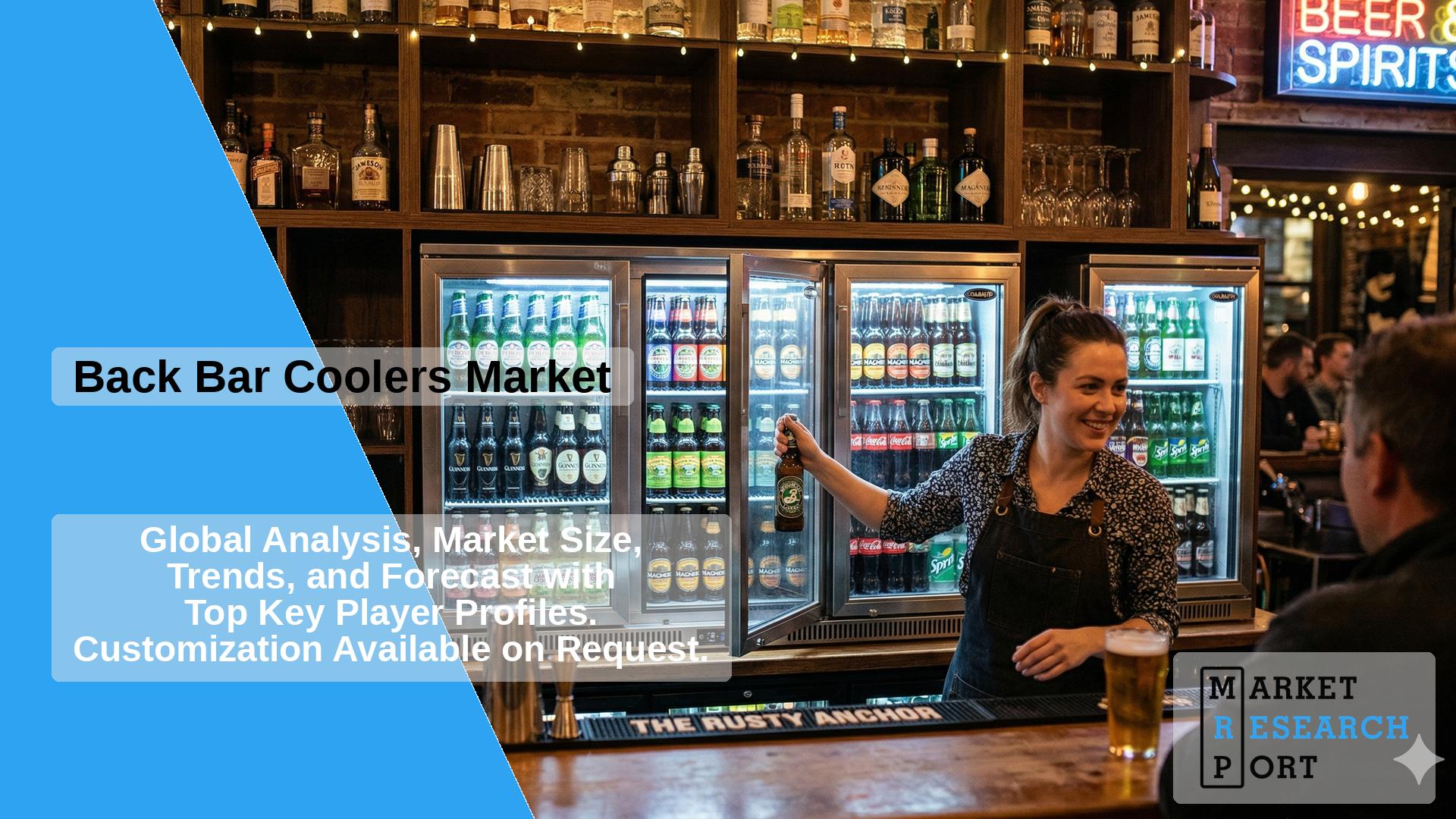
The global back bar coolers market is entering a phase of significant transformation, driven by the rapid expansion of the hospitality and entertainment sectors worldwide. As of 2026, the market value is estimated at USD 1,385.4 million, and it is projected to reach USD 2,342.8 million by 2036, exhibiting a compound annual growth rate (CAGR) of 5.4% over the forecast period. This growth is underpinned by the increasing number of pubs, microbreweries, and high-end restaurants, alongside a rising consumer preference for chilled beverages and premium craft beers. Back bar coolers, which are essential for maintaining optimal beverage temperatures while providing aesthetic display value, have become a focal point for commercial refrigeration innovation.
The evolution of the back bar coolers market is closely tied to the global shift toward sustainability and energy efficiency. Manufacturers are increasingly adopting natural refrigerants like R290 (propane) and R600a (isobutane) to comply with stringent environmental regulations such as the EPA’s SNAP program and the EU’s F-gas regulations. These refrigerants not only have a lower global warming potential but also offer better thermodynamic properties, leading to reduced energy consumption. Furthermore, the rise of the ‘experience economy’ has led bar owners to invest in coolers that offer customizable LED lighting and sleek designs that complement the interior aesthetics of modern lounges and clubs.
Despite the positive outlook, the market faces challenges related to high initial investment costs and the rising prices of raw materials like stainless steel and tempered glass. Small-scale operators often find the cost of premium, energy-efficient models prohibitive, leading to a secondary market for refurbished equipment. Additionally, the maintenance of these units in high-ambient temperature environments requires robust engineering, which can further drive up manufacturing costs. Supply chain disruptions and fluctuating freight costs also remain a concern for global manufacturers who rely on international distribution networks.
The global back bar coolers market is moderately fragmented, featuring a mix of large multinational corporations and specialized regional manufacturers. Major players such as True Manufacturing, Beverage-Air, and Hoshizaki dominate the premium segment with extensive distribution networks and strong brand equity. These companies focus on continuous R&D to introduce features like low-E glass, high-density insulation, and self-cleaning condensers. Meanwhile, regional players in Asia and Europe compete on price and localized service support, often catering to the specific needs of smaller independent bars and cafes. The market is characterized by a high degree of product differentiation based on energy ratings, storage capacity, and aesthetic finishes.
Innovation in the market is currently centered on ‘smart’ refrigeration. IoT-enabled coolers that can send alerts for temperature fluctuations or door-open events are gaining traction among large chain restaurants and hotels that prioritize food safety and operational efficiency. Moreover, the aesthetic aspect of back bar coolers has evolved; black vinyl and stainless steel finishes remain standard, but there is a growing niche for retro-styled or fully customized units that serve as a centerpiece in boutique bars. The regulatory landscape also plays a pivotal role, with mandatory energy labeling schemes forcing manufacturers to phase out inefficient models in favor of high-performance units.
The 2-door back bar cooler segment accounted for the largest revenue share in 2026. This dominance is attributed to the versatility of these units, which offer sufficient storage for a wide variety of bottled and canned beverages without occupying excessive floor space. They are the preferred choice for standard-sized bars and casual dining restaurants. The 2-door models are often available in both swing and sliding door configurations, allowing for flexibility in narrow service areas. Advances in compressor technology have made these units quieter and more efficient, which is a critical factor for establishments where the cooler is located close to the customers.
The 3-door and 4-door segments are expected to grow at a steady pace, primarily driven by high-volume venues such as sports stadiums, large nightclubs, and banquet halls. These larger units provide the necessary capacity to handle peak demand periods without frequent restocking. On the other end of the spectrum, 1-door or ‘compact’ back bar coolers are seeing increased adoption in coffee shops and small bistros that have added alcoholic beverages to their menus. These units are often designed to be under-counter, maximizing the utility of limited square footage while maintaining the necessary cooling performance for craft beers and wines.
Glass door coolers lead the market in terms of revenue, as they serve a dual purpose: storage and merchandising. In a bar setting, visibility is key to driving sales of premium bottled beers and specialty beverages. Modern glass doors utilize double or triple-pane tempered glass with low-emissivity coatings to minimize heat transfer while preventing condensation, ensuring a clear view of the contents at all times. The integration of internal LED lighting further enhances the visual appeal, making these units a staple in modern hospitality design.
Solid door coolers, while less common in customer-facing areas, remain essential for back-of-house storage or in environments where visibility is not a priority. These units generally offer superior insulation and are more energy-efficient than their glass-door counterparts. They are also more durable in high-traffic service areas where the risk of glass breakage is a concern. Additionally, sliding door mechanisms are becoming increasingly popular in both glass and solid variants, as they do not obstruct walkways when opened, making them ideal for cramped bar environments.
The pubs and bars segment is the primary driver of the back bar coolers market. The global resurgence of the nightlife industry, coupled with the explosion of the craft beer movement, has created a continuous demand for specialized cooling solutions. Craft beers often require specific temperature ranges to maintain their flavor profiles, leading to the adoption of coolers with precise digital thermostats. Furthermore, the trend of ‘open-concept’ bars where the refrigeration is visible to the patron has pushed manufacturers to focus more on the external design and internal lighting of their units.
Hotels and restaurants represent another significant application area. In these settings, back bar coolers are often integrated into the overall kitchen or bar design, requiring units that can be built-in or placed under-counter. The emphasis here is on reliability and quiet operation, as these coolers are often located in environments where noise levels must be kept to a minimum. The ‘others’ segment, which includes convenience stores, stadiums, and corporate offices, is also expanding as more non-traditional venues begin to offer chilled alcoholic and non-alcoholic beverages to their visitors.
The North American market remains a powerhouse for back bar coolers, driven by a high density of bars and a culture that favors chilled beverages. The United States, in particular, has a well-established replacement market where businesses are upgrading to energy-efficient models to reduce operational costs. The presence of major manufacturers like True Manufacturing and Beverage-Air provides a competitive edge in terms of logistics and service. Furthermore, strict health and safety regulations regarding beverage storage temperatures ensure a consistent demand for high-quality commercial refrigeration.
Europe is a highly sophisticated market characterized by a strong emphasis on sustainability. The European Union’s Ecodesign and Energy Labelling directives have forced a rapid transition toward high-efficiency units. Countries like the UK, Germany, and France have a rich pub culture, which sustains a steady demand for back bar refrigeration. In Europe, there is a notable preference for sleek, stainless steel designs and units that utilize natural refrigerants. The market is also seeing a rise in demand for wine-specific back bar coolers, reflecting the region’s diverse beverage consumption habits.
The Asia Pacific region is poised for the highest growth rate through 2036. This is driven by the rapid expansion of the organized retail and hospitality sectors in emerging economies. China and India are seeing a surge in the number of western-style bars and lounges, which is creating a massive new market for commercial coolers. Additionally, the growth of the tourism industry in Southeast Asian countries like Thailand and Vietnam is boosting the demand for refrigeration in hotels and resorts. Local manufacturers in the region are also improving their production capabilities, offering cost-effective alternatives to premium western brands.
The competitive landscape is defined by a focus on energy efficiency, durability, and aesthetic innovation. Leading companies are investing heavily in green technologies and smart features to differentiate their products in a crowded market. The following are the prominent players in the global back bar coolers industry:
True Manufacturing is widely regarded as a market leader, known for its robust construction and industry-leading warranty programs. The company has been at the forefront of the transition to R290 hydrocarbon refrigerants, positioning itself as a sustainable choice for environmentally conscious businesses. Beverage-Air, a part of the Ali Group, offers a vast portfolio of cooling solutions with a focus on high-performance airflow systems that ensure consistent temperatures even in high-traffic environments. Hoshizaki Corporation, a Japanese giant, is renowned for its precision engineering and reliability, particularly in its line of professional-grade bar refrigeration.
Emerging players like Atosa and Turbo Air are gaining market share by offering feature-rich products at competitive price points, appealing to budget-conscious independent operators. These companies often include features like pre-installed casters and digital controllers as standard, which were previously reserved for premium models. Meanwhile, specialized firms like Perlick and Glastender focus on high-end, customizable bar equipment that integrates seamlessly into luxury hospitality projects, emphasizing ergonomic design and superior aesthetics.
| Report Attribute | Details |
| Market size value in 2026 | USD 1,385.4 million |
| Revenue forecast in 2036 | USD 2,342.8 million |
| Growth rate | CAGR of 5.4% from 2026 to 2036 |
| Base year for estimation | 2025 |
| Historical data | 2020 – 2024 |
| Forecast period | 2026 – 2036 |
| Quantitative units | Revenue in USD million and CAGR from 2026 to 2036 |
| Report coverage | Revenue forecast, competitive landscape, growth factors, and trends |
| Segments covered | Product, Door Type, Application, Region |
| Regional scope | North America; Europe; Asia Pacific; Latin America; Middle East & Africa |
| Key companies profiled | True Manufacturing, Beverage-Air, Hoshizaki, Haier, Williams Refrigeration, Foster Refrigerator, Arneg, Husky, Liebherr, Tefcold, and others. |
This report provides a comprehensive analysis of the back bar coolers market, segmenting it based on product configuration, door style, end-use application, and geography.
Product Outlook (Revenue, USD Million, 2026 – 2036)
Door Type Outlook (Revenue, USD Million, 2026 – 2036)
Application Outlook (Revenue, USD Million, 2026 – 2036)
Region Outlook (Revenue, USD Million, 2026 – 2036)
1. What is the projected size of the back bar coolers market by 2036?
The market is expected to reach approximately USD 2,342.8 million by 2036, growing steadily from its 2026 valuation.
2. What is the expected growth rate (CAGR) for the market?
The global back bar coolers market is projected to grow at a CAGR of 5.4% between 2026 and 2036.
3. Which region is currently leading the market?
North America held the largest revenue share in 2026, driven by a high concentration of hospitality venues and demand for premium equipment.
4. Which region is expected to grow the fastest?
The Asia Pacific region is forecasted to experience the highest CAGR due to rapid urbanization and the expansion of the nightlife sector in countries like China and India.
5. What are the main drivers for this market?
Key drivers include the global growth of the hospitality industry, the rise of craft beer culture, and increasing regulations favoring energy-efficient refrigeration.
6. What is the difference between swing and sliding doors in this market?
Swing doors are traditional and provide a tight seal, while sliding doors are preferred in narrow bar spaces where there is no room for a door to swing outward.
7. Why are glass door coolers more popular than solid door coolers?
Glass door coolers are preferred for customer-facing areas because they allow for product merchandising and help drive impulse sales by making beverages visible.
8. What refrigerants are being used in modern back bar coolers?
Manufacturers are shifting toward natural refrigerants like R290 and R600a, which are more environmentally friendly and energy-efficient than older HFCs.
9. Who are the top players in the back bar coolers industry?
Leading players include True Manufacturing, Beverage-Air, Hoshizaki, Haier, and Williams Refrigeration, among others.
10. How is technology impacting the back bar coolers market?
Technology is introducing smart features like IoT monitoring, digital temperature controls, and high-efficiency LED lighting, which improve both performance and user experience.