
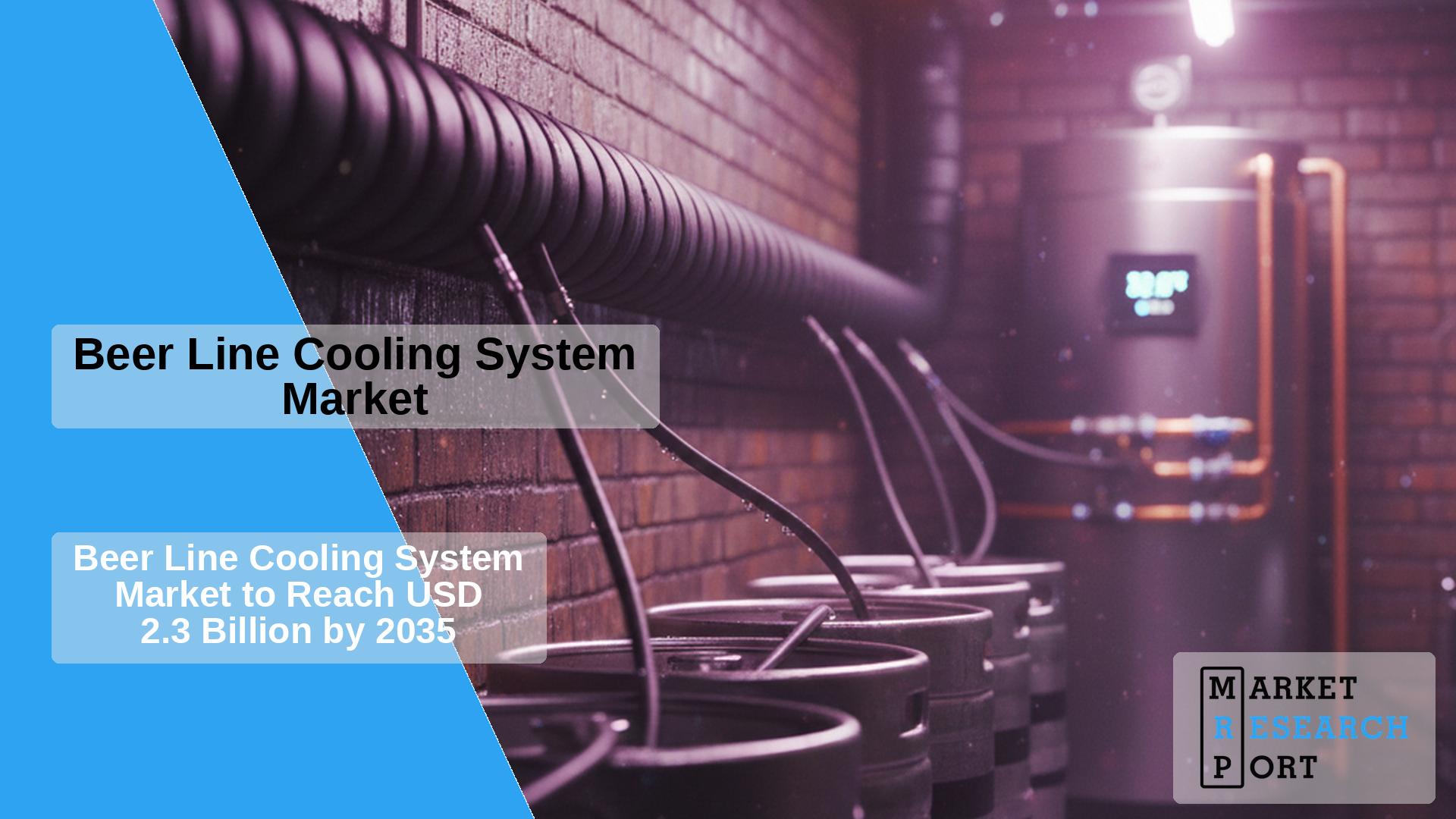
The global beer line cooling system market is projected to reach approximately USD 2.3 billion by 2035, rising from an estimated USD 1.4 billion in 2025. The market is expected to grow at a steady CAGR of 5.0% during the forecast period.
Beer line cooling systems are specialized temperature control solutions designed to maintain optimal beer temperature from keg storage to dispensing taps. These systems are essential for preserving flavor, minimizing foam loss, and ensuring consistent beverage quality across commercial draft beer environments.
As draft beer continues to dominate on-premise alcohol consumption, cooling systems have transitioned from optional equipment to critical hospitality infrastructure.
The market demonstrates stable growth driven by rising demand for premium draft beer experiences and increasing awareness of quality control among hospitality operators. Temperature consistency is now recognized as a direct contributor to reduced beer wastage and improved profitability.
Large venues such as stadiums, entertainment complexes, and high-traffic bars increasingly adopt long-draw dispensing systems, which require advanced and reliable cooling technologies. This trend continues to strengthen demand for glycol-based solutions.
Glycol cooling systems remain the preferred technology due to their ability to maintain stable temperatures over long distances. These systems circulate chilled glycol to ensure beer reaches the tap at the ideal serving temperature, preserving carbonation and taste.
Air-cooled systems continue to serve smaller establishments with short draw requirements. While limited by ambient conditions, they offer cost efficiency and simpler installation for compact dispensing setups.
Bars represent the largest application segment due to high draft beer turnover and continuous dispensing needs. Hotels and restaurants follow closely, driven by premium guest expectations and expanding dine-in experiences.
From an end-use perspective, draft beer accounts for the majority of system demand, as it is highly sensitive to temperature fluctuations. Bottled beer requires less reliance on line cooling, making it a secondary contributor.
Rising consumer preference for fresh draft beer is a major growth driver. Hospitality venues increasingly invest in cooling systems to ensure consistent quality and customer satisfaction.
Expansion of nightlife culture, urban entertainment zones, and tourism-driven hospitality infrastructure further supports market demand. Breweries also actively collaborate with venues to maintain brand integrity through controlled dispensing environments.
High installation and retrofit costs remain a key challenge, particularly for older establishments with legacy beverage lines. Continuous energy consumption and maintenance requirements can also impact operating costs.
Smaller venues often face limitations related to technical expertise and budget constraints, slowing adoption despite quality benefits.
Increasing installation of long-draw systems in stadiums, event venues, and large hospitality complexes presents strong growth potential. These environments require precise temperature control across extended distances.
Demand for modular and scalable cooling systems is rising, enabling operators to expand dispensing capacity without full system replacement.
The shift toward glycol-based cooling solutions continues to shape market dynamics due to their superior performance. Integration of digital temperature monitoring and automation is improving operational efficiency and reducing beer waste.
Energy-efficient designs and environmentally safer cooling fluids are gaining importance as sustainability becomes a purchasing priority for large hospitality chains.
North America remains the leading regional market, supported by a mature draft beer culture and widespread adoption of long-draw systems. Europe follows closely, driven by strong pub traditions and strict quality standards.
Asia Pacific is emerging as a high-growth region due to urbanization, rising disposable incomes, and expanding modern hospitality infrastructure. Other regions show steady development supported by tourism-focused investments.
The beer line cooling system market is moderately fragmented, with manufacturers competing on reliability, cooling accuracy, ease of integration, and energy efficiency. Product innovation and system customization remain key competitive strategies.
In 2025, manufacturers increased investment in energy-efficient chilling units and smart monitoring technologies to improve performance and reduce operational costs. Several breweries partnered with hospitality chains to standardize cooling infrastructure across multi-location outlets.
System upgrades focused on reducing foam loss, improving hygiene compliance, and supporting sustainable beverage dispensing practices.
A beer line cooling system maintains optimal temperature from keg storage to dispensing tap, ensuring consistent taste, carbonation, and foam control.
They reduce beer wastage, preserve quality, and improve customer satisfaction, directly impacting profitability.
Glycol-based systems are widely used due to their ability to provide stable cooling over long distances.
Yes, household draft systems are gaining popularity among enthusiasts, although commercial applications dominate overall demand.