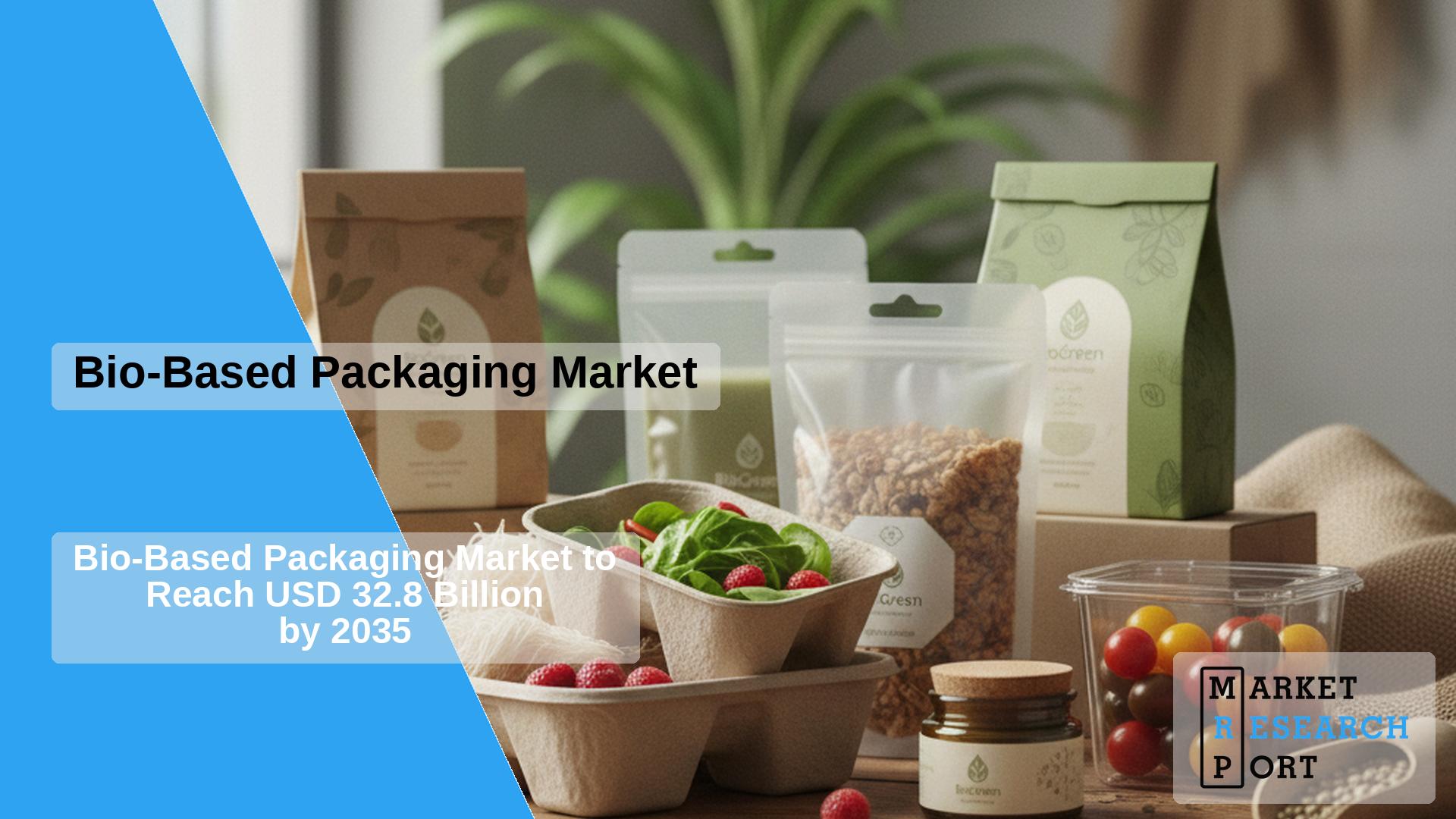
The global bio-based packaging market is projected to reach approximately USD 32.8 billion by 2035, increasing from an estimated USD 11.4 billion in 2025. The market is expected to expand at a steady compound annual growth rate of 11.2% during the forecast period from 2026 to 2035.
Bio-based packaging solutions are manufactured using renewable biological resources such as plant-derived polymers, cellulose fibers, and organic waste materials. These solutions are designed to reduce dependence on fossil-based plastics while supporting sustainability targets, waste reduction goals, and circular economy initiatives across global packaging supply chains.
What was once considered a regulatory obligation is now viewed as a long-term growth strategy. Packaging manufacturers and brand owners increasingly adopt bio-based materials to strengthen environmental credentials, meet regulatory expectations, and align with evolving consumer preferences.
Bioplastics remain the most commercially advanced material category due to their adaptability across flexible and rigid packaging formats. Flexible packaging continues to dominate overall demand, particularly within food, beverage, and e-commerce applications where lightweight and material-efficient solutions are preferred.
Asia Pacific continues to represent the largest production and consumption hub, supported by expanding packaged food demand, government sustainability initiatives, and improving bio-material manufacturing capacity.
Bioplastics account for the largest market share due to their functional versatility, compostability options, and compatibility with existing packaging machinery. Materials such as polylactic acid and starch-based blends are widely used in disposable food containers, films, and shopping bags.
Fiber-based materials, including paper, paperboard, and wood-derived packaging, continue to gain traction as brands move away from plastic-heavy structures. These materials are particularly favored in secondary packaging and retail-ready formats.
Flexible bio-based packaging leads the market owing to its lower material usage, reduced transportation emissions, and adaptability across pouches, wraps, and sachets. These formats support high-volume applications while maintaining sustainability benefits.
Rigid bio-based packaging remains essential in applications requiring strength and shape retention, such as bottles, trays, and pharmaceutical containers.
The food and beverage sector remains the largest adopter of bio-based packaging, driven by strict regulations on food-contact plastics and rising consumer demand for environmentally responsible packaging. Consumer goods and personal care brands are also increasing adoption to reinforce clean-label and sustainability positioning.
Pharmaceutical applications continue to expand selectively as bio-based materials improve in terms of barrier protection, safety, and compliance.
Government restrictions on single-use plastics remain a primary growth catalyst. Extended producer responsibility frameworks, plastic bans, and sustainability mandates continue to push manufacturers toward renewable packaging alternatives.
Corporate sustainability commitments and ESG reporting requirements further accelerate adoption. Consumers increasingly prefer brands that demonstrate measurable environmental responsibility, reinforcing demand for bio-based packaging.
Higher production costs compared to conventional plastics remain a major challenge, particularly in price-sensitive markets. Limited industrial composting infrastructure and performance limitations in moisture resistance and shelf stability also restrict adoption in certain applications.
Ongoing innovation in bio-polymer formulations is improving durability, heat resistance, and barrier performance. The use of agricultural residues and non-food biomass as feedstock is gaining momentum, improving sustainability credentials while reducing reliance on food-based raw materials.
Mono-material packaging designs are becoming increasingly popular as they simplify recycling and waste sorting. Bio-based coatings and barrier layers are replacing traditional plastic laminates, enabling broader use in food and beverage packaging.
Lifecycle assessment and carbon footprint labeling are now integrated into packaging development, supporting transparent sustainability communication.
Asia Pacific continues to dominate global demand due to strong manufacturing capabilities and regulatory support. North America and Europe remain innovation-driven markets with high adoption rates supported by mature sustainability frameworks. Latin America and the Middle East & Africa are emerging regions with gradual but consistent growth.
The bio-based packaging market is moderately fragmented, with global material producers and packaging manufacturers investing in renewable polymers, capacity expansion, and performance optimization. Strategic partnerships and technology licensing remain common competitive strategies.
In 2025, major manufacturers accelerated investment in next-generation bio-based polymers with enhanced barrier performance and higher renewable content. Several companies expanded flexible packaging production capacity to meet rising demand from food and e-commerce sectors.
Industry focus also shifted toward scalable compostable materials compatible with existing waste management systems, supporting broader commercial adoption.
This report evaluates market size trends, material innovation, growth drivers, restraints, emerging opportunities, competitive dynamics, and regional performance across major global markets. The analysis covers the period from 2025 through 2035.