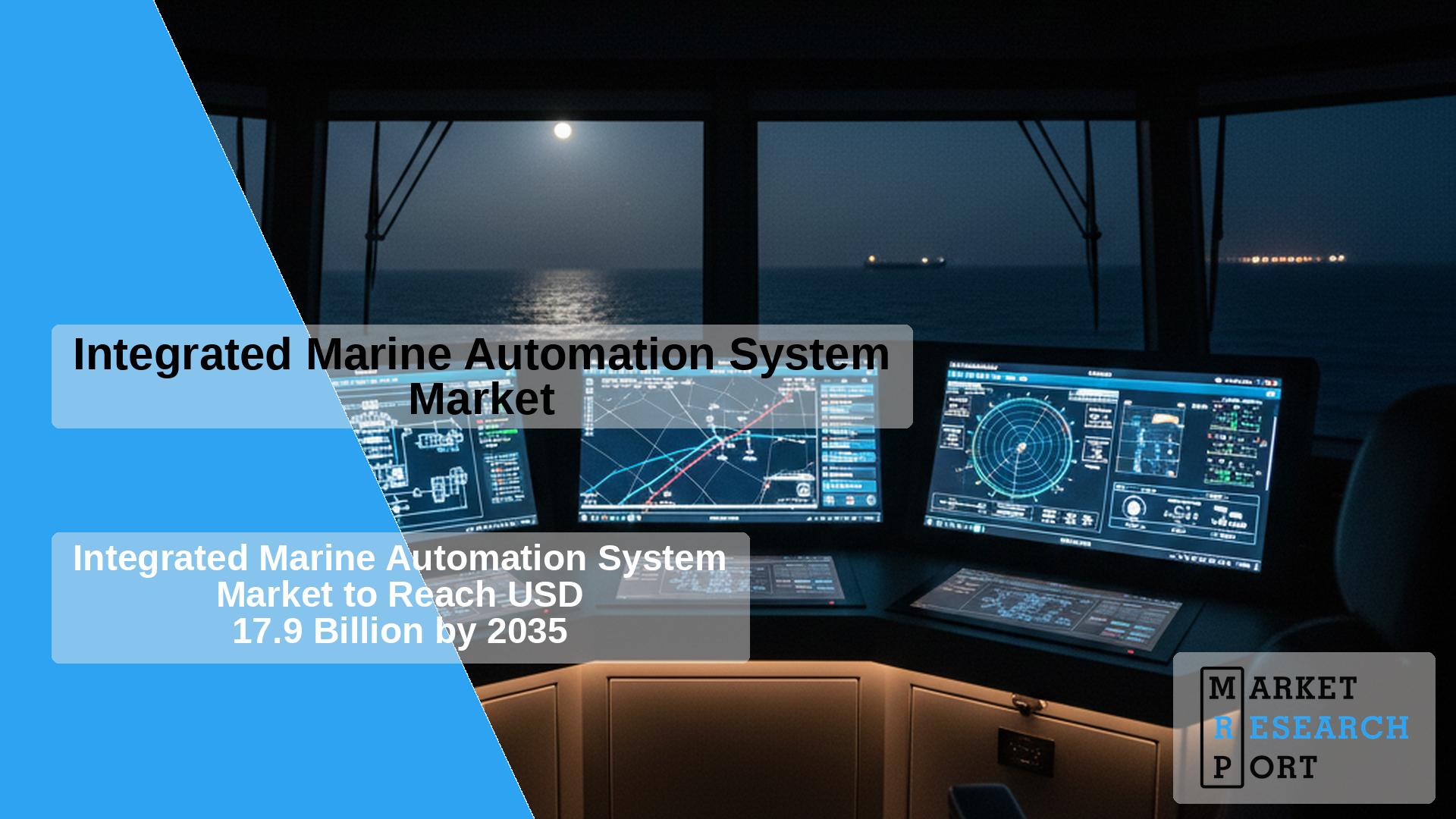
The global integrated marine automation system market is estimated to reach approximately USD 17.9 billion by 2035, rising from about USD 7.2 billion in 2025, expanding at a compound annual growth rate of nearly 9.5% during the forecast period.
Integrated marine automation systems combine hardware, software, and control technologies to automate vessel navigation, propulsion, monitoring, and safety operations. These systems improve operational efficiency, reduce human error, and enable real-time decision-making across commercial, defense, and offshore maritime activities.
The market is witnessing strong momentum as vessel operators prioritize digital transformation to enhance safety, fuel efficiency, and regulatory compliance. Automation adoption is further accelerated by crew shortages, rising operational costs, and increasing pressure to modernize aging global fleets.
Advancements in sensor technologies, artificial intelligence, and remote monitoring platforms continue to reshape vessel operations, supporting predictive maintenance and autonomous navigation capabilities.
Hardware remains the backbone of marine automation infrastructure, supported by critical components such as sensors, control units, and navigation equipment. These components enable real-time data acquisition and system responsiveness under demanding maritime conditions.
Software adoption continues to rise as shipowners seek centralized platforms for vessel monitoring, safety management, and performance optimization. Predictive analytics and cybersecurity solutions are becoming essential features of modern automation systems.
Vessel-management systems dominate solution adoption due to their ability to integrate propulsion, navigation, and onboard operations into unified control environments. These solutions reduce crew workload while improving fuel efficiency and route optimization.
Power-management systems and safety platforms also play critical roles, particularly as vessels adopt hybrid energy systems and face increasing cybersecurity and safety compliance requirements.
New-build installations account for the majority of automation deployments, as shipbuilders integrate advanced systems during vessel construction to ensure seamless system compatibility. Retrofit solutions continue to gain traction among operators seeking to extend vessel life and comply with evolving regulations.
Commercial shipping operators represent the largest user group, driven by global trade expansion and the need to optimize operational costs. Automation enables improved cargo handling, fuel management, and compliance with environmental regulations.
Defense applications focus on mission reliability, secure communications, and autonomous capabilities, supporting steady demand from naval modernization programs.
The increasing need for enhanced navigation safety and operational reliability is a major growth driver. Automation systems provide real-time alerts, collision avoidance support, and automated responses that significantly reduce accident risks.
Artificial intelligence-driven analytics support predictive maintenance and route optimization, helping operators reduce fuel consumption and downtime while improving profitability.
Integration complexity with legacy vessel systems remains a significant challenge, particularly for older fleets not designed for digital interoperability. High upfront investment and limited availability of skilled technical personnel also restrict adoption in some regions.
The development of autonomous and remotely operated vessels presents strong growth potential for integrated automation platforms. These vessels rely entirely on intelligent control systems for navigation, monitoring, and decision-making.
Environmental compliance requirements further encourage adoption, as automation systems enable real-time emissions monitoring and automated regulatory reporting.
Digital twin technology is gaining prominence, allowing operators to simulate vessel performance and maintenance scenarios using virtual replicas. Remote monitoring and shore-based control centers are also becoming standard features in fleet management strategies.
Cybersecurity integration has emerged as a critical trend as vessels become increasingly connected and exposed to digital threats.
Europe remains the leading regional market, supported by advanced shipbuilding capabilities, strict safety regulations, and early adoption of digital vessel technologies. North America follows with strong demand from commercial shipping, offshore energy, and defense fleets.
Asia Pacific continues to demonstrate rapid growth due to expanding shipbuilding activities, port modernization, and rising maritime trade volumes.
The integrated marine automation system market is moderately consolidated, with leading players focusing on system reliability, lifecycle services, and digital innovation. Strategic partnerships, platform upgrades, and service expansion remain key competitive strategies.
In 2025, multiple marine automation providers expanded investments in autonomous navigation software, advanced sensor integration, and cybersecurity platforms. Strategic acquisitions strengthened subsea automation, maritime IoT capabilities, and remote vessel monitoring technologies.
Manufacturers also introduced modular automation architectures to simplify retrofit installations and reduce vessel downtime during system upgrades.
It is a unified platform that automates vessel navigation, propulsion, monitoring, and safety functions using connected hardware and software systems.
They improve safety, reduce operational costs, enhance fuel efficiency, and support regulatory compliance across commercial and defense fleets.
Commercial cargo ships, passenger vessels, offshore platforms, and naval ships commonly deploy integrated automation systems.
Key trends include autonomous vessels, digital twins, remote fleet monitoring, and increased focus on cybersecurity and environmental compliance.