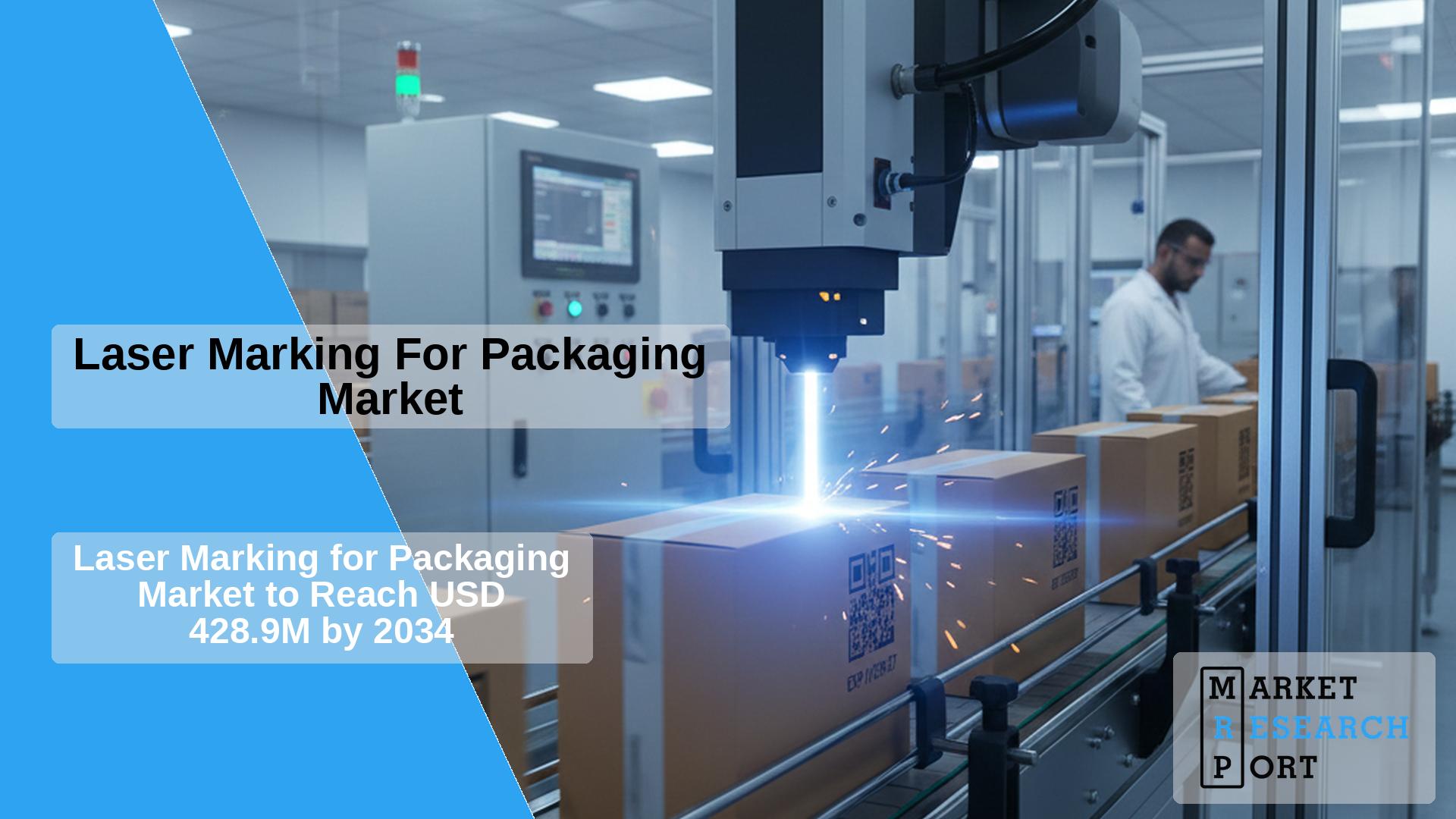
The global laser marking for packaging market is expected to demonstrate consistent growth, reaching an estimated value of USD 428.9 million by 2034, up from approximately USD 262.4 million in 2025. This growth reflects a compound annual growth rate (CAGR) of around 5.5% over the forecast period.
Laser marking for packaging refers to the use of laser-based systems to create permanent codes, symbols, and graphics directly on packaging surfaces. These systems support non-contact, ink-free marking, making them highly suitable for high-speed, regulated, and automated packaging environments. Adoption is increasing as manufacturers focus on durability, traceability, and long-term operational efficiency.
Packaging manufacturers across food, pharmaceuticals, personal care, and industrial goods increasingly rely on laser marking to meet regulatory, branding, and supply chain traceability requirements. Permanent and tamper-resistant marking supports compliance with labeling standards while reducing risks associated with ink smudging, fading, or removal.
Laser marking systems align closely with sustainability initiatives by eliminating inks, solvents, and labels. This makes them a preferred solution for manufacturers aiming to reduce waste, lower consumable costs, and support environmentally responsible production practices.
Fiber laser systems remain the most widely deployed technology due to their high marking speed, precision, and compatibility with automated packaging lines. These systems support continuous operations with minimal maintenance, making them ideal for high-volume production environments.
CO₂ laser systems continue to serve applications involving paper, cardboard, and organic packaging materials, while UV laser systems are gaining importance in applications that require ultra-fine marking and low thermal impact. Together, these technologies enable flexible deployment across diverse packaging materials.
Plastic and polymer packaging represents the largest share of laser marking applications, driven by widespread use in flexible and rigid packaging formats. Laser marking ensures permanent, ink-free coding that supports recycling and traceability initiatives.
Paper, cardboard, metal, and glass packaging formats also benefit from laser marking due to its durability, clarity, and resistance to environmental exposure. These attributes support both regulatory labeling and premium branding requirements.
Product identification remains the leading application area, supported by demand for clear batch numbers, expiry dates, and serial codes. Laser marking ensures consistent readability throughout storage and distribution.
Traceability and anti-counterfeiting applications are expanding as manufacturers strengthen supply chain transparency and brand protection strategies. Branding and regulatory labeling applications further reinforce the role of laser marking in modern packaging operations.
The food and beverage sector represents the largest end-use segment, driven by high packaging volumes and strict hygiene standards. Laser marking supports ink-free, contamination-resistant coding aligned with food safety regulations.
Pharmaceuticals and healthcare packaging relies on laser marking for serialization, compliance labeling, and contamination control. Cosmetics, personal care, automotive, and electronics industries also utilize laser marking for durability, traceability, and premium presentation.
The increasing need for permanent and tamper-resistant packaging identification is a major driver of market growth. Regulatory authorities require durable labeling to support recalls, consumer safety, and product authentication.
Rising automation across packaging lines further supports adoption, as laser marking systems integrate seamlessly with high-speed production environments while reducing downtime and maintenance requirements.
High initial capital investment remains a key barrier, particularly for small and mid-sized manufacturers. In addition, certain heat-sensitive packaging materials require careful laser selection and calibration, adding complexity to implementation.
The need for skilled technical personnel for system setup and optimization also limits adoption in some regions, although ongoing technological advancements are gradually reducing these challenges.
Growth opportunities are expanding through smart packaging, digital serialization, and Industry 4.0 integration. Laser marking systems increasingly support real-time monitoring, predictive maintenance, and quality inspection, enhancing operational efficiency.
As sustainability and traceability requirements intensify, laser marking is expected to gain wider acceptance across both developed and emerging packaging markets.
Asia Pacific leads the global market due to large-scale manufacturing activity, rapid growth of packaged food and pharmaceuticals, and increasing automation adoption. North America and Europe maintain strong demand driven by strict regulatory frameworks and advanced packaging infrastructure.
Latin America and the Middle East & Africa are witnessing gradual growth as packaging standards modernize and investments in automated production increase.
In 2025, major manufacturers introduced next-generation fiber and UV laser marking systems with improved energy efficiency, compact designs, and enhanced connectivity for automated packaging lines. Strategic acquisitions and facility expansions strengthened capabilities in high-speed, precision marking for regulated industries.
Increased investment in AI-enabled inspection and predictive maintenance tools further improved marking accuracy, equipment uptime, and compliance across global packaging operations.
What is laser marking for packaging?
Laser marking is a non-contact process that permanently marks codes, text, or graphics directly onto packaging materials without using inks or labels.
Why is laser marking preferred over traditional coding methods?
Laser marking offers higher durability, reduced maintenance, improved sustainability, and better compliance with regulatory labeling requirements.
Which industries benefit most from laser marking systems?
Food & beverage, pharmaceuticals, healthcare, cosmetics, and electronics industries benefit significantly due to high-volume packaging and strict traceability needs.
What trends are shaping the future of this market?
Automation, smart packaging integration, fiber and UV laser adoption, and Industry 4.0-enabled systems are the key trends driving market evolution.