
The luxury furniture market represents one of the most dynamic and steadily growing segments of the global interior solutions industry. It is driven by a shift in consumer lifestyles, a rising appreciation for artistic craftsmanship, and the growing desire for personalized living environments. Luxury furniture is no longer seen simply as functional décor; today, it symbolizes status, comfort, cultural identity, and attention to long-lasting quality. As global awareness of home aesthetics strengthens, the market continues to expand across residential and commercial segments.
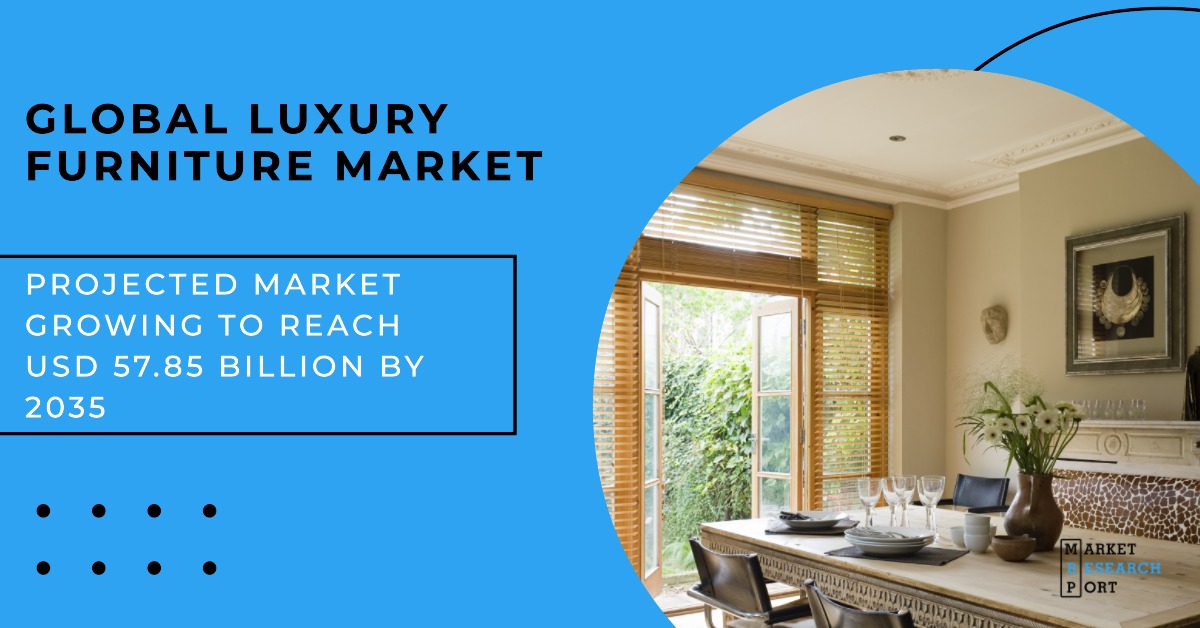
Industry assessments indicate that the market surpassed USD 29 billion in 2024 and is on track to nearly double by 2035. Starting at USD 31.52 billion in 2025, the luxury furniture industry is set for strong expansion, reaching USD 57.85 billion by 2035 with a CAGR of 6.26% over the decade. This upward trajectory is linked to shifts in spending habits, the entry of new luxury housing developments, renovations in hospitality spaces, and consumer preference for finely crafted, premium-grade furnishings. The market is expected to maintain a solid growth rate throughout the next decade, with manufacturers focusing on sustainable practices, advanced materials, and exclusive designer collaborations.
The rise of luxury furniture is shaped by deeper lifestyle and economic factors. Consumers are no longer seeking generic furniture; instead, they are investing in pieces that enrich their surroundings, reflect personal taste, and offer long-term durability. Several core reasons contribute to this consistent growth:
Modern luxury furniture buyers are more selective and informed than ever. They look for pieces that combine artistic design with durability. The demand has shifted from mass-produced premium items to furniture that feels exclusive, custom-built, and closely aligned with personal lifestyles. This rise in individualism has encouraged brands to introduce special editions, customizable configurations, and premium handcrafted collections. Consumers are also placing heightened value on natural materials such as timber, stone, and leather, while showing stronger interest in environmentally responsible pieces.
Technology is simultaneously influencing buying behavior. Interactive virtual showrooms, AI-enabled styling assistance, and easy global shipping have made luxury furniture more accessible to a wider audience. The integration of smart features—such as hidden charging ports, lighting systems, and automated adjustments—has also added a new dimension to modern premium furniture design.
The luxury furniture market is broad and diverse, encompassing several product categories, materials, and end-user applications. Below is a descriptive look at key segmentation areas:
The luxury furniture market exhibits strong regional variations influenced by cultural preferences, architectural styles, and economic conditions. Europe continues to lead due to its deep-rooted heritage in luxury craftsmanship, artisan furniture houses, and iconic design studios. Italy, the UK, Spain, and Germany remain key hubs of innovation and production.
North America follows closely, driven by high living standards, large luxury housing projects, and increased investment in premium commercial interiors. Meanwhile, the Asia-Pacific region is experiencing rapid growth as urban populations expand, high-income groups rise, and global luxury brands establish stronger regional footprints.
The market includes globally recognized brands known for exceptional design quality, innovation, and craftsmanship. These companies play a central role in shaping trends and setting benchmarks for luxury interior standards. Some of the influential names include:
The future of the luxury furniture market appears highly promising. Increasing global appreciation for curated interiors, a stronger focus on sustainability, and continuous advancements in design technology are expected to elevate market standards significantly. The next decade will likely see an expansion of eco-friendly luxury furniture, growth in smart-home compatible pieces, and rising popularity of personalized designs crafted by artisans and boutique studios.
With consumers placing more emotional and cultural value on their living spaces, the luxury furniture industry will continue evolving into a marketplace where artistry, technology, and sustainability intersect to create truly exceptional interiors.