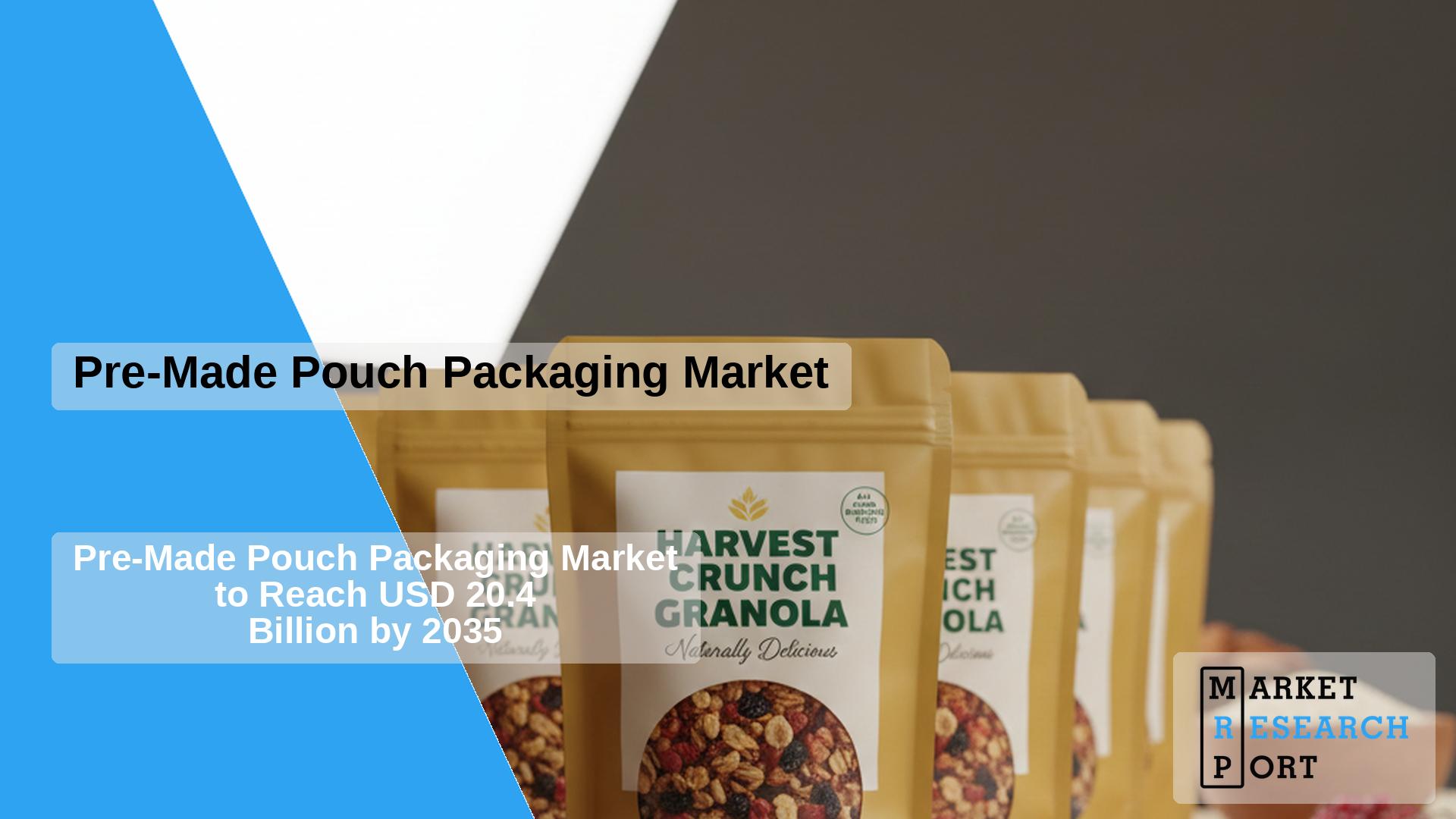
The global pre-made pouch packaging market is experiencing steady expansion as brands increasingly adopt flexible packaging solutions to improve operational efficiency and sustainability performance. In 2025, the market is valued at approximately USD 12.1 billion and is projected to reach nearly USD 20.4 billion by 2035, growing at a CAGR of 5.5% over the forecast period.
Pre-made pouch packaging refers to ready-formed flexible pouches supplied to manufacturers for direct filling and sealing. Unlike form-fill-seal systems, these pouches eliminate the need for in-house pouch formation, reducing setup time and enabling faster production changeovers. This makes them particularly attractive for manufacturers managing multiple product variants or shorter production runs.
Market growth is supported by rising demand from food, beverage, personal care, pharmaceutical, and household product industries. Lightweight construction, reduced material usage, and improved shelf presentation continue to position pre-made pouches as an effective alternative to rigid packaging formats.
The market benefits from the widespread shift toward flexible packaging formats that support automation and cost efficiency across FMCG supply chains.
Stand-up pouches remain the most commonly used format due to their ability to combine convenience, resealability, and strong shelf presence.
Food and beverage applications continue to account for the largest share of demand, driven by changing consumption habits and growth in packaged food products.
North America maintains a leading position in the global market due to advanced packaging infrastructure and early adoption of automated pouch filling technologies.
Stand-up pouches dominate the market as they provide excellent shelf visibility, efficient space utilization, and strong branding potential. Their resealable features also enhance consumer convenience, particularly in food and beverage applications.
Flat pouches are widely used for single-use products and portion-controlled packaging, offering cost advantages through reduced material consumption and efficient transportation.
Spout pouches are gaining adoption for liquid and semi-liquid products, including beverages and household solutions, as they enable controlled dispensing and minimize product waste.
Zipper pouches continue to see stable demand across snacks, pet food, and dry food categories, where resealability and freshness retention are key purchase drivers.
Retort pouches serve specialized applications requiring thermal processing and extended shelf life, particularly for ready-to-eat meals and shelf-stable foods.
The food and beverage segment represents the largest application area for pre-made pouch packaging, supported by demand for convenience foods, improved portability, and longer shelf life.
Personal care and cosmetic manufacturers are increasingly adopting pre-made pouches to reduce packaging weight, enhance visual appeal, and support sustainable packaging initiatives.
Pharmaceutical applications remain stable, with pouches used for unit-dose packaging, moisture protection, and efficient distribution.
Pet food and household product manufacturers continue to adopt pouch formats to improve usability, reduce plastic usage, and optimize logistics.
Increasing adoption of automated pouch filling lines is improving production efficiency while reducing labor dependency across manufacturing facilities.
Lightweight pouch formats help brands lower transportation costs and reduce environmental impact compared to rigid packaging.
The expansion of contract packaging services allows brands to scale production and launch new products without heavy capital investment.
High initial investment required for advanced filling and sealing equipment remains a key challenge, particularly for small and mid-sized manufacturers.
Compatibility issues with older packaging lines can limit operational flexibility and slow adoption of diverse pouch formats.
Volatility in flexible packaging material prices can affect cost predictability for both manufacturers and brand owners.
Rising demand for premium and specialty food products is creating opportunities for high-barrier and visually enhanced pouch formats.
Growing focus on recyclable and mono-material structures is opening new growth avenues aligned with regulatory and sustainability goals.
Private-label brands are increasingly using pre-made pouches to enable faster product launches and frequent packaging updates.
Digital printing is gaining traction as it enables shorter production runs, rapid design changes, and cost-effective customization.
Smart packaging features such as traceability elements and interactive labels are improving supply chain visibility and consumer engagement.
Greater integration of automation and robotics is enhancing consistency, throughput, and quality across high-volume pouch packaging operations.
North America leads the market due to strong FMCG manufacturing capacity and high adoption of automated packaging technologies.
Europe shows steady growth supported by sustainability regulations and increased demand for recyclable packaging formats.
Asia Pacific is emerging as a high-growth region driven by urbanization, rising disposable incomes, and expanding packaged food consumption.
Latin America and the Middle East & Africa continue to experience gradual growth supported by retail expansion and evolving consumer preferences.
Market participants are focusing on material innovation, sustainability initiatives, and automation compatibility to strengthen their competitive positioning.
In 2025, leading manufacturers expanded investments in recycle-ready and mono-material pre-made pouch solutions to meet tightening sustainability regulations.
Packaging companies also increased deployment of high-speed automated filling systems to support rising demand from food and home care sectors.
Collaborations between material suppliers and machinery providers focused on improving scalability and equipment compatibility.
What is pre-made pouch packaging?
Pre-made pouch packaging involves ready-formed flexible pouches supplied for direct filling and sealing by manufacturers.
Which industry drives the highest demand?
The food and beverage industry accounts for the largest share due to growing consumption of packaged and convenience foods.
Why are brands shifting toward pre-made pouches?
Brands adopt pre-made pouches for cost efficiency, sustainability benefits, improved shelf appeal, and faster production changeovers.
What trends are shaping the market?
Key trends include recyclable materials, digital printing adoption, smart packaging features, and increased automation.