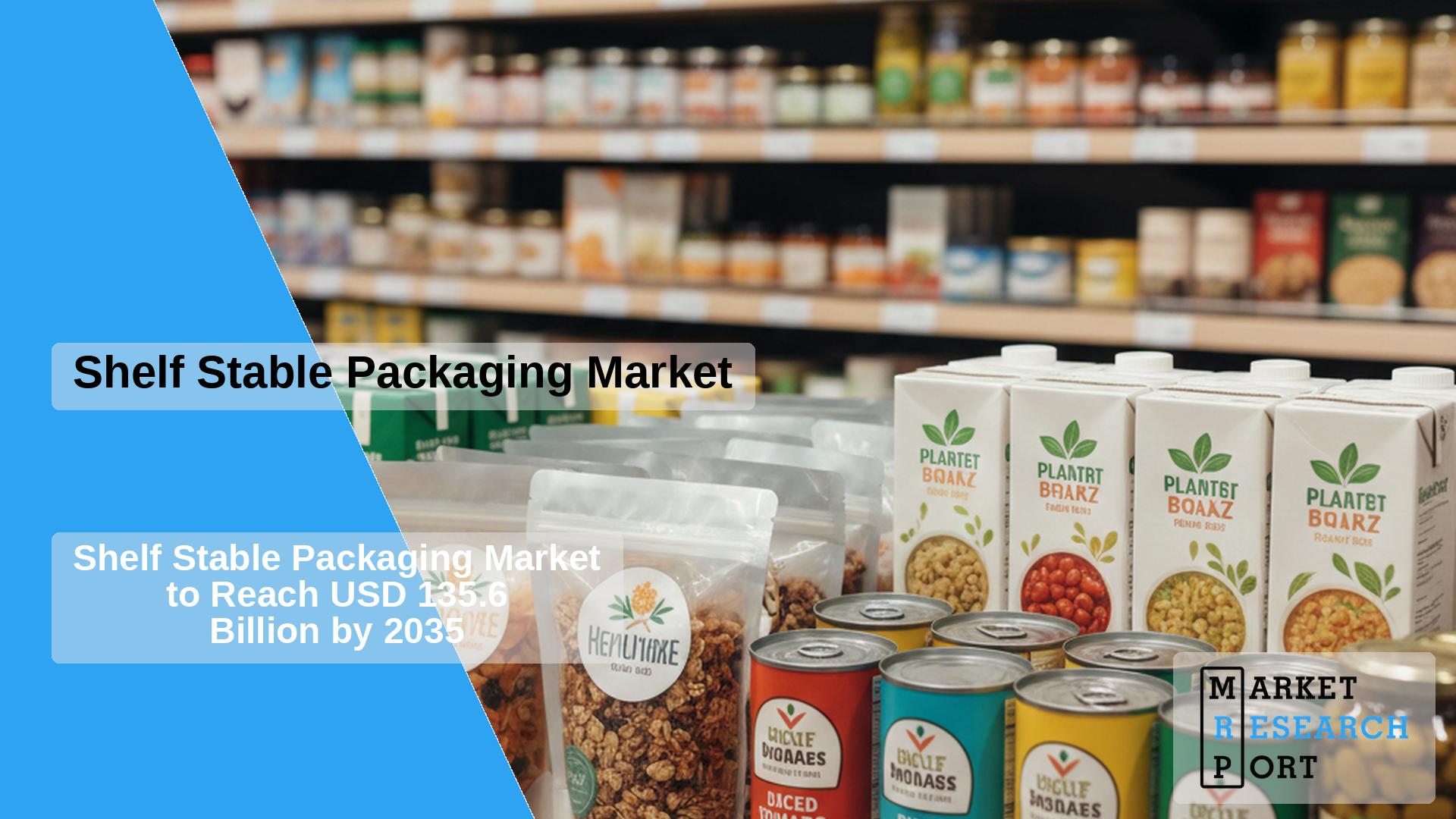
The global shelf stable packaging market is projected to reach approximately USD 135.6 billion by 2035, rising from an estimated USD 74.8 billion in 2025. The market is expected to grow at a compound annual growth rate of around 6.1% during the forecast period.
Shelf stable packaging refers to packaging solutions engineered to preserve food and beverages at ambient temperatures for extended durations without refrigeration. These solutions rely on advanced barrier materials, sterilization techniques, and sealing technologies that inhibit microbial activity and oxidation.
The market plays a critical role in enabling efficient food distribution, particularly in regions with limited cold-chain infrastructure. Shelf stable formats support long-distance transportation, reduce food waste, and improve accessibility to processed and ready-to-consume food products.
Growth in the shelf stable packaging market is primarily driven by rising consumption of ready-to-eat and convenience foods across urban populations. Changing lifestyles, increased workforce participation, and demand for time-saving meal solutions continue to accelerate adoption.
Technological advancements in aseptic processing, retort packaging, and high-barrier flexible materials have significantly enhanced shelf life while reducing material usage. These innovations allow manufacturers to optimize costs and improve sustainability performance.
Flexible packaging continues to lead demand due to its lightweight nature, material efficiency, and ability to provide strong barrier protection. Features such as resealability, portability, and ease of storage make flexible formats highly attractive for modern consumers.
Plastic remains the most widely used material due to its versatility, durability, and cost efficiency. However, metal, glass, and paper-based solutions maintain relevance in applications requiring superior protection, premium positioning, or recyclability.
Metal cans continue to be widely trusted for long-term food preservation due to their complete protection against light, oxygen, and physical damage. Their compatibility with retort sterilization ensures safety for extended ambient storage.
Aseptic packaging technology dominates the technological landscape by enabling shelf-stable storage of liquids and sensitive foods without preservatives. Retort and hot-fill technologies also remain essential for specific product categories such as ready meals, sauces, and acidic foods.
Prepared and ready-to-eat foods represent the largest end-use segment, supported by rising demand for convenience-focused meal solutions. Sauces, condiments, juices, and processed fruits and vegetables also rely heavily on shelf stable packaging to support global distribution.
Protein-based applications, including meat, poultry, and seafood, increasingly adopt advanced retort packaging to meet safety regulations while offering long shelf life for emergency food, travel, and institutional use.
Asia Pacific remains the largest regional market due to its high population density, expanding urbanization, and limited cold-chain infrastructure in several countries. The region benefits from strong demand for affordable and long-lasting food products.
North America and Europe represent mature markets with consistent demand driven by convenience lifestyles and stringent food safety standards. Sustainability-focused packaging innovations are particularly prominent in these regions.
Latin America, the Middle East, and Africa are emerging markets where shelf stable packaging adoption is increasing due to infrastructure constraints, tourism growth, and government initiatives aimed at improving food security.
The shelf stable packaging market is moderately fragmented, with global packaging leaders and regional manufacturers competing on material innovation, barrier performance, sustainability, and production scalability. Strategic investments focus on lightweight packaging, recyclable structures, and advanced sterilization technologies.
In 2025, several packaging manufacturers expanded investments in recyclable and mono-material shelf stable packaging solutions to meet sustainability targets. Aseptic carton innovations focused on increasing renewable material content while improving barrier performance.
Food processors increased adoption of advanced retort and aseptic systems to support export-oriented production and reduce reliance on refrigerated logistics. Strategic acquisitions and partnerships aimed at strengthening material science capabilities were also observed across the industry.
Shelf stable packaging is designed to preserve food and beverages at room temperature for extended periods without refrigeration by preventing microbial growth and oxidation.
Flexible packaging, metal cans, cartons, bottles, and pouches are widely used depending on product type, shelf-life requirements, and distribution needs.
It enables food distribution in regions with limited cold-chain infrastructure, reduces spoilage, and improves access to packaged food products.
Technologies such as aseptic processing, retort sterilization, and hot-fill packaging enhance product safety and shelf life while maintaining quality.