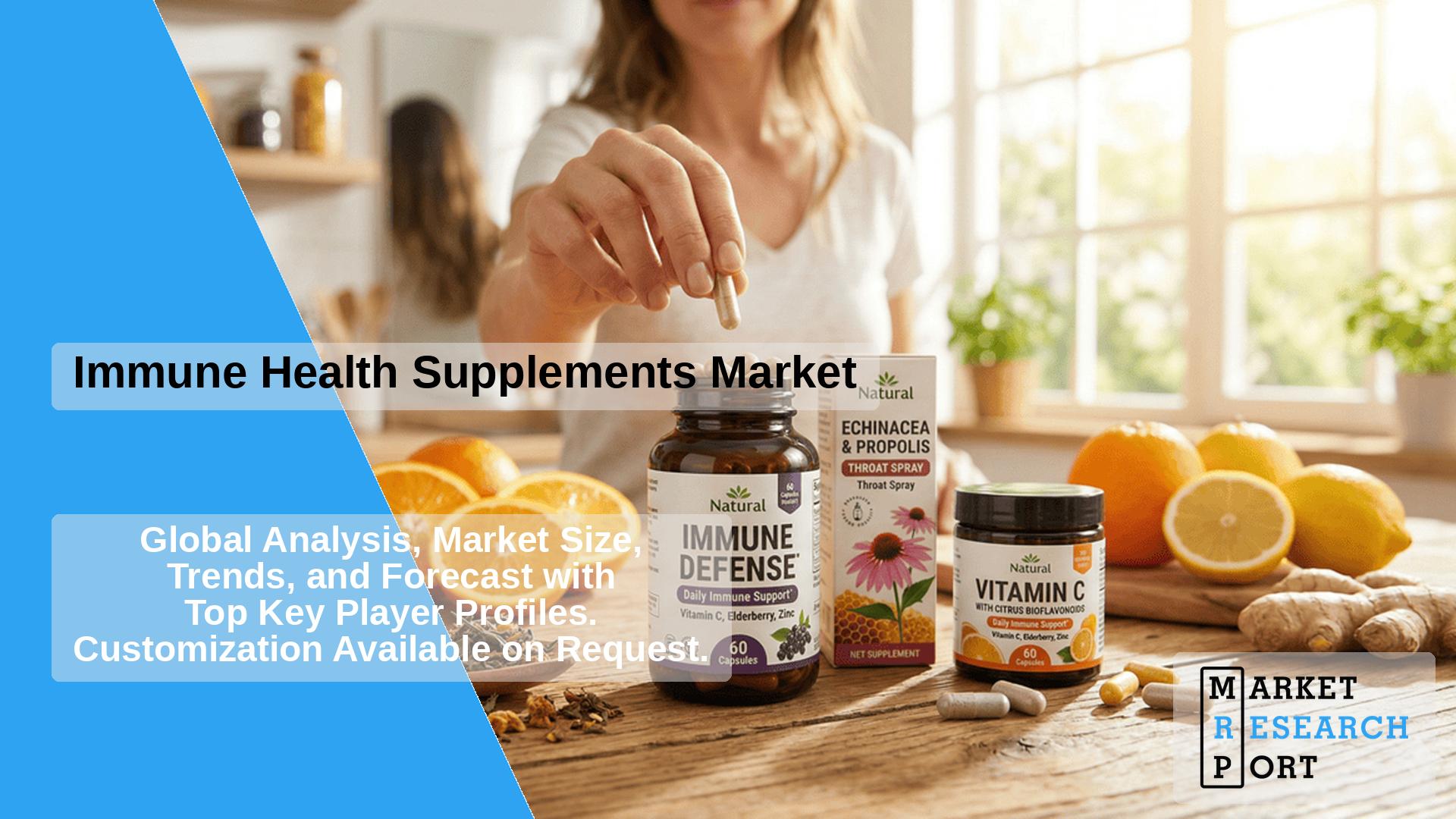
The global Immune Health Supplements Market is entering a phase of sustained, structural growth as the base year 2026 approaches. Following the paradigm shift in consumer behavior observed in the early 2020s, the market has transitioned from a reactive, crisis-driven sector to a proactive, lifestyle-integrated industry. The forecast period of 2026 to 2035 is expected to witness a Compound Annual Growth Rate (CAGR) of approximately 7.4%, driven by advancements in personalized nutrition, biotechnology, and an aging global population. By 2035, the market is projected to reach unprecedented valuations, supported by a diverse array of delivery formats including gummies, powders, and sophisticated liquid formulations. This executive summary highlights the convergence of preventative healthcare and digital commerce, which serves as the primary engine for market expansion. Key stakeholders are increasingly focusing on clean-label ingredients and scientifically validated efficacy to capture a more discerning consumer base. The transition toward holistic wellness, where immunity is viewed as a pillar of overall health rather than a seasonal concern, remains the dominant theme for the next decade.
The Immune Health Supplements Market encompasses a wide range of products designed to enhance the body’s natural defense mechanisms. These products typically contain vitamins, minerals, herbal extracts, probiotics, and amino acids. In the context of this report, immunity supplements are defined as dietary additions that provide concentrated sources of nutrients or other substances with a nutritional or physiological effect. The market is categorized by ingredient type, form, distribution channel, and end-user. As we look toward the 2026-2035 horizon, the definition of ‘immunity’ is expanding to include gut health (the microbiome-immune axis) and stress management (the cortisol-immune link). This broadening definition is crucial for understanding the market’s trajectory. Below is a summary of the core market metrics for the forecast period.
| Metric | Details |
|---|---|
| Base Year | 2026 |
| Forecast Period | 2026 – 2035 |
| Estimated Market Value (2026) | USD 24.8 Billion |
| Projected Market Value (2035) | USD 46.2 Billion |
| Projected CAGR | 7.4% |
| Dominant Segment | Vitamins & Minerals |
| Fastest Growing Segment | Probiotics & Herbal Extracts |
The market’s evolution is also characterized by the rise of nutraceuticals, which blur the line between food and medicine. Regulatory bodies such as the FDA in the United States and the EFSA in Europe continue to refine the standards for health claims, which in turn influences product development and marketing strategies. The introduction of AI-driven formulation is another defining characteristic of the 2026 landscape, allowing brands to tailor supplement profiles to specific genetic markers or lifestyle data.
The dynamics of the Immune Health Supplements Market are shaped by a complex interplay of macroeconomic trends and micro-level consumer shifts. Macro Factors: One of the primary drivers is the global demographic shift toward an aging population. By 2035, a significant portion of the population in developed and emerging economies will be over the age of 60, a demographic naturally more focused on immune support. Furthermore, rising healthcare costs globally are incentivizing consumers to invest in preventative health measures. On the economic front, the growth of the middle class in the Asia-Pacific region is creating a massive new consumer base with the disposable income to spend on premium health products. Micro Factors: At the micro level, the ‘clean label’ movement is no longer a niche preference but a market standard. Consumers are scrutinizing ingredient lists for synthetic fillers, allergens, and GMOs. The transparency of the supply chain—from raw material sourcing to manufacturing—has become a key competitive differentiator. Drivers: The integration of immunity supplements into daily routines, the rise of e-commerce, and the increasing scientific backing for ingredients like Vitamin D3, Zinc, and Elderberry are major growth drivers. Restraints: However, the market faces challenges such as the potential for regulatory crackdowns on unsubstantiated health claims and the volatility of raw material prices due to climate change affecting herbal harvests. Opportunities: The 2026-2035 period presents significant opportunities in personalized supplementation. Subscription-based models that use blood tests or DNA kits to provide custom immune-support packs are expected to see high adoption rates. Additionally, the ‘veganization’ of supplements, such as algae-based Vitamin D, offers a pathway to capture the growing plant-based market segment.
The Immune Health Supplements Market is highly fragmented, with segmentation providing a clear view of where value is concentrated and where growth is accelerating. By Ingredient Type:
By Form:
By Distribution Channel:
By End-User:
The regional distribution of the Immune Health Supplements Market reveals distinct maturity levels and growth trajectories. North America: Currently the largest market, North America is characterized by high consumer awareness and a robust retail infrastructure. The United States leads the region, with a strong emphasis on innovative delivery formats and premium herbal blends. The market here is expected to maintain a steady growth rate, supported by a well-established regulatory framework. Europe: The European market is heavily influenced by strict EFSA regulations regarding health claims. Germany, the UK, and France are the key players. There is a strong trend toward organic and sustainable sourcing in this region. The ‘green’ consumer movement is a significant factor in product development. Asia-Pacific: This region is projected to be the fastest-growing market through 2035. Driven by China, India, and Japan, the growth is fueled by a combination of traditional medicine (TCM and Ayurveda) and modern nutraceutical science. The rising middle class and increasing urbanization are key catalysts. LAMEA: Latin America, the Middle East, and Africa represent emerging frontiers. While currently holding a smaller market share, the increasing penetration of global brands and improving healthcare infrastructure in countries like Brazil and the UAE suggest significant long-term potential. Regional players are often focusing on affordable, single-ingredient supplements to build market presence before moving into complex formulations.
The Immune Health Supplements Market is characterized by intense competition among global conglomerates and specialized niche players. Strategic maneuvers such as Mergers and Acquisitions (M&A) are common as large pharmaceutical companies seek to acquire innovative health and wellness brands. Companies are investing heavily in R&D to provide clinical evidence for their products, moving away from generic claims to specific, proprietary formulations. The competitive environment is also being reshaped by Direct-to-Consumer (DTC) brands that leverage social media and influencer marketing to bypass traditional retail barriers. Below is a comparison of key market participants.
| Company | Core Strength | Key Product Line |
|---|---|---|
| Bayer AG | Global reach and pharmaceutical-grade testing. | Redoxon (Vitamin C focus) |
| Nestlé Health Science | Focus on medical nutrition and probiotics. | Garden of Life (Organic/Clean Label) |
| Amway (Nutrilite) | Strong direct-selling network and plant-based sourcing. | Nutrilite Vitamin C Extended Release |
| GlaxoSmithKline (GSK) | Mass-market penetration and brand heritage. | Emergen-C |
| Herbalife Nutrition | Community-based marketing and personalized plans. | Immune Booster (Sachet format) |
As we progress toward 2035, the ‘Big Pharma’ influence is expected to grow, bringing more rigorous clinical trials to the supplement space, which will further enhance consumer trust and market valuation.
1. What is the projected growth rate of the Immune Health Supplements Market from 2026 to 2035?
The market is expected to grow at a CAGR of approximately 7.4% during this period, driven by an aging population and a shift toward preventative healthcare.
2. Which ingredient is currently dominating the market?
Vitamins and minerals remain the dominant segment, with Vitamin C and Vitamin D being the most sought-after ingredients. However, probiotics are the fastest-growing sub-segment.
3. How is the ‘Clean Label’ trend affecting the market?
Consumers are increasingly demanding transparency, leading manufacturers to remove synthetic fillers, artificial colors, and GMOs from their formulations.
4. Which region offers the most growth potential?
The Asia-Pacific region is expected to witness the highest growth rate due to rising disposable incomes and a strong cultural affinity for herbal and natural remedies.
5. Are gummies becoming more popular than traditional tablets?
Yes, gummies and other ‘pill-free’ formats are seeing significant growth, particularly among younger demographics who value convenience and taste.
6. What role does AI play in the future of immunity supplements?
AI is being used to create personalized supplement regimens based on individual health data, blood markers, and genetic profiles, which is a major trend for the 2030s.
7. How do regulations impact market entry?
Regulatory bodies like the FDA and EFSA require rigorous substantiation for health claims. Navigating these regulations is a significant barrier to entry but ensures product safety and efficacy for the consumer.