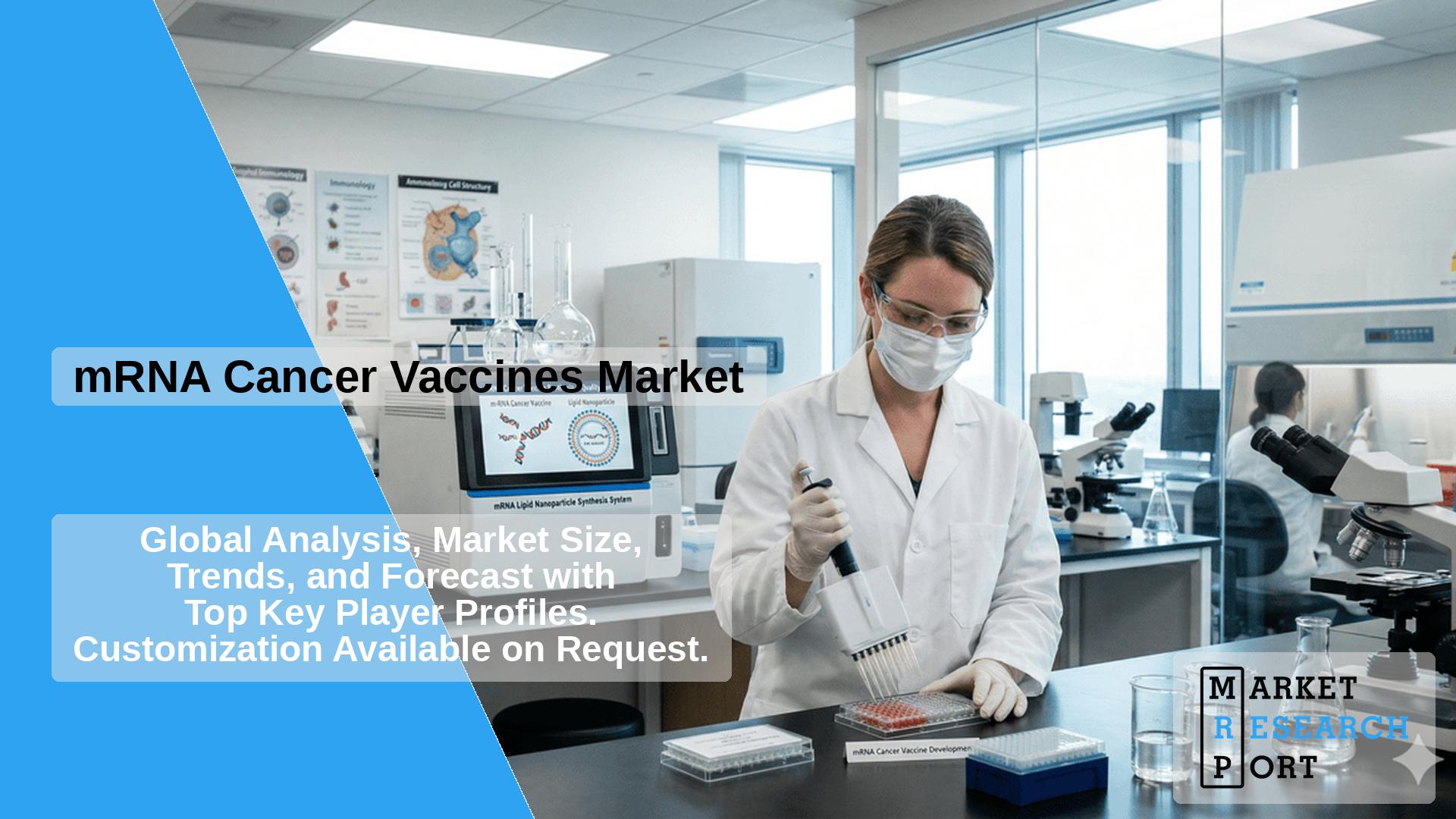
The mRNA Cancer Vaccines Market is entering a pivotal phase of commercialization and rapid expansion, projected to redefine the oncology landscape between 2026 and 2035. Following the unprecedented success of mRNA technology in the infectious disease sector, particularly during the COVID-19 pandemic, the focus has shifted toward therapeutic applications in oncology. This report provides an in-depth analysis of the market, which is expected to witness a robust Compound Annual Growth Rate (CAGR) as several late-stage clinical trials transition into commercial products. The market is driven by the increasing prevalence of various cancer types, the demand for personalized medicine, and significant advancements in Lipid Nanoparticle (LNP) delivery systems. By 2026, the market will have moved beyond the nascent stage, with the first wave of personalized neoantigen vaccines reaching the market. The forecast period 2026-2035 will be characterized by the integration of mRNA vaccines with existing checkpoint inhibitors, creating synergistic treatment modalities that improve patient outcomes in previously hard-to-treat malignancies such as metastatic melanoma and non-small cell lung cancer (NSCLC). Strategic collaborations between biotechnology pioneers and established pharmaceutical giants are expected to accelerate manufacturing capabilities and global distribution networks, ensuring that these high-cost therapies become more accessible over time.
The mRNA Cancer Vaccines Market encompasses the development, manufacturing, and commercialization of vaccines that utilize messenger RNA to instruct the patient’s own cells to produce proteins that trigger an immune response against cancer cells. Unlike traditional vaccines that introduce a weakened or inactivated pathogen, mRNA vaccines provide the genetic blueprint for tumor-associated antigens (TAAs) or tumor-specific antigens (TSAs). These vaccines are primarily therapeutic rather than prophylactic, aimed at treating existing cancers and preventing recurrence. The market is categorized into Personalized mRNA Vaccines, which are tailored to the unique mutations of an individual’s tumor, and Off-the-shelf mRNA Vaccines, which target common antigens shared across specific cancer types. The following table outlines the key market metrics for the forecast period.
| Metric | Details |
|---|---|
| Base Year | 2026 |
| Forecast Period | 2026 – 2035 |
| Market Valuation (2026) | Estimated USD 4.2 Billion |
| Projected Valuation (2035) | Estimated USD 18.5 Billion |
| CAGR (2026-2035) | Approximately 17.9% |
| Key Technology | Lipid Nanoparticles (LNP) & Synthetic mRNA |
As we look toward 2026, the definition of this market also includes the ancillary services required for genomic sequencing and bioinformatics, which are essential for the design of personalized mRNA sequences. The scalability of In Vitro Transcription (IVT) processes remains a critical technical definition within the industry, distinguishing leaders in the space who can produce high-purity mRNA at scale.
The dynamics of the mRNA Cancer Vaccines Market are influenced by a complex interplay of technological, regulatory, and economic factors. Drivers: The primary driver is the shift toward Precision Medicine. As genomic sequencing becomes more affordable, the feasibility of creating patient-specific vaccines increases. Furthermore, the Regulatory Environment has become more favorable, with agencies like the FDA and EMA providing ‘Fast Track’ and ‘Prime’ designations to promising mRNA candidates, significantly shortening the time-to-market. The high unmet clinical need in oncology, particularly for refractory cancers, provides a massive patient pool. Restraints: Despite the optimism, the market faces hurdles. The High Cost of Production for personalized therapies remains a significant barrier to widespread adoption. Additionally, the Complexity of the Tumor Microenvironment (TME) can sometimes suppress the immune response generated by the vaccine, necessitating combination therapies. Opportunities: There is a significant opportunity in the development of Multi-antigen Vaccines that target several mutations simultaneously, reducing the risk of tumor escape. Moreover, the expansion of mRNA technology into Adjuvant Settings (post-surgery) to prevent recurrence represents a massive untapped market segment. Macro Factors: Global healthcare spending is increasing, and there is a concerted effort by governments to reduce the long-term economic burden of cancer through innovative treatments. Micro Factors: At the organizational level, the ability to secure Intellectual Property (IP) regarding LNP formulations is a decisive factor for competitive advantage. The stability of mRNA molecules and the requirement for Ultra-cold Chain Logistics also play a role in the operational dynamics of market participants.
The mRNA Cancer Vaccines Market is segmented based on vaccine type, indication, and end-user. This granular approach allows for a better understanding of where the highest growth potential lies.
The mRNA Cancer Vaccines Market exhibits distinct regional characteristics driven by infrastructure and investment. North America: This region is expected to maintain the largest market share throughout the forecast period. The presence of industry leaders like Moderna and Merck, coupled with a robust clinical trial infrastructure and high healthcare expenditure, makes it the primary hub for mRNA innovation. The US FDA’s proactive stance on cell and gene therapies further bolsters this position. Europe: Europe follows closely, with BioNTech (Germany) and CureVac serving as major pillars. The European market benefits from strong government support for biotechnology and a well-integrated network of cancer research hospitals. Asia-Pacific: This is projected to be the fastest-growing region between 2026 and 2035. Countries like China and Japan are investing heavily in local mRNA manufacturing capabilities. The rising incidence of cancer in these aging populations, combined with improving healthcare access, creates a fertile ground for market expansion. LAMEA (Latin America, Middle East, and Africa): While currently holding a smaller share, this region presents long-term opportunities as infrastructure for genomic testing improves and local partnerships are established to bring mRNA therapies to emerging markets.
The competitive environment of the mRNA Cancer Vaccines Market is characterized by a mix of ‘Big Pharma’ and specialized ‘Pure-play’ biotech firms. Success in this market is determined by the strength of the clinical pipeline, the efficiency of the manufacturing platform, and the ability to form strategic alliances. Moderna, Inc. and BioNTech SE are the undisputed leaders, leveraging their massive capital reserves from COVID-19 vaccine sales to accelerate their oncology programs. Merck & Co. has emerged as a vital partner, providing the PD-1 inhibitors that are often paired with mRNA vaccines. Other notable players include CureVac N.V., which is refining its second-generation mRNA platform, and Gritstone Bio, which focuses on optimized neoantigen identification. The following table compares key players based on their strategic positioning.
| Company | Key Focus Area | Strategic Strength |
|---|---|---|
| Moderna | Personalized Neoantigen Therapy (mRNA-4157) | Massive R&D budget and established LNP platform. |
| BioNTech | FixVac (Off-the-shelf) & iNeST (Personalized) | Strong partnership with Genentech and deep immunology expertise. |
| CureVac | Optimized mRNA backbone | Focus on lower dosage and high stability. |
| Gritstone Bio | Self-amplifying mRNA (samRNA) | Technology that requires lower doses for immune activation. |
As the market matures toward 2035, we expect to see significant Mergers and Acquisitions (M&A) as larger companies look to acquire niche biotech firms with proprietary delivery technologies or unique antigen discovery algorithms.
Q1: What is the expected market size of mRNA cancer vaccines by 2035?
A: The market is projected to reach approximately USD 18.5 Billion by 2035, driven by the commercialization of several late-stage pipeline candidates.
Q2: How do mRNA cancer vaccines differ from traditional chemotherapy?
A: Unlike chemotherapy, which kills both healthy and cancerous cells, mRNA vaccines are a form of immunotherapy that trains the patient’s own immune system to specifically target and destroy cancer cells based on their unique genetic markers.
Q3: Which cancer type will see the most benefit from mRNA vaccines?
A: Currently, Melanoma and Non-Small Cell Lung Cancer (NSCLC) are seeing the most significant benefits in clinical trials, but the technology is being expanded to include pancreatic, colorectal, and breast cancers.
Q4: Are these vaccines personalized for every patient?
A: There are two types. Personalized vaccines are custom-made for each individual based on their tumor’s mutations, while off-the-shelf vaccines target common antigens shared by many patients with the same type of cancer.
Q5: What are the main challenges for the mRNA cancer vaccines market?
A: The primary challenges include the high cost of personalized manufacturing, the need for complex cold-chain logistics, and the biological challenge of overcoming the immunosuppressive nature of certain tumors.