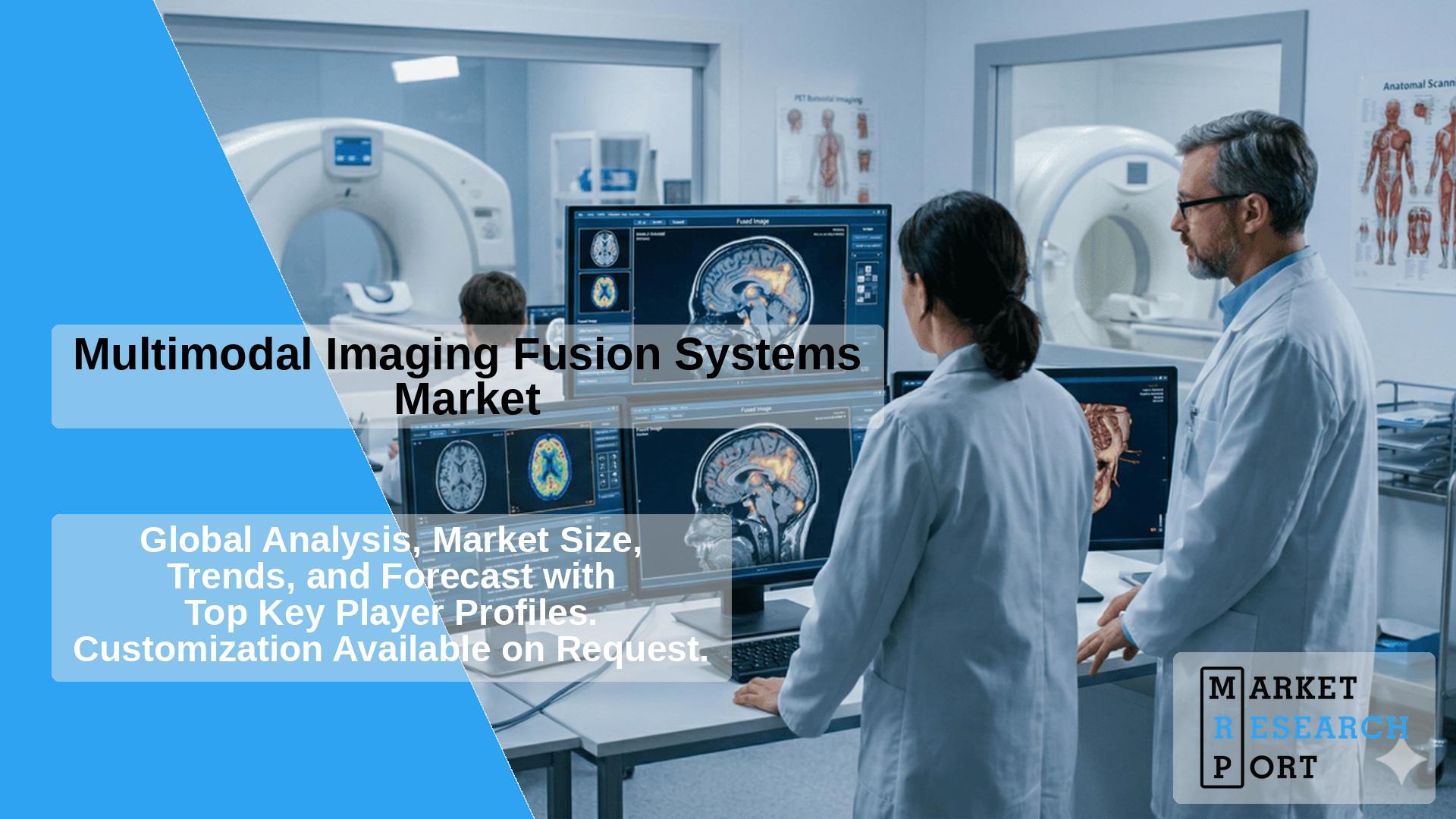
The Multimodal Imaging Fusion Systems Market is poised for a transformative decade between 2026 and 2035. As the healthcare industry shifts toward precision medicine, the integration of anatomical and functional imaging has become a cornerstone of diagnostic accuracy. Multimodal imaging fusion, which combines data from different modalities such as PET/CT, SPECT/CT, and MRI/PET, allows clinicians to visualize physiological processes within their precise anatomical context. This synergy is particularly critical in oncology, neurology, and cardiology, where early detection and accurate localization of pathologies can significantly alter patient outcomes. The market is driven by rapid advancements in artificial intelligence (AI) and machine learning algorithms that automate image registration and fusion, reducing the margin of error and clinical workflow time. Despite high capital expenditures and the need for specialized personnel, the long-term cost-effectiveness of accurate diagnosis and therapy monitoring is expected to drive adoption across both developed and emerging economies. By 2035, the market is anticipated to reach a mature state characterized by seamless interoperability and widespread use of hybrid imaging systems in routine clinical practice.
Multimodal imaging fusion refers to the process of aligning and integrating multiple images of the same anatomical region acquired from different imaging modalities. The primary goal is to provide a comprehensive view that no single modality can offer alone. For instance, Computed Tomography (CT) provides high-resolution structural detail, while Positron Emission Tomography (PET) offers metabolic insights. When fused, these datasets enable the identification of metabolic hotspots within specific organs or tissues. The market encompasses the hardware (hybrid scanners), software (fusion algorithms and workstations), and services associated with these systems.
| Metric | Details |
|---|---|
| Base Year | 2026 |
| Forecast Period | 2026-2035 |
| Market Value (2026) | Estimated USD 4.2 Billion |
| Projected Value (2035) | Estimated USD 8.5 Billion |
| CAGR (2026-2035) | Approximately 8.2% |
| Dominant Segment | PET/CT Systems |
| Fastest Growing Region | Asia-Pacific |
The dynamics of the Multimodal Imaging Fusion Systems Market are influenced by a complex interplay of technological, demographic, and economic factors.
Drivers: The foremost driver is the rising prevalence of chronic diseases, particularly cancer and neurodegenerative disorders like Alzheimer’s. As global populations age, the demand for early-stage diagnostic tools increases. Furthermore, the integration of AI-driven image processing is revolutionizing the field. AI algorithms can now perform rigid and non-rigid registration with higher precision than manual methods, accounting for patient movement and organ deformation.
Restraints: The primary barrier remains the high cost of acquisition and maintenance. A high-end MRI/PET system can cost several million dollars, limiting its availability to Tier-1 hospitals and research institutions. Additionally, the shortage of dual-trained radiologists and nuclear medicine specialists poses a challenge to optimal system utilization.
Opportunities: The emergence of theranostics—a combination of diagnostics and therapeutics—presents a massive opportunity. Multimodal imaging is essential for identifying targets for radiopharmaceutical therapy and monitoring the response in real-time. Moreover, the expansion of healthcare infrastructure in BRICS nations provides a fertile ground for market players to introduce mid-range hybrid systems tailored for high-volume diagnostic centers.
The market is segmented based on technology, application, and end-user to provide a granular view of growth opportunities.
North America: Currently leads the market, driven by a robust healthcare infrastructure, high healthcare spending, and early adoption of hybrid imaging technologies. The presence of major market players like GE Healthcare and the rapid integration of AI in clinical workflows solidify its position.
Europe: Follows closely, with strong government support for cancer research and a well-established network of nuclear medicine facilities. Countries like Germany, France, and the UK are hubs for multimodal imaging innovation.
Asia-Pacific: Expected to witness the highest CAGR during the forecast period. This is attributed to the massive investments in healthcare modernization in China and India, a growing middle class with access to advanced diagnostics, and the rising burden of chronic diseases.
LAMEA: Represents an emerging market with steady growth in Brazil and the Middle East, where medical tourism and private healthcare investments are driving the demand for state-of-the-art diagnostic equipment.
The competitive environment is characterized by intense R&D investment and strategic collaborations. Key players are focusing on developing digital detectors for PET systems to improve sensitivity and resolution while reducing scan times. The integration of cloud-based image sharing and remote diagnostic capabilities is also a major trend among top-tier vendors.
| Company | Core Strength | Recent Innovation |
|---|---|---|
| GE Healthcare | Extensive global distribution and service network. | Discovery MI PET/CT with digital silicon photomultiplier technology. |
| Siemens Healthineers | Leader in MRI/PET integration and AI-based software. | Biograph Vision Quadra for whole-body PET imaging. |
| Philips Healthcare | Focus on workflow optimization and user-centric design. | Vereos Digital PET/CT with proprietary digital photon counting. |
| Canon Medical Systems | Strong presence in high-resolution CT technology. | Cartesion Prime Digital PET/CT system. |
PET/CT provides both metabolic and anatomical information in a single session. Standalone PET lacks the structural detail needed to precisely locate metabolic abnormalities, whereas PET/CT allows for exact localization, improving diagnostic accuracy and surgical planning.
AI is significantly reducing the time required for image fusion and registration. It helps in noise reduction, image reconstruction, and automated lesion detection, which enhances the productivity of radiologists and reduces the likelihood of human error.
MRI/PET systems are significantly more expensive and technically complex to operate. Additionally, the lack of standardized reimbursement codes in many regions and the longer scan times compared to CT have slowed its initial adoption, though its use in neurology and pediatrics is growing rapidly.
It allows for ‘precision diagnostics’ where treatment is tailored to the specific metabolic and genetic profile of a patient’s disease. This is crucial for selecting the right targeted therapies and monitoring their effectiveness in real-time.
These systems require rigorous quality control, specialized cooling systems (for MRI), and regular calibration of radiation detectors. Maintenance contracts are often a significant portion of the total cost of ownership, requiring specialized biomedical engineers.