Global Online Food Delivery Market: Analysis & Recent Industry Developments
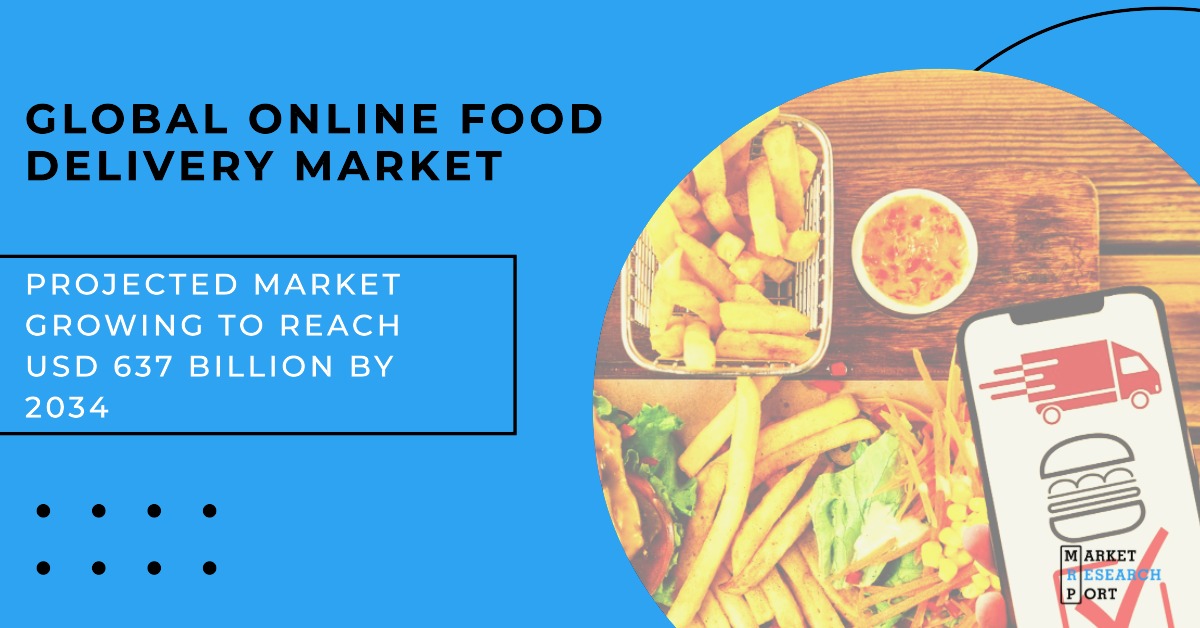
The online food delivery sector has transformed significantly over the past decade. Fueled by growing internet connectivity, widespread smartphone adoption, and shifting consumer lifestyles that value convenience and speed, this market has emerged as a cornerstone of the digital economy. As of 2025, the global online food delivery market is estimated to be worth USD 257.43 billion. Forecasts suggest it could expand to around USD 637.46 billion by 2034, representing a compound annual growth rate (CAGR) of approximately 10.6%.
Growth Catalysts and Market Trends
Several interlocking trends continue to drive the expansion of the online food delivery market globally:
- Smartphone and Internet Penetration: Mobile apps make ordering food, tracking deliveries, and payment simple and convenient — driving widespread adoption.
- Changing Lifestyles: Fast‑paced work schedules, urban commuting, and growing demand for convenience make meal delivery an attractive alternative to cooking or dining out.
- Third‑Party Delivery Platforms: Aggregators and delivery marketplaces have lowered the entry barrier for restaurants, enabling small and medium eateries to offer delivery without owning delivery infrastructure.
- Advances in Logistics & Technology: Improvements such as route optimization, real-time tracking, delivery-management software, and automation — including robotics and AI — are helping reduce delivery times and costs.
Market Segmentation
Platform Type
- Mobile Applications: Dominant globally — their convenience, saved preferences, payment integration, and intuitive UI make them the primary channel for food orders.
- Web / Desktop Platforms: Still used, especially for bulk orders or by corporate clients, but overall market share remains smaller compared to mobile apps.
Payment Methods
- Digital / Online Payments: The leading payment method, thanks to ease, speed, and security — helping build trust with customers.
- Cash on Delivery (COD): Retains relevance in regions with lower digital-payment adoption, or among customers preferring cash transactions.
Regional Insights
Asia Pacific
The Asia-Pacific region remains the largest contributor to global online food delivery revenue. In 2025, the regional market is estimated at USD 108.12 billion, with forecasts projecting a rise to about USD 267.73 billion by 2034 — a CAGR of around 10.8%. High population density, growing urbanization, rising smartphone usage, and diverse food demand all contribute to this dominance.
Other Regions
- North America & Europe: Mature markets with well-established delivery networks, high internet and payment penetration, and a taste for convenience-based services.
- Latin America, Middle East & Africa: Emerging regions showing growing potential as internet penetration rises and digital payment systems become more accessible.
Leading Players in the Market
- Uber Eats
- DoorDash
- Grubhub
- Just Eat Takeaway
- Zomato
- Deliveroo
- Grab
- Delivery Hero
- Ele.me
- Rappi
- Foodhub
- Gopuff
Recent Industry Developments (2024 – 2025)
- DoorDash acquired Deliveroo (UK / Europe) in a major consolidation deal, expanding its global presence.
- DoorDash also acquired hospitality-tech company SevenRooms to integrate restaurant reservations, guest management, and delivery services.
- Delivery automation progressed with partnerships like Serve Robotics providing robotic delivery services for major platforms.
- Uber faced regulatory challenges affecting some regional acquisition plans, reflecting the competitive and complex nature of global market expansion.
- Overall, the industry is witnessing consolidation, automation adoption, and service diversification to enhance efficiency and profitability.
Opportunities & Emerging Trends
- Further adoption of automation, AI-driven route optimization, and demand forecasting to improve delivery speed and efficiency.
- Expansion beyond restaurant food into groceries, convenience items, and quick commerce.
- Strategic consolidation: major players acquiring regional competitors or investing in technology to stay competitive.
- Integration of value-added services such as reservations, loyalty programs, dynamic pricing, and AI-driven personalization.
Challenges & Market Constraints
- High operational costs: delivery staff payments, logistics, fuel, and infrastructure investments.
- Regulatory compliance challenges in different regions can slow expansion.
- Increasing competition and market saturation may impact smaller players.
- Consumer price sensitivity could affect demand and retention.
Frequently Asked Questions
What is the current global market size for online food delivery?
Estimated at USD 257.43 billion in 2025, with expected growth to USD 637.46 billion by 2034.
What is the expected growth rate (CAGR)?
Around 10.6% from 2025 to 2034.
Which region leads the global food delivery market?
The Asia-Pacific region remains the largest contributor, driven by high population density, urbanization, and strong digital adoption.
What major industry changes occurred recently?
Key developments include the DoorDash acquisition of Deliveroo, DoorDash’s acquisition of SevenRooms, and delivery automation with robotic services.
What are future opportunities?
Automation, expansion into groceries and quick commerce, platform consolidation, and value-added services like AI personalization and reservations.