
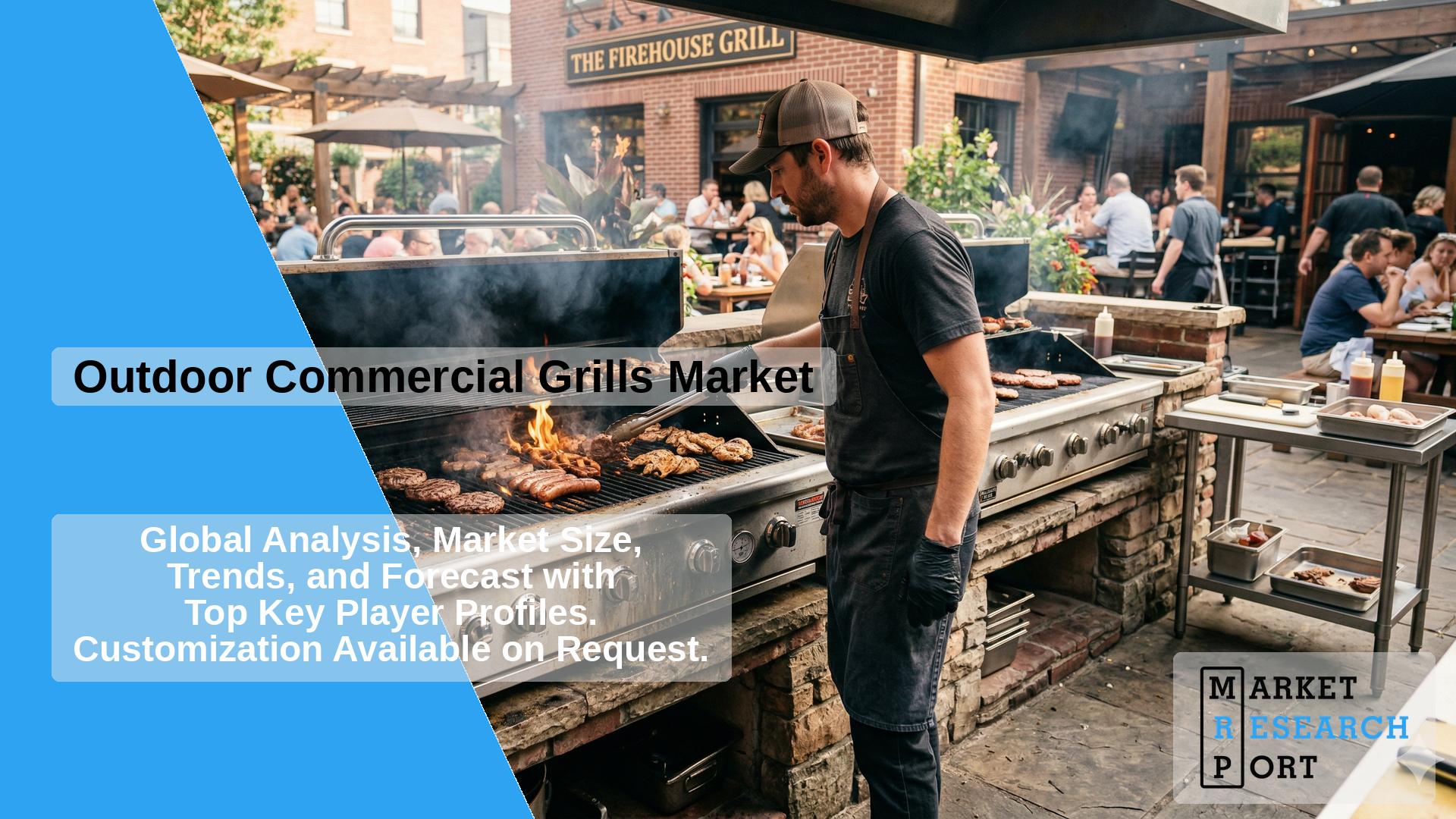
The global outdoor commercial grills market size was estimated at USD 3,150.5 million in 2026 and is projected to reach USD 5,850.0 million by 2036, growing at a CAGR of 6.4% from 2026 to 2036. The expansion of the market is primarily driven by the burgeoning hospitality sector, the rising popularity of outdoor dining experiences, and significant investments in luxury resort infrastructure. As consumers increasingly seek unique culinary experiences, commercial establishments are expanding their outdoor cooking capabilities to include high-performance grilling systems. Furthermore, the integration of advanced technology in grilling equipment, such as precision temperature controls and automated cleaning systems, is enhancing the operational efficiency of professional kitchens.
The global shift toward experiential dining has transformed the way commercial kitchens operate. Outdoor commercial grills are no longer just supplementary equipment; they are now central to the identity of many high-end eateries and resorts. The demand for durable, weather-resistant, and high-capacity grilling units is at an all-time high. Manufacturers are responding by utilizing premium materials like 304-grade stainless steel and incorporating modular designs that allow for easy customization and maintenance. Additionally, the rise of ‘staycations’ and local tourism has prompted hotels to invest heavily in poolside and rooftop grilling stations to enhance guest satisfaction and generate additional revenue streams.
However, the market does face certain hurdles, including the high initial cost of premium commercial-grade equipment and the ongoing maintenance requirements associated with outdoor exposure. Fluctuating prices of raw materials such as steel and nickel can also impact the final pricing of the products. Furthermore, strict environmental regulations regarding smoke emissions and fuel usage in certain urban areas may limit the adoption of traditional charcoal or wood-fired grills. Despite these challenges, the continuous innovation in hybrid fuel systems and smoke-reduction technologies is expected to mitigate these issues and sustain market growth over the long term.
The global outdoor commercial grills market is characterized by a moderate level of concentration, with several established players holding significant market shares while numerous regional manufacturers cater to niche segments. Leading companies like Weber-Stephen, Middleby Corporation, and Napoleon have built strong brand reputations through decades of innovation and extensive distribution networks. These major players often engage in strategic acquisitions to broaden their product portfolios and enter new geographic markets. The market is also seeing a surge in specialized manufacturers focusing on ultra-luxury or high-tech smart grills, which cater to the premium hospitality segment.
Market characteristics include a strong emphasis on product durability and multi-functionality. Commercial grills are now expected to perform a variety of tasks, from traditional searing and smoking to rotisserie cooking and even baking. This versatility allows commercial operators to streamline their equipment needs and offer a wider menu. The market is also witnessing a trend toward ‘smart’ kitchens, where grills are equipped with IoT sensors to monitor fuel levels, internal temperatures, and component health, providing real-time data to chefs and facility managers to ensure consistent food quality and safety.
The gas grills segment led the market and accounted for the largest revenue share in 2026. This dominance is attributed to the convenience and efficiency offered by natural gas and propane systems. In a fast-paced commercial environment, the ability to reach high temperatures quickly and maintain precise heat control is crucial. Gas grills also produce fewer emissions compared to charcoal, making them more suitable for urban environments with strict air quality standards. The development of infrared burner technology has further enhanced the performance of gas grills, allowing for faster searing and more even heat distribution, which is highly valued by professional chefs.
The charcoal and wood-fired segment is expected to grow at a steady pace, driven by the enduring popularity of authentic smoky flavors. Many high-end steakhouses and traditional BBQ joints prioritize the unique taste profile that only solid fuel can provide. Innovations in this segment focus on better airflow management and easier ash disposal systems to reduce the labor intensity of charcoal grilling. Additionally, the hybrid segment, which combines gas and charcoal capabilities in a single unit, is gaining traction among versatile commercial kitchens that want to offer both speed and traditional flavor without investing in two separate pieces of equipment.
The restaurants and hotels segment accounted for the largest revenue share in 2026. The post-pandemic era has seen a permanent shift in consumer preference toward outdoor seating, prompting restaurant owners to invest in high-quality outdoor cooking stations. Hotels and resorts are also integrating outdoor grills into their poolside bars and rooftop lounges to create a more social and engaging atmosphere for guests. These installations often serve as a focal point for live cooking demonstrations and events, which can significantly boost beverage and food sales. The demand for heavy-duty, high-capacity grills that can handle continuous operation during peak hours is a key driver in this segment.
The public and recreational spaces segment, including parks, community centers, and corporate campuses, is another significant area of growth. Municipalities are increasingly upgrading public parks with durable, coin-operated, or timer-controlled commercial grills to provide safe and accessible cooking facilities for families. Similarly, corporate offices are incorporating outdoor break areas with grilling stations as part of their employee wellness programs. These grills are typically designed for extreme durability and ease of cleaning, often featuring simplified controls and tamper-resistant components to withstand heavy use in unsupervised environments.
North America held the largest market share in 2026, with the United States being the primary contributor. The region’s market is supported by a robust hospitality industry and a cultural affinity for outdoor gatherings. The presence of major manufacturers and a well-developed supply chain for replacement parts and maintenance services further bolsters the market. In the U.S., the trend of ‘outdoor kitchens’ has moved beyond residential spaces into the commercial realm, with many suburban restaurants expanding their footprints to include elaborate outdoor patios equipped with professional-grade grilling suites.
The market in Germany is driven by a strong emphasis on engineering excellence and energy efficiency. German commercial operators favor high-performance grills that meet stringent safety and environmental certifications. The rise of beer gardens and seasonal outdoor festivals creates a consistent demand for mobile and high-capacity grilling solutions. Furthermore, the growing interest in premium BBQ techniques among German consumers has led to an increase in specialized grill-centric restaurants that require sophisticated equipment capable of long-duration smoking and precision roasting.
The Asia Pacific region is poised for the fastest growth through 2036. This is largely due to the rapid expansion of the middle class and the subsequent growth in the tourism and dining sectors. Countries like China and India are seeing a surge in international hotel chains and luxury resorts, all of which require high-end outdoor cooking equipment. Additionally, the street food culture in many Asian countries is evolving, with vendors increasingly adopting more professional and hygienic grilling equipment. The rise of western-style BBQ concepts in urban centers like Tokyo, Seoul, and Singapore is also contributing to the regional market momentum.
The market features a mix of global conglomerates and specialized manufacturers. These companies focus on R&D to introduce features like automated cleaning, energy-efficient burners, and integrated digital monitoring systems. The following are the leading companies in the outdoor commercial grills market:
The Middleby Corporation is a major player that has expanded its presence through the acquisition of premium brands like Lynx and Taylor. Their focus is on providing a complete outdoor kitchen solution, integrating grills with refrigeration and storage. Weber-Stephen remains a household name that has successfully transitioned its expertise into the commercial sector, offering heavy-duty versions of its iconic kettle and spirit designs. Napoleon, a Canadian company, is recognized for its innovative infrared technology and high-quality stainless steel construction, making it a favorite among coastal resorts where salt air corrosion is a concern.
| Report Attribute | Details |
| Market size value in 2026 | USD 3,150.5 million |
| Revenue forecast in 2036 | USD 5,850.0 million |
| Growth rate | CAGR of 6.4% from 2026 to 2036 |
| Base year for estimation | 2025 |
| Historical data | 2020 – 2024 |
| Forecast period | 2026 – 2036 |
| Quantitative units | Revenue in USD million and CAGR from 2026 to 2036 |
| Report coverage | Revenue forecast, competitive landscape, growth factors, and trends |
| Segments covered | Product, Application, Region |
| Regional scope | North America; Europe; Asia Pacific; Latin America; Middle East & Africa |
| Country scope | U.S.; Canada; Mexico; Germany; UK; France; Italy; Spain; China; India; Japan; South Korea; Brazil; Argentina; Saudi Arabia; South Africa |
Product Outlook (Revenue, USD Million, 2026 – 2036)
Application Outlook (Revenue, USD Million, 2026 – 2036)
Region Outlook (Revenue, USD Million, 2026 – 2036)
1. What is the projected market size of the outdoor commercial grills market by 2036?
The market is expected to reach approximately USD 5,850.0 million by 2036, driven by the expansion of the global hospitality and tourism sectors.
2. What is the expected growth rate (CAGR) for the market?
The market is projected to grow at a compound annual growth rate (CAGR) of 6.4% from 2026 to 2036.
3. Which product segment holds the largest share?
Gas-powered commercial grills currently hold the largest share due to their operational efficiency, precise temperature control, and ease of integration into existing commercial gas lines.
4. Which region is expected to grow the fastest?
The Asia Pacific region is anticipated to experience the fastest growth, fueled by rapid urbanization and the proliferation of luxury hotels and western-style dining concepts.
5. What are the primary drivers for the outdoor commercial grills market?
Key drivers include the rising popularity of outdoor dining, the growth of the ‘experience economy’ in hospitality, and technological advancements in grilling efficiency and automation.
6. Who are the leading players in the market?
Major players include Weber-Stephen, The Middleby Corporation, Napoleon, Traeger, and RH Peterson Co., among others listed in our comprehensive report.
7. How is technology impacting the commercial grill market?
Technology is introducing IoT connectivity for remote monitoring, AI for fuel optimization, and advanced infrared burners for superior cooking performance and energy savings.
8. What are the main challenges facing the market?
Challenges include high initial capital expenditure, strict environmental regulations regarding smoke in urban areas, and the volatility of raw material prices like stainless steel.
9. Are electric grills gaining popularity in the commercial sector?
Yes, electric grills are seeing increased adoption in urban environments and indoor-outdoor transition spaces where gas lines are unavailable or smoke regulations are extremely strict.