
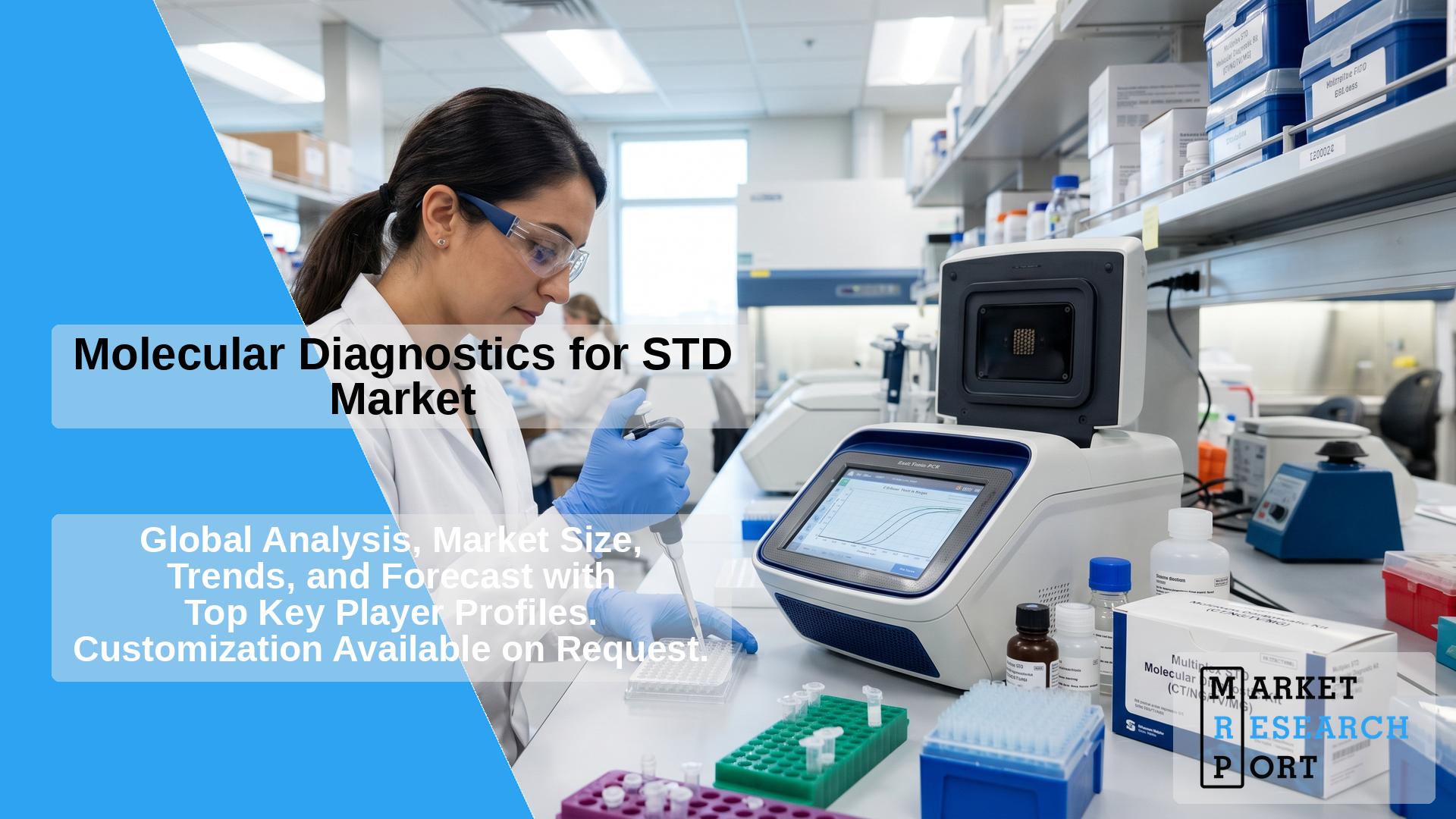
The global molecular diagnostics for STD market size was estimated at USD 2,624.3 million in 2025 and is projected to reach USD 6,500.0 million by 2036, growing at a CAGR of 8.6% from 2026 to 2036. The market’s expansion is primarily driven by the escalating prevalence of sexually transmitted infections (STIs) globally, the transition from traditional culture-based methods to highly sensitive molecular assays, and the increasing integration of point-of-care (POC) testing in clinical workflows.
The global landscape for sexually transmitted disease diagnostics is undergoing a radical transformation. Molecular diagnostics, which involve the detection of specific nucleic acid sequences (DNA or RNA) of pathogens, have largely superseded traditional methods like Gram staining and viral culture. This shift is necessitated by the need for rapid, accurate, and high-throughput testing to manage the rising global burden of infections such as Chlamydia, Gonorrhea, Syphilis, and Human Papillomavirus (HPV). The World Health Organization (WHO) estimates that more than 1 million STIs are acquired every day worldwide, many of which are asymptomatic, making sensitive molecular screening essential for public health intervention.
Technological innovations, particularly in the realm of Nucleic Acid Amplification Tests (NAATs), have enabled clinicians to provide results within hours rather than days. The expansion of the market is further supported by the development of automated platforms that reduce human error and labor costs. Furthermore, the COVID-19 pandemic significantly expanded the global footprint of molecular diagnostic infrastructure. Laboratories that invested in PCR machines and liquid handling robots for SARS-CoV-2 testing are now repurposing this equipment for broader infectious disease panels, including STDs, thereby lowering the entry barrier for molecular screening in various regions.
However, the market faces certain headwinds. High costs associated with molecular diagnostic instruments and reagents can limit adoption in low-resource settings. Additionally, the social stigma surrounding STDs often prevents individuals from seeking testing, particularly in conservative societies. Regulatory complexities and the requirement for highly skilled laboratory personnel to operate complex platforms like Next-Generation Sequencing (NGS) also pose challenges. Despite these hurdles, the move toward decentralized testing and the emergence of over-the-counter (OTC) molecular self-tests are expected to unlock new growth avenues, particularly in developed markets where consumer privacy and convenience are prioritized.
The global molecular diagnostics for STD market is characterized by a high degree of concentration among a few dominant players. Companies such as Roche, Hologic, Abbott, and Cepheid (Danaher) hold significant market shares due to their extensive patent portfolios, established distribution networks, and integrated platform-reagent ecosystems. These leaders focus on continuous innovation, often launching high-throughput systems capable of processing thousands of samples daily, which is critical for large-scale screening programs. While the top tier controls much of the centralized laboratory market, a growing number of mid-sized and specialized firms are carving out niches in the point-of-care and isothermal amplification segments.
The market is further defined by its high barriers to entry, primarily due to the stringent regulatory requirements for IVD (In Vitro Diagnostic) products. Obtaining FDA 510(k) clearance or CE-IVD marking requires extensive clinical validation, which is both time-consuming and capital-intensive. Moreover, the industry is seeing a trend of vertical integration, where diagnostic companies acquire software firms to enhance their data management and reporting capabilities. This convergence of biotechnology and digital health is creating more holistic diagnostic solutions that assist in epidemiological tracking and patient management.
The PCR segment led the market and accounted for the largest revenue share in 2025. PCR technology remains the cornerstone of molecular diagnostics due to its versatility and the availability of a vast menu of cleared assays. Real-time PCR (qPCR) is particularly favored for its ability to provide quantitative results and its compatibility with multiplexing. This allows for the simultaneous detection of pathogens like Chlamydia trachomatis, Neisseria gonorrhoeae, and Trichomonas vaginalis in a single reaction, significantly improving laboratory efficiency and reducing the time to treatment.
The Isothermal Nucleic Acid Amplification Technology (INAAT) segment is expected to grow at a significant CAGR through 2036. Unlike PCR, which requires precise thermal cycling, INAAT operates at a constant temperature, making it ideal for point-of-care and near-patient testing environments. Technologies such as Loop-mediated Isothermal Amplification (LAMP) and Transcription-Mediated Amplification (TMA) are gaining traction because they require less sophisticated equipment and can often utilize simpler sample preparation methods. This makes them highly suitable for clinics, physician offices, and community health centers in both developed and developing regions.
Next-Generation Sequencing (NGS) is an emerging segment within the STD diagnostic space. While currently more expensive and complex than PCR, NGS offers unparalleled depth of information, such as the ability to identify antibiotic resistance markers in Neisseria gonorrhoeae. As the cost of sequencing continues to decline and bioinformatics pipelines become more user-friendly, NGS is expected to play a larger role in public health surveillance and the management of multi-drug resistant STIs.
The CT/NG testing segment accounted for the largest revenue share in 2025. Chlamydia and Gonorrhea are the most frequently reported bacterial STIs globally. Because these infections are often asymptomatic but can lead to severe complications like pelvic inflammatory disease (PID) and infertility if left untreated, many countries have implemented routine screening guidelines for high-risk populations. The high volume of tests performed annually for these two pathogens ensures the segment’s continued dominance. Molecular assays for CT/NG are highly standardized and are the primary focus for most diagnostic platform manufacturers.
The Human Papillomavirus (HPV) segment is another major revenue generator. Molecular HPV testing has increasingly replaced or supplemented traditional Pap smears in cervical cancer screening programs. The shift toward primary HPV screening, where the molecular test is the first line of defense, has significantly boosted demand. High-risk HPV genotyping, which identifies specific strains like HPV 16 and 18, is critical for risk stratification and clinical decision-making. The expansion of vaccination programs and the subsequent need for post-vaccination surveillance also support this segment’s growth.
HIV molecular testing, including viral load monitoring and early infant diagnosis, remains a vital part of the market. While rapid antibody tests are common for initial screening, molecular tests (RT-PCR) are essential for confirming infections during the window period and for managing patients on antiretroviral therapy (ART). The integration of HIV testing into multi-pathogen molecular panels is a growing trend, particularly in regions with high disease prevalence like Sub-Saharan Africa.
Diagnostic laboratories dominated the market in 2025. These facilities, ranging from large commercial reference labs to hospital-based laboratories, handle the bulk of molecular STD testing. Their ability to invest in high-throughput, fully automated systems allows them to process large volumes of samples with high efficiency and low cost-per-test. The trend toward laboratory consolidation, where smaller labs are acquired by larger networks, further concentrates the market within this segment. These labs also benefit from established reimbursement pathways and strong relationships with healthcare providers.
The hospitals and clinics segment is expected to witness substantial growth, driven by the push for rapid results. In emergency departments and specialized STI clinics, the ability to diagnose and treat a patient in a single visit (the ‘test-and-treat’ model) is highly desirable to prevent the further spread of infection and ensure patient compliance. The adoption of compact, easy-to-use molecular platforms that do not require specialized laboratory infrastructure is facilitating this shift. Furthermore, the increasing number of private clinics offering specialized sexual health services is contributing to the expansion of this end-user category.
North America held the largest revenue share in 2025. The region’s dominance is a result of several factors, including high healthcare spending, a proactive approach to STI screening by organizations like the CDC, and the presence of major industry players. The U.S. market is particularly robust, with a well-defined regulatory environment and favorable reimbursement policies for molecular tests. The increasing incidence of syphilis and the rise of antibiotic-resistant gonorrhea in the U.S. have prompted intensified screening efforts, further driving the demand for advanced molecular diagnostics.
Europe is the second-largest market, characterized by strong public health systems and a high level of awareness regarding sexual health. Countries like Germany, the UK, and France have well-established screening programs for HPV and Chlamydia. The European market is also a hub for diagnostic innovation, with many companies utilizing the CE-IVD marking process to launch new products before they enter the U.S. market. The focus on cost-effectiveness and the integration of molecular diagnostics into national health insurance schemes are key features of the European landscape.
Asia Pacific is projected to be the fastest-growing region between 2026 and 2036. This growth is underpinned by the massive population base, increasing urbanization, and the rapid expansion of healthcare infrastructure in China and India. Government initiatives to control the spread of HIV and other STIs, coupled with a growing middle class that has better access to private diagnostic services, are significant drivers. Additionally, the region is becoming a manufacturing hub for diagnostic reagents and instruments, which is helping to lower costs and increase the availability of molecular testing.
The competitive environment is intense, with companies competing on the basis of assay menu, platform automation, time-to-result, and cost. Leading firms are increasingly focusing on ‘syndromic testing,’ where a single patient sample is tested for a broad range of pathogens that cause similar symptoms. This approach provides a more comprehensive clinical picture and is highly valued by healthcare providers.
The following are the leading companies in the molecular diagnostics for STD market:
| Report Attribute | Details |
| Market size value in 2026 | USD 2,850.0 million |
| Revenue forecast in 2036 | USD 6,500.0 million |
| Growth rate | CAGR of 8.6% from 2026 to 2036 |
| Base year for estimation | 2025 |
| Historical data | 2020 – 2024 |
| Forecast period | 2026 – 2036 |
| Quantitative units | Revenue in USD million and CAGR from 2026 to 2036 |
| Report coverage | Revenue forecast, competitive landscape, growth factors, and trends |
| Segments covered | Technology, Application, End-user, Region |
| Regional scope | North America; Europe; Asia Pacific; Latin America; Middle East & Africa |
| Country scope | U.S.; Canada; Mexico; Germany; UK; France; Italy; Spain; China; India; Japan; South Korea; Brazil; Argentina; Saudi Arabia; South Africa |
This report forecasts revenue growth at global, regional, and country levels and provides an analysis of the latest industry trends in each of the sub-segments from 2026 to 2036.
Technology Outlook (Revenue, USD Million, 2026 – 2036)
Application Outlook (Revenue, USD Million, 2026 – 2036)
End-user Outlook (Revenue, USD Million, 2026 – 2036)
Region Outlook (Revenue, USD Million, 2026 – 2036)
1. How big is the molecular diagnostics for STD market?
The global market size is projected to reach USD 2,850.0 million in 2026 and is expected to grow to USD 6,500.0 million by 2036.
2. What is the expected growth rate of the market?
The market is anticipated to grow at a compound annual growth rate (CAGR) of 8.6% from 2026 to 2036.
3. Which technology segment holds the largest share?
The PCR (Polymerase Chain Reaction) segment currently holds the largest share due to its high accuracy and widespread adoption in clinical laboratories.
4. What are the primary drivers for this market?
Key drivers include the rising global incidence of STIs, the shift toward automated molecular testing, and the increasing availability of point-of-care diagnostic solutions.
5. Which region is expected to grow the fastest?
Asia Pacific is expected to be the fastest-growing region due to improving healthcare infrastructure, rising awareness, and large undiagnosed patient populations.
6. What is the impact of point-of-care (POC) testing on this market?
POC testing is a major growth catalyst as it allows for rapid diagnosis and immediate treatment, which is essential for controlling the spread of infectious diseases.
7. Which application segment is the most significant?
The CT/NG (Chlamydia and Gonorrhea) segment is the largest, driven by high testing volumes and routine screening recommendations.
8. Who are the major players in the molecular diagnostics for STD market?
Leading players include Roche, Hologic, Abbott, Cepheid (Danaher), and Becton Dickinson (BD).
9. What are the main challenges facing the market?
Challenges include the high cost of molecular platforms, the requirement for skilled technicians, and the social stigma associated with STD testing.