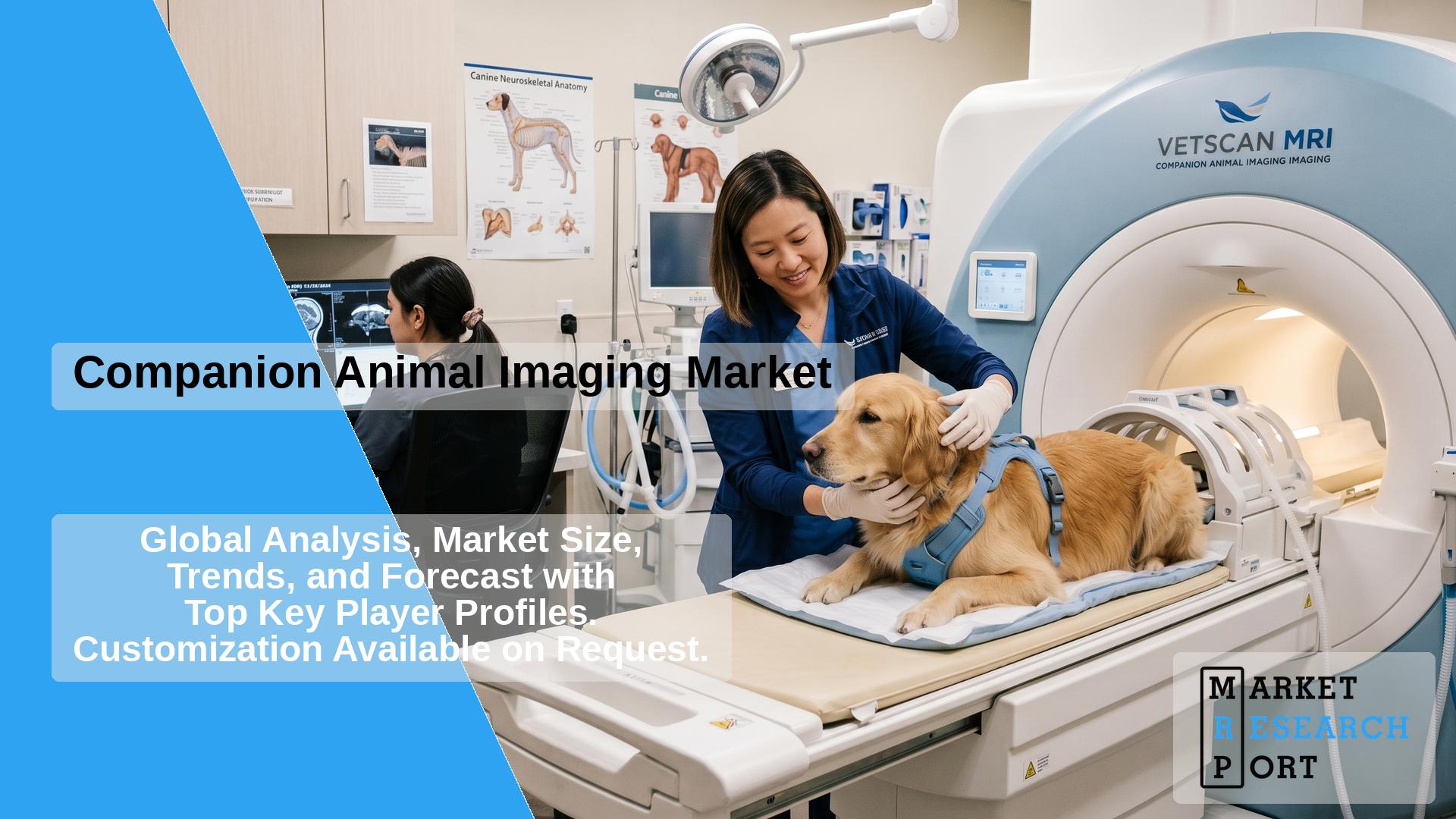
The global companion animal imaging market size was estimated at USD 2,845.2 million in 2026 and is projected to reach USD 5,340.8 million by 2036, growing at a CAGR of 6.5% from 2026 to 2036. The expansion of this sector is primarily stimulated by the increasing humanization of pets, rising prevalence of chronic conditions in domestic animals, and significant technological advancements in veterinary diagnostic equipment. As pet owners increasingly view their animals as integral family members, the willingness to invest in sophisticated medical care, including advanced imaging, has surged globally.
The companion animal imaging sector is undergoing a profound transformation as veterinary medicine aligns more closely with human healthcare standards. The transition from traditional analog systems to sophisticated digital platforms has revolutionized diagnostic workflows. High-resolution digital radiography, multi-slice computed tomography (CT), and high-field magnetic resonance imaging (MRI) are becoming standard in tertiary veterinary centers. This shift is supported by the rising incidence of age-related diseases in pets, such as cancer and degenerative joint diseases, which require precise imaging for effective management. Furthermore, the expansion of pet insurance coverage in developed economies has made expensive diagnostic procedures more accessible to a broader demographic of pet owners.
However, the market faces certain structural challenges. The high capital investment required for advanced imaging systems like MRI and CT scanners can be prohibitive for small and medium-sized veterinary practices. Additionally, there is a global shortage of specialized veterinary radiologists capable of interpreting complex imaging data, which can lead to bottlenecks in diagnostic services. The maintenance costs and the need for specialized facilities to house heavy equipment also add to the operational burden. Despite these hurdles, the market is finding balance through the rise of teleradiology services, which allow local clinics to transmit images to remote specialists for expert analysis, thereby expanding the reach of advanced diagnostics.
The future of the market looks promising with the advent of point-of-care (POC) imaging solutions. Portable ultrasound devices and handheld X-ray units are gaining traction, particularly in emergency care and equine medicine. These innovations allow for immediate assessment without the need to transport distressed animals to specialized rooms. Moreover, the development of veterinary-specific contrast agents and molecular imaging techniques is opening new frontiers in oncology and neurology. As the global pet population continues to grow, particularly in emerging economies, the demand for reliable and rapid imaging solutions is set to escalate, driving long-term market sustainability.
The companion animal imaging market is moderately consolidated, with a few prominent players holding significant market shares while numerous specialized firms compete in niche segments. Major corporations such as IDEXX Laboratories, Zoetis, and Fujifilm dominate the landscape through extensive distribution networks and comprehensive product portfolios that include hardware, software, and consumables. These leaders often engage in strategic acquisitions to integrate novel technologies, such as AI-driven diagnostic tools or cloud-based image management systems. The competitive environment is characterized by intense R&D activities aimed at reducing scan times and improving image resolution specifically for the unique anatomical requirements of different animal species.
Technological innovation is a primary driver of market dynamics. The industry is moving toward ‘smart’ imaging systems that utilize machine learning algorithms to assist veterinarians in identifying abnormalities that might be missed by the human eye. This is particularly relevant in busy clinical settings where rapid decision-making is crucial. Additionally, there is a growing emphasis on low-dose radiation technologies to ensure the safety of both the animal patients and the veterinary staff. The market is also seeing a rise in dedicated veterinary MRI systems that are designed to accommodate the smaller size of cats and dogs compared to human patients, offering better signal-to-noise ratios and more accurate diagnostic outcomes.
The X-ray segment led the market and accounted for the largest revenue share in 2026. Radiography remains the foundational diagnostic tool in veterinary medicine due to its versatility, cost-effectiveness, and speed. It is the first line of defense for diagnosing fractures, dental issues, and thoracic abnormalities. The shift from Computed Radiography (CR) to Digital Radiography (DR) has significantly boosted this segment, as DR offers immediate image availability and superior contrast. The ability to manipulate digital images reduces the need for repeat exposures, which is vital for minimizing radiation and stress for the animal. As dental health becomes a priority for pet owners, the demand for specialized veterinary dental X-ray systems is also contributing to the segment’s dominance.
The ultrasound segment is expected to grow at the fastest CAGR of 6.8% from 2026 to 2036. Ultrasound is highly valued for its non-invasive nature and its ability to provide real-time functional information about soft tissues and organs. It is indispensable in cardiology (echocardiography) and abdominal imaging. The growth is fueled by the increasing availability of high-frequency transducers that provide exceptional detail in small animal patients. Furthermore, the rise of Point-of-Care Ultrasound (POCUS) is a major catalyst, as it allows clinicians to perform quick scans in exam rooms or surgical suites. The development of color Doppler and 3D/4D imaging capabilities is further expanding the clinical utility of ultrasound in complex cases like congenital heart defects and tumor vascularization.
Computed Tomography (CT) and Magnetic Resonance Imaging (MRI) represent the high-end segments of the market. CT is increasingly used for complex surgical planning, especially in orthopedics and oncology, due to its ability to provide detailed cross-sectional views. MRI remains the gold standard for neurological assessments, including brain tumors and spinal cord injuries. While these modalities currently have lower adoption rates due to cost, the establishment of more veterinary referral centers and diagnostic hubs is expected to drive their growth. The development of ‘standing CT’ for horses is a notable innovation, allowing for the imaging of the head and neck without the risks associated with general anesthesia.
The dogs segment dominated the market in 2026, reflecting the high status of dogs as companions and the significant financial resources owners dedicate to their health. Dogs are prone to a wide range of conditions that require imaging, including hip and elbow dysplasia, cranial cruciate ligament ruptures, and various forms of cancer. The diversity in dog breeds also necessitates a wide range of imaging equipment, from systems capable of handling giant breeds to those sensitive enough for toy breeds. The increasing focus on geriatric care for dogs, as they live longer due to better nutrition and medicine, is a key driver for recurring imaging needs in managing chronic age-related ailments.
The cats segment is projected to witness robust growth through 2036. Historically, cats were less likely to receive advanced medical care compared to dogs, but this trend is reversing. The ‘cat-friendly’ clinic movement has encouraged owners to seek more frequent veterinary visits. Cats frequently require imaging for renal diseases, hypertrophic cardiomyopathy, and dental resorptive lesions. Because cats are often more stressed in clinical environments, there is a high demand for rapid imaging modalities and portable solutions that can be used with minimal restraint. The rise of indoor-only cats has also led to an increase in obesity-related health issues, further necessitating diagnostic imaging for monitoring internal health.
The horses segment occupies a specialized niche, particularly in the sports and racing industries. Equine imaging requires highly specialized, rugged, and often portable equipment. Digital radiography and ultrasound are essential for lameness exams and pre-purchase evaluations. The high value of performance horses justifies the use of advanced modalities like nuclear scintigraphy and standing MRI. Innovations in wireless technology have been particularly beneficial for equine practitioners, allowing them to capture and view high-quality images in the field or stable environment. The growth in this segment is tied to the health of the global equestrian industry and the increasing use of horses for recreational purposes.
Orthopedics is the leading application for companion animal imaging. The high frequency of fractures, joint dislocations, and degenerative bone diseases in pets makes imaging an essential part of orthopedic practice. Surgeons rely heavily on pre-operative CT scans and intra-operative fluoroscopy to ensure precise implant placement. As pet owners increasingly opt for advanced procedures like total hip replacements, the demand for high-fidelity imaging continues to rise. The ability to monitor bone healing and implant stability through regular follow-up X-rays ensures that orthopedics remains a consistent revenue generator for the imaging market.
Oncology is another rapidly growing application area. Cancer is a leading cause of death in older pets, and early detection is critical for successful treatment. Imaging plays a vital role in tumor staging, biopsy guidance, and monitoring the response to chemotherapy or radiation. Advanced modalities like MRI and CT are essential for identifying the margins of tumors before surgical excision. The integration of PET/CT in veterinary medicine, although still in its early stages, represents the future of veterinary oncology, offering metabolic insights that traditional imaging cannot provide. The emotional bond between owners and their pets often drives the pursuit of comprehensive cancer care, fueling demand in this segment.
Cardiology and neurology are also significant application fields. Echocardiography is the standard for diagnosing heart murmurs and congestive heart failure, which are common in both dogs and cats. In neurology, the rise in specialized veterinary neurologists has led to increased use of MRI for diagnosing epilepsy, intervertebral disc disease, and inflammatory brain conditions. As diagnostic capabilities improve, veterinarians are able to offer more accurate prognoses and tailored treatment plans, which in turn encourages pet owners to utilize these advanced services.
North America dominated the companion animal imaging market in 2026. The region’s leadership is underpinned by a high rate of pet ownership, a well-established veterinary healthcare infrastructure, and significant investment in animal health research. The United States, in particular, has a high density of specialty veterinary hospitals that offer advanced imaging services. The presence of major industry players and a favorable regulatory environment for new medical devices further support market growth. Additionally, the high penetration of pet insurance in the U.S. and Canada helps offset the costs of expensive imaging procedures, making them more accessible to the general public.
Europe is the second-largest market, driven by strong animal welfare laws and a long history of veterinary excellence. Countries like Germany, the UK, and France have highly sophisticated veterinary markets with a strong emphasis on diagnostic precision. The European market is also characterized by a high demand for eco-friendly and low-radiation imaging systems, reflecting broader regional trends in sustainability and safety. The presence of leading imaging companies like Esaote and Agfa-Gevaert provides a strong local base for innovation and distribution. The growth of corporate veterinary groups in Europe is also leading to the standardization of imaging equipment across multiple clinics, driving volume sales.
The Asia Pacific region is expected to grow at the fastest CAGR during the forecast period. Rapid urbanization, a growing middle class, and changing cultural attitudes toward pet ownership in countries like China, India, and South Korea are the primary drivers. In China, the pet industry is booming, with a significant increase in the number of high-end veterinary clinics in major cities. The regional market is also benefiting from the presence of local manufacturers who are producing cost-effective imaging solutions tailored to the needs of emerging markets. As veterinary education improves and pet owners become more aware of advanced diagnostic options, the demand for imaging in Asia Pacific is set to skyrocket.
This report forecasts revenue growth at a global level and provides an analysis of the latest industry trends in each of the sub-segments from 2026 to 2036. For this study, the market has been segmented based on modality, animal type, application, end-user, and region:
Modality Outlook (Revenue, USD Million, 2026 – 2036)
Animal Type Outlook (Revenue, USD Million, 2026 – 2036)
Application Outlook (Revenue, USD Million, 2026 – 2036)
End-user Outlook (Revenue, USD Million, 2026 – 2036)
Region Outlook (Revenue, USD Million, 2026 – 2036)
The global companion animal imaging market size was estimated at USD 2,845.2 million in 2026 and is expected to grow significantly over the next decade.
The market is expected to grow at a compound annual growth rate (CAGR) of 6.5% from 2026 to 2036, reaching a valuation of USD 5,340.8 million.
North America dominated the market in 2026, accounting for over 39% of global revenue, driven by high pet healthcare spending and advanced veterinary infrastructure.
Key drivers include the humanization of pets, the rising prevalence of chronic diseases in animals, technological advancements in imaging modalities, and the increasing availability of pet insurance.
X-ray (Radiography) remains the most widely used modality due to its essential role in basic diagnostics, cost-effectiveness, and widespread availability in veterinary clinics.
The dogs segment is the largest contributor to market revenue, owing to the high population of pet dogs and their susceptibility to conditions requiring imaging, such as orthopedic issues.
Prominent players include IDEXX Laboratories, Inc., Zoetis Inc., Fujifilm Holdings Corporation, Esaote SpA, and Agfa-Gevaert Group, among others.
AI is being integrated into imaging software to assist in the automated detection of abnormalities, improving diagnostic speed and accuracy for veterinarians.
The Asia Pacific region is projected to be the fastest-growing market due to rapid urbanization, increasing pet ownership, and rising disposable income in countries like China and India.
Challenges include the high cost of advanced equipment like MRI and CT scanners, the need for specialized facilities, and a global shortage of veterinary radiologists.