
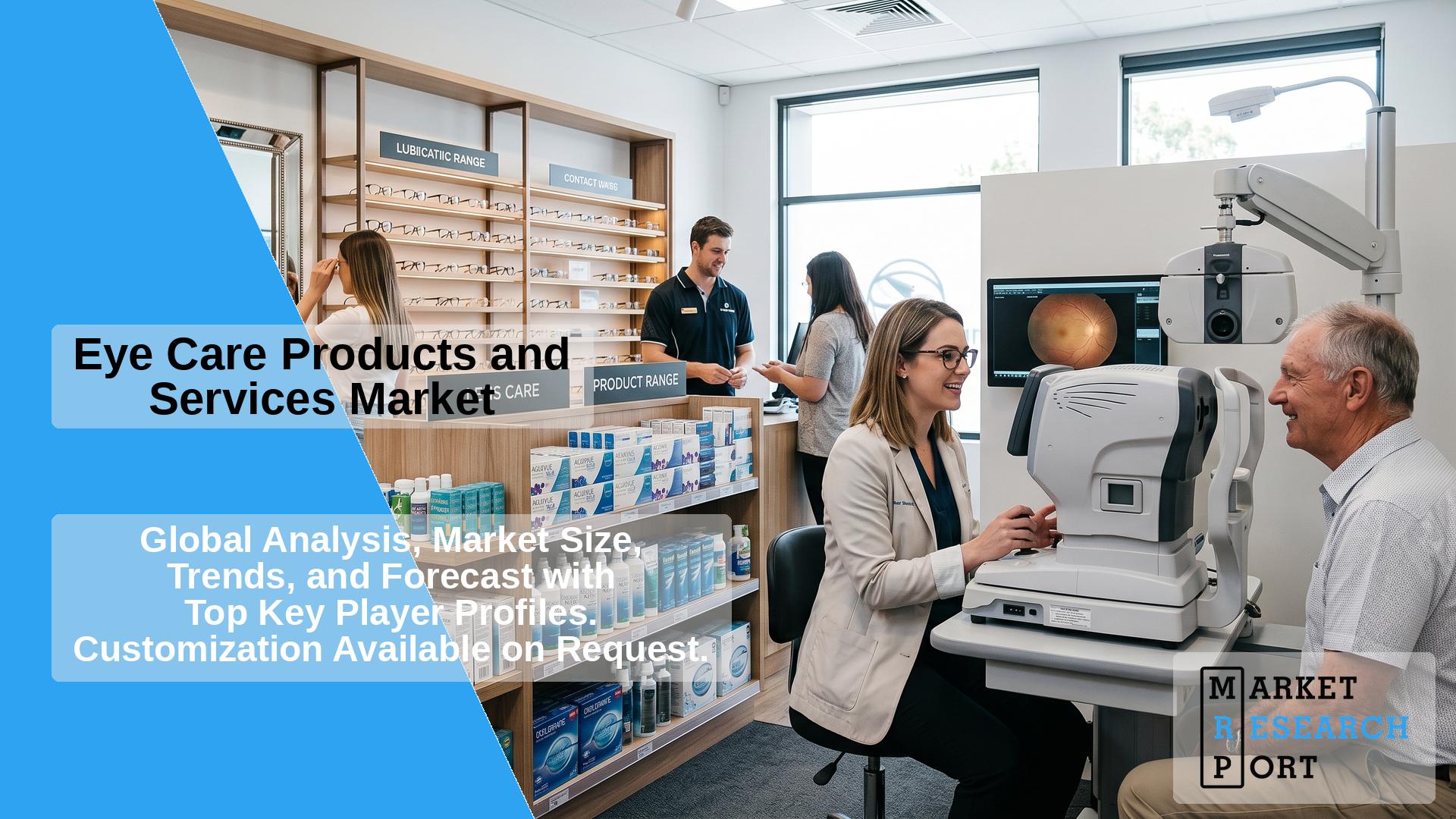
The global eye care products and services market size is estimated to be valued at USD 195.5 billion in 2026 and is projected to reach USD 315.8 billion by 2036, growing at a compound annual growth rate (CAGR) of 4.9% from 2026 to 2036. This expansion is primarily driven by the rising prevalence of vision-related disorders such as myopia, hyperopia, astigmatism, and presbyopia, alongside a growing geriatric population susceptible to age-related macular degeneration and cataracts. Additionally, the surge in digital device usage has led to a significant increase in digital eye strain, further boosting demand for protective eyewear and specialized eye care services.
The global landscape for ocular health is undergoing a transformative phase. The transition from traditional corrective methods to advanced surgical and pharmaceutical interventions is a hallmark of the current market. Environmental factors, including increased exposure to ultraviolet radiation and the pervasive nature of blue light from screens, have made eye care a daily necessity rather than a periodic concern. Furthermore, the expansion of retail optical chains and the integration of e-commerce platforms have made vision correction products more accessible to a broader demographic, particularly in emerging economies.
However, the market faces challenges related to the high cost of advanced ophthalmic surgeries and specialized diagnostic equipment. In many developing regions, the lack of skilled ophthalmologists and optometrists remains a significant barrier to the delivery of quality eye care services. Additionally, while the pharmaceutical segment is growing, the long gestation periods for clinical trials and stringent regulatory approvals for new ophthalmic drugs can delay market entry. Despite these hurdles, the continuous innovation in contact lens materials and the development of minimally invasive glaucoma surgery (MIGS) devices are providing new avenues for market expansion.
Substantial opportunities exist in the development of personalized eye care solutions. The rise of smart contact lenses capable of monitoring intraocular pressure or glucose levels represents a frontier in medical technology. Moreover, the increasing focus on pediatric eye care, specifically myopia management in children through specialized lenses and atropine drops, is a rapidly growing niche. Government initiatives aimed at eliminating avoidable blindness and the rising corporate investment in employee vision wellness programs are further reinforcing the long-term growth trajectory of the industry.
The global eye care products and services market is characterized by a mix of high consolidation in the product manufacturing sector and fragmentation in the service delivery sector. Large multinational corporations dominate the production of eyewear, contact lenses, and ophthalmic devices. These entities leverage extensive R&D budgets and global distribution networks to maintain market leadership. Conversely, the services market, comprising independent clinics, hospitals, and retail outlets, is more localized, though there is a growing trend toward the corporatization of eye care through large hospital chains and franchised optical centers.
Innovation is a primary driver of market dynamics. Companies are increasingly focusing on the sustainability of their products, introducing frames made from recycled materials and eco-friendly contact lens packaging. The market is also seeing a shift toward ‘premiumization,’ where consumers are willing to pay more for high-index lenses, anti-reflective coatings, and designer frames. In the service sector, the adoption of electronic health records (EHR) and digital imaging has streamlined patient workflows and improved diagnostic accuracy, leading to higher patient satisfaction and retention rates.
The eyewear segment, encompassing spectacles and sunglasses, accounted for the largest revenue share in 2026. This dominance is attributed to the universal need for vision correction and the dual role of eyewear as a medical necessity and a fashion accessory. The development of lightweight, durable materials such as titanium and carbon fiber has enhanced consumer comfort, while the integration of blue-light filtering technology has addressed the concerns of the digital-native population. Prescription sunglasses are also gaining traction as consumers become more aware of the long-term effects of UV exposure on eye health.
The contact lens segment is projected to grow at a significant pace through 2036. This growth is fueled by the increasing preference for daily disposable lenses, which offer superior hygiene and convenience. Technological advancements have led to the creation of silicone hydrogel lenses that allow for higher oxygen permeability, reducing the risk of corneal hypoxia. Furthermore, the expansion of the cosmetic contact lens market, particularly in the Asia Pacific region, has introduced a new consumer base interested in eye color enhancement and aesthetic modification.
Ophthalmic pharmaceuticals represent another vital segment, with a focus on treatments for dry eye syndrome, glaucoma, and retinal diseases. The rising incidence of diabetes globally has led to an increase in diabetic retinopathy cases, driving the demand for anti-VEGF injections and other advanced therapies. The shift from multi-dose bottles to preservative-free single-dose units is a notable trend, reflecting a growing emphasis on patient safety and comfort in long-term medication regimens.
Eye examinations and vision screenings form the foundation of the services market. Regular check-ups are increasingly viewed as essential for general health maintenance, leading to higher footfall in optometry clinics. The use of advanced diagnostic tools like Optical Coherence Tomography (OCT) and fundus photography has enabled the early detection of conditions that were previously difficult to diagnose in their initial stages. This proactive approach to eye health is significantly reducing the incidence of permanent vision loss.
Surgical services, particularly cataract and refractive surgeries, are major revenue generators. Cataract surgery is one of the most frequently performed medical procedures worldwide. The introduction of femtosecond laser-assisted cataract surgery (FLACS) and premium intraocular lenses (IOLs), such as multifocal and toric lenses, has improved surgical outcomes and reduced recovery times. Refractive surgeries like LASIK and PRK continue to be popular among younger demographics seeking freedom from glasses and contact lenses, with newer techniques like SMILE (Small Incision Lenticule Extraction) offering even less invasive options.
North America dominated the market in 2026, a position it is expected to maintain due to high healthcare spending and the presence of major industry players. The United States market is characterized by a strong emphasis on technological innovation and a well-established reimbursement framework for ophthalmic procedures. The high prevalence of dry eye syndrome and the rapid adoption of premium eyewear brands contribute to the region’s significant market share.
Europe follows closely, with countries like Germany, France, and the UK leading the way. The European market benefits from robust public healthcare systems that provide coverage for essential eye care services. There is also a strong cultural emphasis on preventative care, which supports the high volume of routine eye exams. The region is a hub for high-quality optical manufacturing, particularly in Italy and Germany, which are renowned for their eyewear design and lens technology.
The Asia Pacific region is set to experience the highest CAGR from 2026 to 2036. This is driven by the ‘myopia boom’ in countries like China and South Korea, where a large percentage of the student population requires vision correction. Increasing disposable income in India and Southeast Asia is allowing more individuals to access private eye care services and premium products. Furthermore, government-led initiatives to improve rural healthcare infrastructure are expanding the reach of eye care services to previously underserved populations.
The market features several prominent players who are constantly innovating to maintain their competitive edge. These companies focus on strategic partnerships, mergers, and acquisitions to expand their geographic footprint and product portfolios.
EssilorLuxottica remains a dominant force in the eyewear and lens market, utilizing its vertically integrated business model to control everything from design to retail. Johnson & Johnson Vision and Alcon are leaders in the contact lens and surgical device segments, respectively, with both companies investing heavily in next-generation IOLs and digital surgical platforms. Bausch + Lomb continues to be a household name in both consumer eye care and specialized pharmaceuticals, maintaining a broad portfolio that caters to various ocular needs.
In recent years, the industry has seen a surge in digital integration. For instance, the launch of AI-based screening platforms for diabetic retinopathy has allowed for faster and more accurate diagnosis in primary care settings. There has also been a significant move toward tele-optometry, enabling patients in remote areas to receive prescriptions through virtual consultations. In the pharmaceutical realm, the approval of new long-acting injectable therapies for wet age-related macular degeneration has reduced the treatment burden for patients, requiring fewer visits to the clinic.
Furthermore, the eyewear industry has seen a rise in 3D-printed frames, allowing for complete customization based on a patient’s facial anatomy. This not only improves comfort but also reduces waste in the manufacturing process. On the surgical side, the development of robotic-assisted ophthalmic surgery is currently in the experimental phase, promising even greater precision in delicate retinal procedures in the coming decade.
This report provides a comprehensive analysis of the market by segmenting it based on product, service, and region, with forecasts extending from 2026 to 2036.
Product Outlook (Revenue, USD Million, 2026 – 2036)
Service Outlook (Revenue, USD Million, 2026 – 2036)
Region Outlook (Revenue, USD Million, 2026 – 2036)
1. What is the projected market size of the eye care products and services industry by 2036?
The market is expected to reach approximately USD 315.8 billion by 2036, growing steadily from its 2026 valuation.
2. What is the expected CAGR for the market during the forecast period?
The market is projected to grow at a CAGR of 4.9% between 2026 and 2036.
3. Which region is expected to grow the fastest?
The Asia Pacific region is anticipated to be the fastest-growing market due to rising myopia rates and improving healthcare access.
4. What are the primary drivers of the eye care market?
Key drivers include an aging global population, increased screen time leading to eye strain, and technological advancements in surgical and diagnostic tools.
5. Who are the leading players in the eyewear segment?
Major players include EssilorLuxottica, Safilo Group, and Hoya Corporation, among others.
6. How is technology changing eye care services?
Technology is introducing AI for early diagnosis, tele-ophthalmology for remote consultations, and laser-assisted precision in surgeries.
7. What is the significance of the contact lens segment?
Contact lenses offer a convenient alternative to glasses, with daily disposables and silicone hydrogel materials driving significant market volume.
8. Are there any major challenges facing the market?
Challenges include the high cost of advanced treatments, a shortage of specialized professionals in certain regions, and strict regulatory hurdles for new drugs.
9. What role does the geriatric population play in market growth?
The elderly population is a primary consumer of eye care services due to the high prevalence of age-related conditions like cataracts and macular degeneration.
10. Is the demand for sustainable eye care products increasing?
Yes, there is a growing trend toward eco-friendly frames and sustainable packaging in the contact lens and eyewear sectors.