
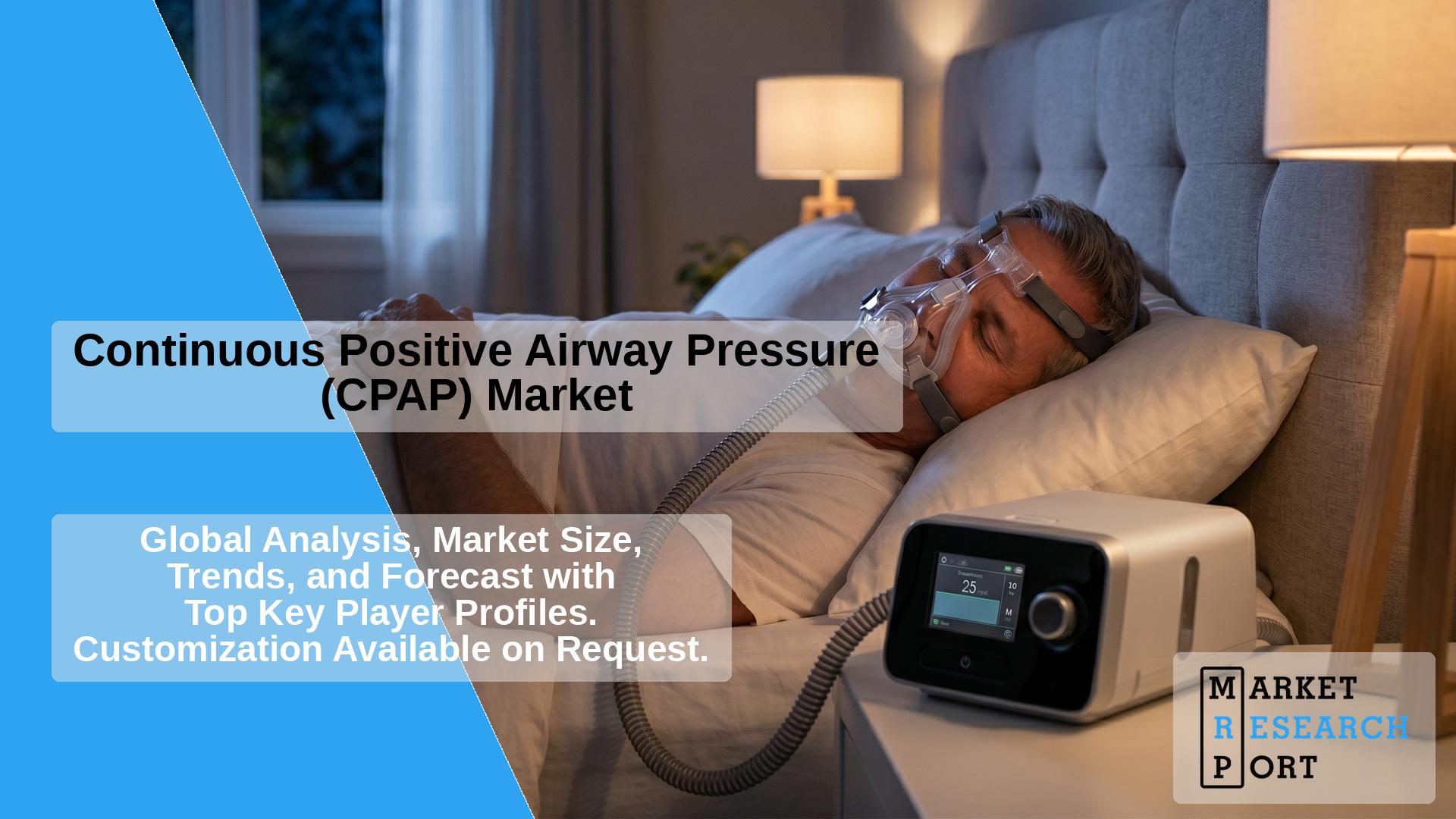
The global Continuous Positive Airway Pressure (CPAP) market is undergoing a significant transformation, driven by the rising prevalence of obstructive sleep apnea (OSA) and a growing emphasis on respiratory health. In 2026, the market value is estimated at USD 4,850.5 million. By 2036, it is projected to expand to USD 10,125.8 million, representing a compound annual growth rate (CAGR) of 7.6% over the forecast period. This growth is underpinned by technological advancements in device comfort, the integration of digital health platforms, and increasing diagnostic rates in emerging economies.
The expansion of the CPAP market is fundamentally linked to the global obesity epidemic, which remains a primary risk factor for sleep-disordered breathing. As body mass index levels rise globally, the incidence of OSA has surged, creating a sustained demand for effective therapeutic interventions. CPAP therapy remains the gold standard for treating OSA, offering a non-invasive solution that prevents airway collapse during sleep. Furthermore, the shift toward home-based sleep testing has lowered the barrier to diagnosis, allowing more patients to enter the treatment funnel. Manufacturers are responding by developing smaller, quieter, and more portable devices that cater to active lifestyles and travel needs.
Despite the positive outlook, the market faces challenges related to patient adherence and high initial costs in certain regions. Many patients find CPAP masks uncomfortable or intrusive, leading to high discontinuation rates. Additionally, the complex reimbursement landscape in various countries can limit access for lower-income populations. Supply chain disruptions and regulatory hurdles, particularly regarding material safety and device recalls, have also impacted market stability in recent years. However, the industry is overcoming these obstacles through the development of ergonomic mask designs, silent motor technologies, and enhanced humidification systems that improve the overall user experience.
Opportunities for growth are abundant in the realm of personalized medicine and artificial intelligence. AI-driven algorithms are now being used to predict patient non-compliance and suggest proactive adjustments to therapy settings. There is also a significant move toward circular economy principles, with companies exploring recyclable materials for masks and accessories. The expansion of telemedicine services has further streamlined the patient journey, from initial screening to long-term therapy management. As healthcare systems globally prioritize chronic disease management, CPAP therapy is increasingly recognized for its role in reducing the risk of associated comorbidities such as hypertension, cardiovascular disease, and type 2 diabetes.
The global CPAP market is characterized by a high degree of consolidation, with a few dominant players controlling a substantial portion of the revenue. Companies like ResMed and Philips Respironics have long-established their presence through extensive R&D and global distribution networks. However, the competitive landscape is evolving as new entrants from the Asia Pacific region introduce cost-effective alternatives. Market leaders are focusing on ecosystem-based strategies, where the device is just one part of a broader digital health platform that includes data analytics and patient engagement tools. This concentration allows for significant investment in innovation but also creates high entry barriers for smaller firms.
The market is further defined by its shift toward consumer-centric designs. Historically, CPAP machines were bulky and clinical in appearance; today, they are designed to blend into the home environment. The rise of the ‘connected patient’ has led to the inclusion of Bluetooth and Wi-Fi connectivity in almost all new device models. This allows for seamless data transfer to clinicians and provides patients with immediate feedback on their sleep quality. Regulatory standards remain stringent, with agencies like the FDA and EMA continuously updating requirements for biocompatibility and data security, ensuring that devices are both safe and effective for long-term use.
The CPAP machines segment accounted for the largest revenue share in 2026. This dominance is attributed to the essential nature of the primary unit in therapy. Within this segment, Auto-adjusting CPAP (APAP) devices are seeing the highest growth rate. Unlike traditional fixed-pressure machines, APAPs use sensors to detect changes in breathing patterns and adjust the airflow accordingly. This provides a more comfortable experience for the patient, particularly during different stages of sleep or changes in sleeping position. The development of travel-sized CPAP machines has also opened a new niche market for frequent travelers who require therapy on the go.
The masks and accessories segment is projected to grow at a rapid pace through 2036. Masks are considered consumables and require regular replacement to maintain hygiene and seal integrity. Innovations in mask technology, such as minimal-contact nasal pillows and full-face masks with magnetic clips, have significantly improved patient comfort. The accessories sub-segment, which includes heated tubing, filters, and humidifiers, also contributes a steady stream of recurring revenue. Manufacturers are increasingly focusing on hypoallergenic materials and modular designs that allow patients to customize their interface for a better fit, thereby reducing air leaks and skin irritation.
The home care settings segment led the market in 2026 and is expected to maintain its lead through 2036. The transition from hospital-based care to home-based management is a major trend in the respiratory device industry. Home care offers patients convenience and comfort, which are critical for long-term compliance with CPAP therapy. The availability of user-friendly devices and remote monitoring capabilities has made it easier for patients to manage their condition without frequent clinic visits. This shift is also supported by healthcare payers who see home-based therapy as a more cost-effective alternative to institutional care.
Sleep labs and hospitals remain vital components of the market, particularly for the initial diagnosis and titration of therapy. While home sleep testing is growing, many complex cases still require a full polysomnography (PSG) in a clinical setting. Hospitals also serve as the primary point of care for patients with acute respiratory failure or those requiring specialized ventilation. However, the role of sleep labs is evolving toward a more consultative model, where they provide oversight for home-based programs. The integration of diagnostic data with therapeutic devices is creating a more streamlined workflow for clinicians in these settings.
North America dominated the CPAP market in 2026, with the United States being the primary contributor. The region’s leadership is due to a well-established sleep medicine infrastructure, high awareness of OSA, and favorable reimbursement policies. The presence of major industry players and a strong focus on technological innovation further bolster the market. In the U.S., the increasing prevalence of lifestyle-related disorders and a proactive approach to chronic disease management continue to drive demand. The market is also seeing a rise in direct-to-consumer sales channels, allowing patients to purchase accessories and supplies more easily.
Europe follows North America in market share, with countries like Germany, the UK, and France showing robust demand. The European market is characterized by a strong emphasis on regulatory compliance and patient safety. Public healthcare systems in many European countries provide coverage for CPAP therapy, ensuring high adoption rates. Germany, in particular, has a large geriatric population and a sophisticated healthcare system that prioritizes respiratory health. The region is also a hub for R&D, with several companies focusing on sustainable and eco-friendly device components to meet stringent environmental regulations.
The Asia Pacific region is set to be the fastest-growing market between 2026 and 2036. Rapid urbanization, rising disposable incomes, and improving healthcare literacy are key drivers in countries like China and India. As these nations invest in healthcare infrastructure, the availability of sleep diagnostic services is expanding. Furthermore, the growing middle class is increasingly seeking premium healthcare solutions. Local manufacturers are also playing a significant role by providing affordable CPAP options tailored to the specific needs of the regional population. Government initiatives to address non-communicable diseases are further supporting market expansion.
Latin America and the Middle East & Africa represent emerging markets with significant untapped potential. In Latin America, Brazil and Mexico are leading the way with increasing investments in private healthcare. In the Middle East, the high prevalence of obesity and diabetes is driving a surge in OSA cases. While these regions currently face challenges such as economic volatility and limited specialized medical personnel, the long-term outlook remains positive as healthcare access improves and awareness of sleep disorders grows. Strategic partnerships between global players and local distributors are helping to bridge the gap in these regions.
The following are the leading companies in the global CPAP market. These organizations are at the forefront of innovation and market strategy.
ResMed Inc. is a global leader in the development of cloud-connected medical devices for the treatment of sleep apnea and other chronic respiratory conditions. The company’s focus on digital health has resulted in millions of connected devices worldwide, providing a wealth of data that helps improve patient outcomes. Their AirSense series is widely regarded as a benchmark for performance and quiet operation. ResMed continues to invest heavily in software solutions that engage patients and streamline the clinical workflow for providers.
Koninklijke Philips N.V., through its Philips Respironics division, has historically been a major force in the CPAP market. Despite recent challenges related to product recalls, the company remains committed to the sleep and respiratory care space. Philips focuses on integrated solutions that combine hardware with sophisticated data management tools. Their DreamStation platform is designed to encourage patient adherence through a sleek interface and personalized coaching features. The company is currently focusing on restoring market trust through enhanced quality control and next-generation device development.
Fisher & Paykel Healthcare specializes in systems for use in respiratory care and the treatment of obstructive sleep apnea. Based in New Zealand, the company is renowned for its world-leading humidification technology. Their CPAP devices and masks are designed with a focus on natural breathing and comfort. The F&P Icon and SleepStyle series incorporate advanced sensors that optimize humidity and pressure, reducing common side effects like nasal dryness. Their mask range, including the Vitera and Evora, is highly rated for its innovative seal technology and ease of use.
What is the projected size of the CPAP market by 2036?
The market is expected to reach approximately USD 10,125.8 million by 2036.
What is the estimated market value for 2026?
The market is valued at USD 4,850.5 million in 2026.
What is the expected CAGR for the CPAP market?
The market is projected to grow at a CAGR of 7.6% from 2026 to 2036.
Which region is expected to grow the fastest?
The Asia Pacific region is anticipated to experience the highest growth rate due to increasing healthcare awareness and infrastructure.
Who are the dominant players in the CPAP industry?
Key leaders include ResMed, Philips Respironics, and Fisher & Paykel Healthcare.
What are the main factors driving market growth?
Primary drivers include the rising prevalence of obesity, an aging global population, and technological advancements in device connectivity.
What is the difference between CPAP and Auto-CPAP?
A standard CPAP delivers a constant pressure, while an Auto-CPAP (APAP) adjusts the pressure automatically based on the patient’s breathing patterns.
How is AI impacting the CPAP market?
AI is being used to monitor patient data in real-time, predict non-compliance, and optimize therapy settings for better clinical outcomes.
What are the common challenges in this market?
Challenges include patient discomfort leading to low adherence, high costs in developing regions, and strict regulatory requirements.
Is home sleep testing affecting CPAP adoption?
Yes, the rise of home sleep testing has made diagnosis more accessible, leading to a higher number of patients starting CPAP therapy.