
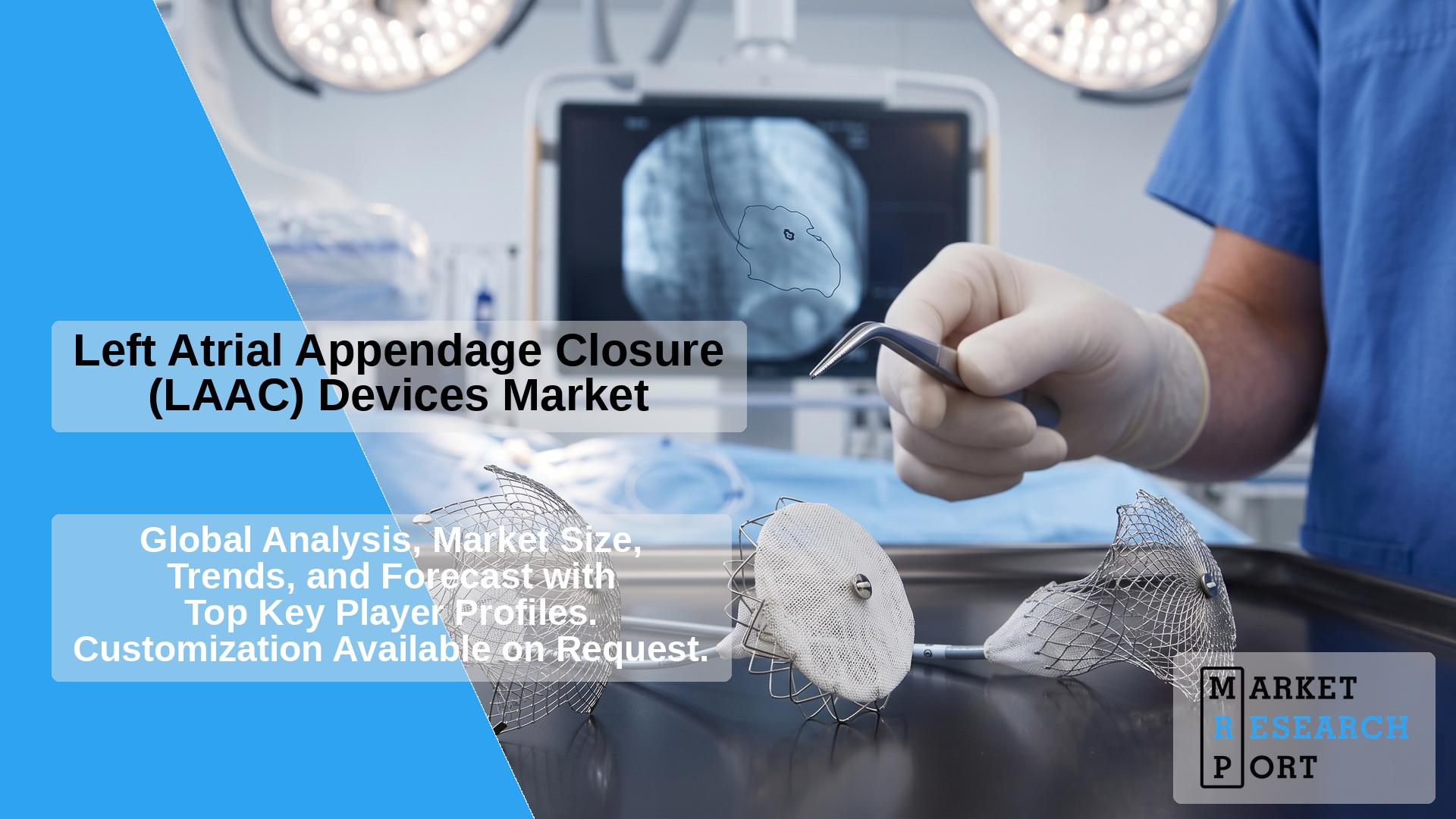
The global Left Atrial Appendage Closure (LAAC) Devices market is undergoing a period of transformative growth, driven by the increasing prevalence of atrial fibrillation and the rising demand for alternatives to long-term oral anticoagulation therapy. The global left atrial appendage closure (LAAC) devices market size was estimated at USD 1,850.5 million in 2026 and is projected to reach USD 6,720.8 million by 2036, growing at a CAGR of 13.75% from 2026 to 2036. This expansion is primarily attributed to the aging global population, improvements in minimally invasive surgical techniques, and a growing body of clinical evidence supporting the safety and efficacy of LAAC procedures in preventing strokes among patients with non-valvular atrial fibrillation.
The rising incidence of stroke associated with atrial fibrillation (AFib) is a significant public health concern, particularly as the elderly population grows. While oral anticoagulants (OACs) have long been the standard of care, many patients are ineligible for these medications due to high bleeding risks, lifestyle factors, or non-compliance. LAAC devices offer a mechanical solution by sealing off the left atrial appendage, the site where over 90% of stroke-causing thrombi form in patients with non-valvular AFib. As clinical trials continue to demonstrate that LAAC is non-inferior to modern blood thinners, physician confidence and patient acceptance are reaching new heights. Technological refinements, such as the development of next-generation devices with better sealing capabilities and lower profiles, are further expanding the eligible patient population.
However, the market faces certain hurdles, including the high cost of devices and the technical complexity of the implantation procedure. The requirement for specialized training for interventional cardiologists and electrophysiologists can limit the number of centers capable of performing these procedures, particularly in developing economies. Additionally, while the safety profile of these devices has improved significantly, risks such as pericardial effusion, device-related thrombus, and peridevice leak remain areas of focus for manufacturers and clinicians. Regulatory pathways also vary significantly across regions, which can delay the introduction of new technologies in certain markets.
Despite these challenges, the shift toward value-based healthcare and the focus on long-term cost savings are creating significant opportunities. By reducing the need for lifelong medication and preventing the catastrophic costs associated with stroke and major bleeding events, LAAC procedures are increasingly viewed as a cost-effective intervention. Innovations in pre-procedural imaging, such as 3D transesophageal echocardiography (TEE) and CT-based planning, are improving procedural success rates and reducing complications. Furthermore, the expansion of indications to include patients who are not necessarily at high risk of bleeding but prefer a one-time procedure over daily medication could significantly broaden the market scope.
The global LAAC devices market is characterized by a high degree of concentration, with a few major medical technology companies holding the majority of the market share. Boston Scientific Corporation and Abbott Laboratories are the primary leaders, having established strong footprints with their respective Watchman and Amplatzer Amulet product lines. These companies benefit from extensive clinical data, established distribution networks, and strong relationships with cardiac centers worldwide. While the market is currently dominated by these giants, several mid-sized and emerging players, particularly from Europe and Asia, are introducing innovative designs to capture niche segments or regional markets. This concentration results in intense competition focused on clinical outcomes, ease of use, and device versatility.
The market is also defined by rapid technological evolution and a heavy emphasis on research and development. Manufacturers are constantly iterating on device designs to improve anatomical fit and reduce the risk of leaks. The integration of advanced materials, such as specialized nitinol frames and biocompatible fabric covers, is a key characteristic of modern LAAC devices. Furthermore, the market is influenced by stringent regulatory oversight, where long-term clinical trial results are essential for gaining market approval and securing favorable reimbursement policies. The trend toward minimally invasive, catheter-based interventions continues to shape the industry, moving away from traditional surgical ligation methods.
The endocardial LAAC devices segment accounted for the largest revenue share in 2026. This dominance is driven by the success of percutaneous, catheter-based systems that allow for a less invasive approach compared to open-heart surgery. These devices are typically implanted via the femoral vein and advanced to the heart through a transeptal puncture. The high adoption rate is supported by shorter recovery times, reduced hospital stays, and a lower risk of procedural complications compared to surgical alternatives. Continuous improvements in delivery systems and the introduction of various sizes to accommodate diverse appendage morphologies have solidified the endocardial segment’s position as the market leader.
The epicardial LAAC devices segment is expected to grow at a steady pace through 2036. Epicardial closure involves placing a loop or clip around the outside of the left atrial appendage, often performed during other cardiac surgeries or via a standalone thoracoscopic approach. This method is particularly useful for patients who may not be candidates for endocardial devices due to anatomical constraints or those already undergoing heart surgery for other reasons. While the procedure is generally more invasive than endocardial closure, advancements in robotic-assisted surgery and specialized clipping devices are making epicardial closure more accessible and appealing to a broader range of surgeons and patients.
Hospitals dominated the market in 2026 and are expected to maintain their lead throughout the forecast period. The complexity of LAAC procedures requires a sophisticated infrastructure, including cardiac catheterization labs, advanced imaging systems, and the presence of a multidisciplinary heart team. Hospitals are also the primary centers for managing high-risk AFib patients and are better equipped to handle any potential complications that may arise during or after the procedure. The availability of comprehensive post-operative care and the ability to integrate LAAC into broader cardiovascular service lines make hospitals the preferred setting for these interventions.
Ambulatory Surgical Centers (ASCs) are projected to experience the fastest growth rate between 2026 and 2036. The shift toward outpatient care is being driven by the need to reduce healthcare costs and improve patient convenience. As LAAC procedures become more standardized and delivery systems become more user-friendly, a growing number of procedures are being performed in specialized outpatient settings. Improvements in anesthesia and the development of protocols for same-day discharge are making ASCs a viable and attractive option for lower-risk patients. This trend is further supported by changes in reimbursement policies in several developed countries that encourage the migration of certain cardiovascular procedures to the outpatient environment.
North America led the global LAAC devices market in 2026, with the United States being the primary contributor. The region’s leadership is a result of a well-established healthcare system, high awareness among both physicians and patients, and favorable reimbursement structures for LAAC procedures. The presence of major market players and a strong emphasis on clinical research have facilitated the rapid uptake of new technologies. Furthermore, the high prevalence of AFib among the aging U.S. population continues to drive demand for stroke prevention solutions that do not rely on long-term anticoagulation.
Europe represents the second-largest market, characterized by a diverse regulatory landscape and a strong emphasis on evidence-based medicine. Countries like Germany, France, and the UK have been early adopters of LAAC technology, with many centers participating in pivotal clinical trials. The European market is also home to several innovative manufacturers, contributing to a competitive environment. While reimbursement varies by country, the general trend toward supporting minimally invasive cardiac interventions has bolstered market growth across the continent. The increasing focus on reducing the burden of stroke on national health systems is a key driver in this region.
The Asia Pacific region is expected to be the fastest-growing market for LAAC devices through 2036. This growth is fueled by the rapid expansion of healthcare infrastructure in emerging economies like China and India, coupled with an increasing diagnosis rate of atrial fibrillation. As the middle-class population grows and access to advanced medical treatments improves, the demand for LAAC devices is surging. Local manufacturers in China are also entering the market with cost-effective alternatives, which is expected to increase procedure volumes. Government initiatives to modernize healthcare facilities and the rising adoption of Western medical standards are further accelerating market penetration in this region.
Latin America and the Middle East & Africa are emerging markets with significant untapped potential. In Latin America, countries like Brazil and Mexico are seeing an increase in specialized cardiac centers and a growing number of trained interventionalists. In the Middle East, high healthcare spending in Gulf Cooperation Council (GCC) countries is supporting the adoption of premium medical technologies. While these regions currently represent a smaller share of the global market, improving economic conditions and a rising focus on chronic disease management are expected to drive steady growth over the next decade.
The competitive landscape of the LAAC devices market is dominated by large-scale medical device manufacturers who leverage their extensive resources for clinical validation and global distribution. These companies focus on continuous innovation, strategic acquisitions, and expanding their indications to maintain market leadership.
| Report Attribute | Details |
| Market size value in 2026 | USD 1,850.5 million |
| Revenue forecast in 2036 | USD 6,720.8 million |
| Growth rate | CAGR of 13.75% from 2026 to 2036 |
| Base year for estimation | 2025 |
| Historical data | 2020 – 2024 |
| Forecast period | 2026 – 2036 |
| Quantitative units | Revenue in USD million and CAGR from 2026 to 2036 |
| Report coverage | Revenue forecast, competitive landscape, growth factors, and trends |
| Segments covered | Product, End-User, Region |
| Regional scope | North America; Europe; Asia Pacific; Latin America; Middle East & Africa |
| Country scope | U.S.; Canada; Mexico; Germany; UK; France; Italy; Spain; China; India; Japan; South Korea; Brazil; Argentina; Saudi Arabia; South Africa |
This report forecasts revenue growth at global, regional, and country levels and provides an analysis of the latest industry trends in each of the sub-segments from 2026 to 2036.
Product Outlook (Revenue, USD Million, 2026 – 2036)
End-User Outlook (Revenue, USD Million, 2026 – 2036)
Region Outlook (Revenue, USD Million, 2026 – 2036)
1. What is the projected market size of the LAAC devices market by 2036?
The global market is expected to reach approximately USD 6,720.8 million by 2036, driven by rising AFib prevalence and technological innovation.
2. What is the expected growth rate of the market?
The market is projected to grow at a compound annual growth rate (CAGR) of 13.75% from 2026 to 2036.
3. Why is the LAAC procedure becoming more popular?
It provides a one-time mechanical solution for stroke prevention in patients with non-valvular atrial fibrillation, serving as an alternative for those who cannot tolerate or do not wish to take long-term blood thinners.
4. Which region currently holds the largest market share?
North America dominated the market in 2026 due to its advanced healthcare infrastructure and high adoption rates of cardiac technologies.
5. Which region is expected to grow the fastest?
The Asia Pacific region is anticipated to be the fastest-growing market due to its large patient population and rapidly improving medical facilities.
6. What are the main types of LAAC devices?
The two main types are endocardial devices (implanted via a catheter inside the heart) and epicardial devices (applied to the outside of the heart).
7. Who are the leading players in this market?
Key companies include Boston Scientific, Abbott, AtriCure, Medtronic, and Lifetech Scientific, among others.
8. What are the primary end-users of these devices?
Hospitals are the leading end-users, although Ambulatory Surgical Centers are seeing rapid growth as procedures become more streamlined.
9. What are the common risks associated with LAAC device implantation?
Potential risks include pericardial effusion, device-related thrombus, peridevice leaks, and complications related to the catheterization procedure.
10. How does reimbursement impact the LAAC market?
Reimbursement is a critical factor; favorable policies in countries like the U.S. and Germany have significantly boosted procedure volumes, while lack of coverage in other regions can restrain growth.