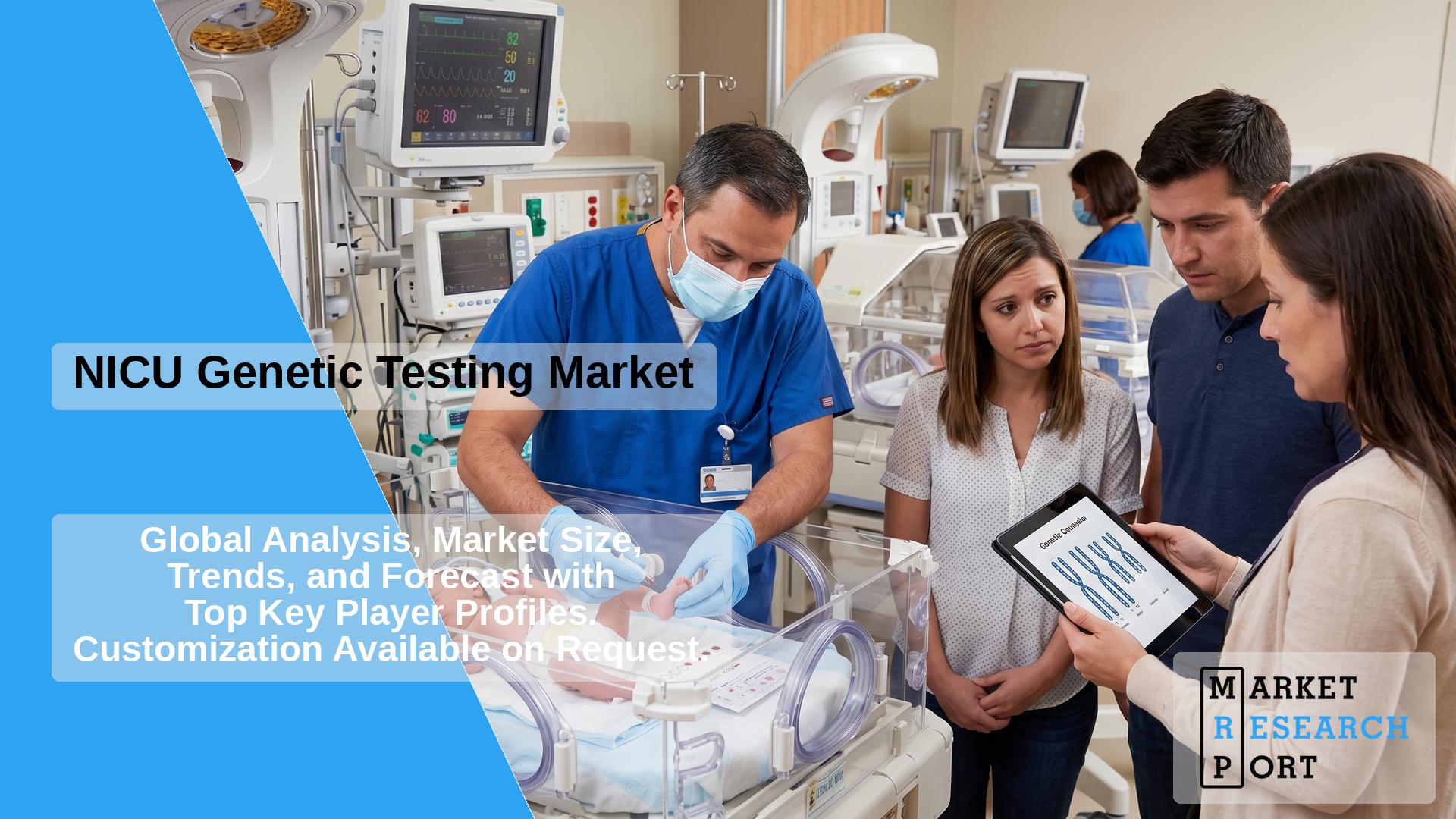
The global NICU genetic testing market size is estimated to be valued at USD 5,120.4 million in 2026 and is projected to reach USD 15,480.8 million by 2036, growing at a CAGR of 11.7% from 2026 to 2036. The expansion of this market is primarily driven by the increasing prevalence of rare genetic disorders in newborns, the rising adoption of rapid Whole Genome Sequencing (rWGS) in clinical settings, and significant improvements in healthcare infrastructure that allow for early intervention in neonatal intensive care units.
The landscape of neonatal care is undergoing a paradigm shift as genetic testing moves from a secondary investigative tool to a frontline diagnostic necessity. In the Neonatal Intensive Care Unit (NICU), where every hour counts, the ability to identify the underlying molecular cause of a child’s illness can drastically alter treatment pathways. The transition from traditional biochemical screening to advanced genomic sequencing is catalyzed by the decreasing costs of high-throughput sequencing and the increasing availability of specialized bioinformatics pipelines. Furthermore, the growing awareness among parents and healthcare providers regarding the benefits of early diagnosis in preventing long-term morbidity is fueling the demand for comprehensive genetic panels and rapid exome sequencing.
Despite the technological momentum, the market faces hurdles related to the high cost of advanced genomic tests and the complexity of interpreting variants of uncertain significance. The specialized nature of NICU genetic testing requires a multidisciplinary team, including neonatologists, geneticists, and bioinformaticians, which can be a resource-heavy requirement for smaller healthcare facilities. Additionally, ethical considerations surrounding the storage of genomic data of minors and the potential for incidental findings create a complex regulatory and social environment. However, as reimbursement policies evolve and clinical evidence continues to demonstrate the cost-effectiveness of early genetic diagnosis through reduced hospital stays, these barriers are expected to diminish.
The future of the NICU genetic testing market lies in the democratization of rapid sequencing technologies. Emerging point-of-care genetic testing devices and the expansion of centralized genomic laboratories are making these life-saving tools more accessible globally. There is a significant opportunity in the development of targeted panels for specific neonatal phenotypes, such as unexplained seizures or respiratory failure, which can provide faster answers than broad-spectrum sequencing. Moreover, the shift toward personalized neonatal medicine, where treatments are tailored based on the infant’s genetic profile, is expected to be a major growth lever for the industry over the next decade.
The global NICU genetic testing market is characterized by a high degree of innovation and a moderately consolidated competitive landscape. Key players such as Illumina, Thermo Fisher Scientific, and GeneDx dominate the market through their advanced sequencing platforms and extensive clinical databases. These industry leaders focus on strategic collaborations with hospitals and research institutions to validate the clinical utility of rapid sequencing. While the market is led by a few giants, there is a vibrant ecosystem of specialized diagnostic labs and biotech startups focusing on niche areas like mitochondrial disorders or rapid bioinformatics, contributing to a dynamic and evolving market structure.
The market is defined by a strong emphasis on turnaround time and diagnostic yield. In the NICU environment, ‘rapid’ sequencing often refers to results delivered within 24 to 72 hours. This requirement has led to the development of streamlined laboratory workflows and automated data analysis tools. Geographically, the market is influenced by regional healthcare policies and the prevalence of consanguinity in certain populations, which can increase the incidence of autosomal recessive disorders. The market is also seeing a trend toward the integration of multi-omics data, combining genomics with transcriptomics and proteomics to provide a more holistic view of the neonate’s health status.
The Whole Genome Sequencing (WGS) segment accounted for the largest revenue share in the technology category in 2025. This dominance is attributed to the comprehensive nature of WGS, which can detect single nucleotide variants, small insertions/deletions, and structural variants in a single assay. In the NICU, where infants often present with complex and overlapping symptoms, the ability of WGS to provide a ‘one-and-done’ test makes it highly attractive. The falling cost of sequencing per gigabase has made WGS more competitive against traditional methods like chromosomal microarrays and targeted gene panels.
The Whole Exome Sequencing (WES) segment is expected to grow at a significant CAGR of 12.1% during the forecast period. WES focuses on the protein-coding regions of the genome, where the majority of known disease-causing mutations reside. It is often viewed as a more cost-effective alternative to WGS while still offering a high diagnostic yield. Improvements in enrichment technologies and the expansion of clinical exome databases are enhancing the performance of WES in neonatal diagnostics. Many hospitals are adopting ‘trio-exome’ testing, where the infant and both parents are sequenced simultaneously to quickly identify de novo mutations and inheritance patterns.
The services segment led the market in 2025, driven by the high demand for outsourced diagnostic testing. Many hospitals prefer to send samples to specialized reference laboratories that possess the necessary high-end sequencing equipment and expert staff for interpretation. These service providers offer comprehensive reports that include clinical correlations and recommendations for management, which are invaluable for neonatologists who may not be experts in genetics. The rise of tele-genetics and remote counseling services is also supporting the growth of this segment.
The consumables and kits segment is projected to grow at the fastest rate as more large-scale hospitals and academic medical centers move toward in-house testing. The development of ‘plug-and-play’ sequencing kits that simplify the library preparation process is enabling hospitals to establish their own genomic medicine programs. This shift is motivated by the desire to further reduce turnaround times and maintain control over patient data. Manufacturers are responding by creating specialized neonatal testing kits that require minimal blood volumes, a critical factor when dealing with premature infants.
The metabolic disorders segment represented the largest application area in 2025. Inborn errors of metabolism often manifest acutely in the neonatal period and can lead to irreversible neurological damage or death if not treated immediately. Genetic testing allows for the precise identification of the enzyme deficiency, enabling targeted dietary interventions or enzyme replacement therapies. The expansion of newborn screening programs to include a wider range of metabolic conditions via genetic confirmation is a key driver for this segment.
The neurological disorders segment is anticipated to be the fastest-growing application through 2036. Neonatal seizures and hypotonia are common reasons for NICU admission, and a significant portion of these cases have a genetic basis. The identification of specific genetic markers for epilepsy syndromes or neuromuscular diseases can guide the selection of anti-seizure medications and provide families with accurate prognostic information. As our understanding of the genetic architecture of neonatal neurology expands, the utilization of genetic testing in this field is expected to surge.
The North America NICU genetic testing market dominated the global industry in 2025. This is largely due to the presence of advanced healthcare facilities, high healthcare expenditure, and a favorable reimbursement landscape for genomic testing. The United States, in particular, has been a pioneer in the implementation of rapid WGS programs in NICUs, supported by initiatives like the Project Baby Bear. The presence of major market players and a strong focus on personalized medicine continue to drive the regional market. Furthermore, the integration of genetic testing into standard clinical guidelines by professional bodies like the American College of Medical Genetics and Genomics (ACMG) has bolstered adoption.
The European market is characterized by strong government support for rare disease research and the presence of well-established national health systems. Countries like the UK, Germany, and France are leading the way in integrating genomics into neonatal care. The UK’s National Health Service (NHS) has implemented a national rapid exome sequencing service for critically ill babies, setting a benchmark for other nations. European regulations regarding data privacy and in vitro diagnostics (IVDR) play a significant role in shaping the market, ensuring high standards of test validity and patient protection.
The Asia Pacific region is expected to witness the fastest CAGR of 13.5% from 2026 to 2036. This growth is fueled by the massive population base, increasing disposable income, and rapid modernization of healthcare infrastructure in China and India. Governments in the region are increasingly recognizing the economic burden of rare diseases and are investing in genomic initiatives. The rise of local diagnostic giants and the increasing number of NICU beds are creating a fertile ground for market expansion. Additionally, the high rate of congenital anomalies in certain parts of Asia is driving the demand for early genetic screening and diagnosis.
The market features a mix of established biotechnology companies and specialized clinical laboratories. These organizations are focused on improving diagnostic yields and reducing the time to result. Key strategies include the development of proprietary bioinformatics platforms and the expansion of testing menus to include novel genetic markers.
Other significant participants in the market include BGI Group, Agilent Technologies, and PerkinElmer, all of whom contribute to the diversity of testing options available to clinicians.
| Report Attribute | Details |
| Market size value in 2026 | USD 5,120.4 million |
| Revenue forecast in 2036 | USD 15,480.8 million |
| Growth rate | CAGR of 11.7% from 2026 to 2036 |
| Base year for estimation | 2025 |
| Historical data | 2020 – 2024 |
| Forecast period | 2026 – 2036 |
| Quantitative units | Revenue in USD million and CAGR from 2026 to 2036 |
| Report coverage | Revenue forecast, competitive landscape, growth factors, and trends |
| Segments covered | Technology, Product & Service, Application, End-use, Region |
| Regional scope | North America; Europe; Asia Pacific; Latin America; Middle East & Africa |
| Country scope | U.S.; Canada; Mexico; Germany; UK; France; Italy; Spain; China; India; Japan; South Korea; Brazil; Saudi Arabia; South Africa |
This report forecasts revenue growth at global, regional, and country levels and provides an analysis of the latest industry trends in each of the sub-segments from 2026 to 2036.
Technology Outlook (Revenue, USD Million, 2026 – 2036)
Product & Service Outlook (Revenue, USD Million, 2026 – 2036)
Application Outlook (Revenue, USD Million, 2026 – 2036)
End-use Outlook (Revenue, USD Million, 2026 – 2036)
Region Outlook (Revenue, USD Million, 2026 – 2036)
The global NICU genetic testing market is estimated to be valued at USD 5,120.4 million in 2026 and is expected to reach USD 15,480.8 million by 2036.
The market is projected to grow at a compound annual growth rate (CAGR) of 11.7% from 2026 to 2036.
Whole Genome Sequencing (WGS) currently holds the largest market share due to its ability to provide a comprehensive diagnostic view of the neonatal genome in a single test.
Key drivers include the rising incidence of rare genetic diseases, the clinical shift toward rapid sequencing for critically ill infants, and the decreasing costs of genomic technologies.
North America is the leading region, accounting for over 42% of the market share in 2025, driven by advanced healthcare infrastructure and favorable reimbursement policies.
rWGS is used to provide a quick molecular diagnosis for infants with unexplained illnesses, often leading to immediate changes in clinical management and improved outcomes.
High costs of testing, the need for specialized personnel for data interpretation, and ethical concerns regarding genomic data are the main challenges facing the market.
Major players include Illumina, GeneDx, Thermo Fisher Scientific, Agilent Technologies, and BGI Group, among others.
AI is being used to automate the interpretation of genetic variants, significantly reducing the time required to deliver a diagnosis to clinicians in the NICU.
The neurological disorders segment is expected to grow at the fastest rate as genetic testing becomes a standard part of the workup for neonatal seizures and developmental delays.