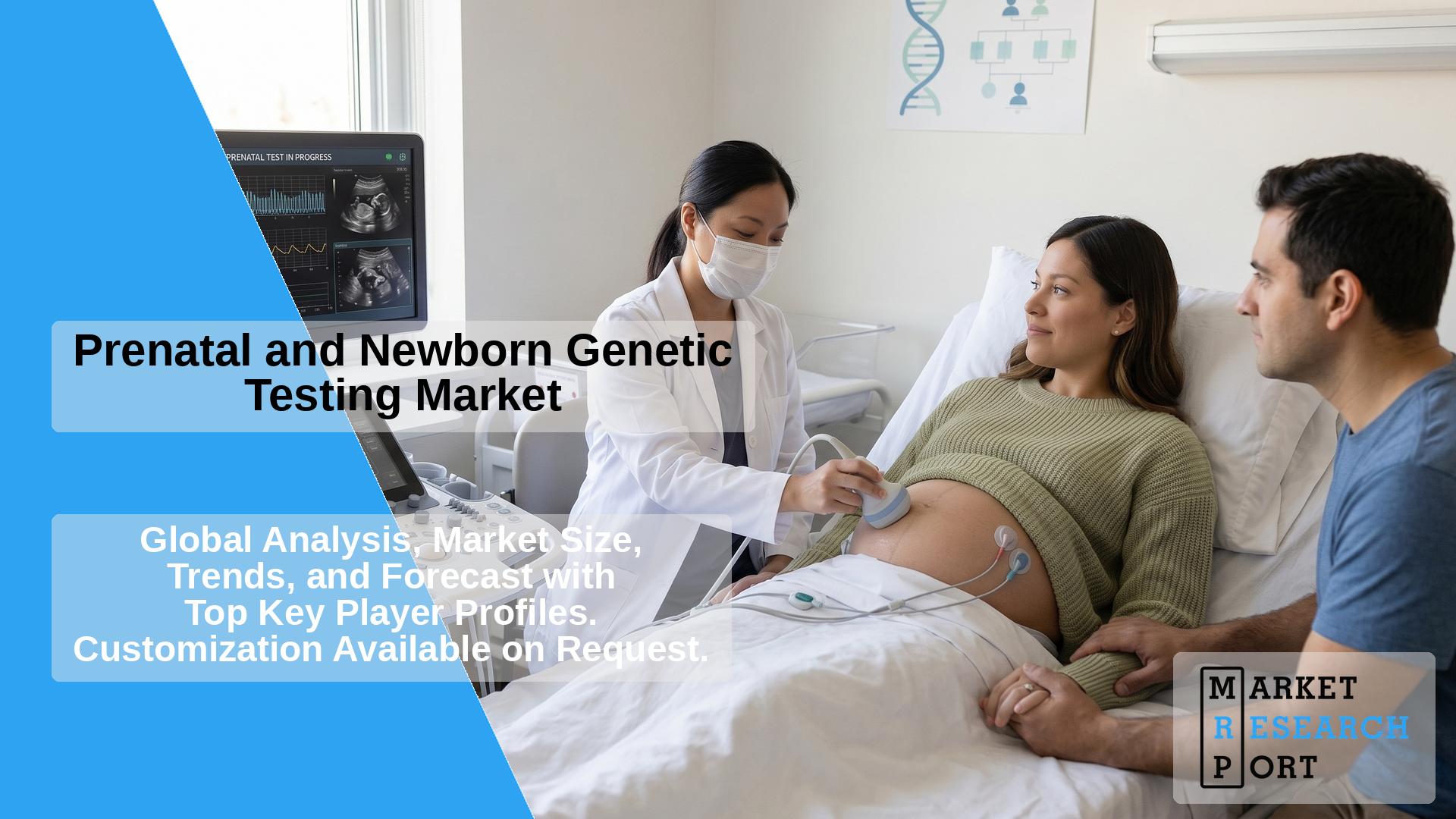
The global prenatal and newborn genetic testing market size is estimated to be valued at USD 6,540.5 million in 2026 and is projected to reach USD 18,210.8 million by 2036, expanding at a compound annual growth rate (CAGR) of 10.8% during the forecast period. This robust expansion is primarily attributed to the increasing incidence of genetic abnormalities, rising maternal age globally, and significant advancements in non-invasive prenatal testing (NIPT) technologies. Furthermore, government-mandated newborn screening programs and the integration of next-generation sequencing (NGS) into clinical diagnostics are providing a substantial impetus to market growth.
The landscape of reproductive health is undergoing a paradigm shift as genetic screening becomes a standard component of prenatal care. The transition from biochemical screening to molecular-based testing has revolutionized the early detection of chromosomal aneuploidies such as Down syndrome, Edwards syndrome, and Patau syndrome. The increasing awareness among expectant parents regarding the benefits of early diagnosis, coupled with the availability of advanced screening panels that can detect microdeletions and single-gene disorders, is driving the demand for prenatal testing. Additionally, the expansion of newborn screening (NBS) panels to include rare metabolic and genetic conditions ensures early intervention, significantly improving long-term health outcomes for infants.
However, the market faces certain challenges, particularly concerning the high cost of advanced genomic tests and the lack of comprehensive reimbursement policies in developing economies. While NIPT is becoming more affordable, it remains inaccessible for a large portion of the population in low-income regions. Ethical considerations surrounding genetic manipulation and the potential for social stigmatization also pose hurdles. Furthermore, the complexity of interpreting genetic data requires highly skilled genetic counselors and bioinformaticians, whose shortage in certain regions can limit the effective implementation of these diagnostic tools. Despite these constraints, the ongoing reduction in sequencing costs and the development of point-of-care testing kits are expected to mitigate some of these barriers over the next decade.
The integration of artificial intelligence (AI) and machine learning (ML) in genetic data analysis is opening new frontiers for the market. These technologies enable more precise interpretation of variants of uncertain significance (VUS), thereby reducing false-positive rates and enhancing clinical decision-making. Moreover, the shift toward personalized medicine is encouraging the development of customized screening panels tailored to specific ethnic backgrounds or family histories. As healthcare systems increasingly focus on preventive care, the prenatal and newborn genetic testing market is poised for sustained long-term growth, supported by a favorable regulatory environment and continuous technological innovation.
The global prenatal and newborn genetic testing market is characterized by a high degree of concentration, with a few prominent players dominating the technological and commercial landscape. Companies such as Illumina, Natera, and LabCorp hold significant market shares due to their extensive patent portfolios, advanced sequencing platforms, and wide-reaching distribution networks. The market is also seeing a trend of vertical integration, where technology providers are acquiring diagnostic laboratories to offer end-to-end services. This consolidation allows major players to maintain competitive pricing and invest heavily in research and development, creating high entry barriers for new participants.
Innovation is a primary driver of market dynamics. The industry is moving beyond simple aneuploidy screening toward comprehensive genome-wide analysis. The development of liquid biopsy techniques for prenatal diagnosis is a major milestone, allowing for the detection of fetal DNA in maternal blood with unprecedented sensitivity. Furthermore, the newborn screening sector is evolving from traditional tandem mass spectrometry toward DNA-based assays, enabling the identification of conditions that were previously difficult to screen at birth. The market is also witnessing a surge in strategic collaborations between biotechnology firms and public health organizations to expand screening programs in emerging markets.
The consumables segment accounted for the largest revenue share in 2026. This dominance is attributed to the high volume of tests performed annually and the recurring need for reagents, assay kits, and disposal supplies. As the volume of prenatal screenings increases globally, the demand for specialized consumables that ensure high-fidelity results remains constant. Manufacturers are focusing on developing ready-to-use kits that minimize manual intervention and reduce the risk of contamination, which is particularly important in high-throughput diagnostic laboratories.
The instruments segment is expected to grow at a steady pace, driven by the modernization of laboratory infrastructure in developing countries. The adoption of automated sequencers and high-resolution microarray scanners is essential for laboratories aiming to offer advanced genetic testing services. While the initial capital investment for these instruments is high, their ability to process large batches of samples with high accuracy provides a long-term return on investment. Technological advancements are also leading to the development of more compact and cost-effective instruments, making advanced genetic testing more accessible to smaller clinics and regional hospitals.
Next-Generation Sequencing (NGS) led the technology segment in 2026 and is projected to maintain its lead through 2036. The ability of NGS to sequence millions of DNA fragments simultaneously allows for the comprehensive analysis of the fetal genome from maternal blood. This technology has significantly improved the detection rates of chromosomal abnormalities while reducing the need for invasive procedures. The declining cost of sequencing and the development of streamlined bioinformatics pipelines are making NGS the gold standard in both prenatal and newborn genetic diagnostics.
Polymerase Chain Reaction (PCR) remains a vital technology, particularly for targeted screening and confirmatory testing. Quantitative PCR (qPCR) and digital PCR (dPCR) are widely used in newborn screening for the detection of specific genetic mutations associated with conditions like cystic fibrosis and spinal muscular atrophy. PCR-based methods are favored for their speed, cost-effectiveness, and ease of use, making them ideal for initial screening in resource-limited settings. Meanwhile, Chromosomal Microarray (CMA) continues to be the preferred method for detecting submicroscopic deletions and duplications that may be missed by traditional karyotyping.
Diagnostic centers dominated the market in 2026, representing the largest end-use segment. The growth of this segment is fueled by the increasing outsourcing of genetic tests by hospitals to specialized laboratories that possess the necessary technical expertise and high-end equipment. Diagnostic centers often offer a broader range of testing panels and faster turnaround times, which are critical for prenatal decision-making. The rise of direct-to-consumer genetic testing models is also contributing to the expansion of this segment, as more individuals seek independent genetic assessments.
Hospitals are expected to witness significant growth as they increasingly integrate genetic testing into their routine obstetric and neonatal care units. Many large maternity hospitals are establishing in-house molecular diagnostic labs to provide immediate screening for newborns. This integration ensures that infants with metabolic or genetic disorders receive timely treatment, which is often life-saving. Specialty clinics, including fertility centers and genomic medicine clinics, also play a crucial role, particularly in preimplantation genetic testing (PGT) for couples undergoing in vitro fertilization (IVF).
North America dominated the global prenatal and newborn genetic testing market in 2026. This leadership is sustained by a well-established healthcare infrastructure, high awareness among the population, and favorable reimbursement scenarios for genetic testing. The presence of major industry players in the United States and Canada facilitates the rapid adoption of new technologies. Furthermore, the American College of Obstetricians and Gynecologists (ACOG) guidelines recommending NIPT for all pregnant women, regardless of risk, have significantly boosted market penetration in the region.
Europe represents the second-largest market, with countries like Germany, the UK, and France at the forefront. The market in Europe is driven by strong government support for newborn screening and the presence of centralized public health systems that facilitate the implementation of large-scale screening programs. Germany, in particular, has seen a rise in the adoption of advanced genomic tools due to its robust biotechnology sector and stringent quality standards for diagnostic testing.
The Asia Pacific region is anticipated to be the fastest-growing market between 2026 and 2036. This rapid growth is attributed to the large birth rate in countries like China and India, increasing disposable income, and improving healthcare access. Governments in the region are also expanding their national newborn screening programs to cover a wider range of conditions. The rise of local biotechnology companies in China is creating a competitive environment that is driving down the costs of genetic tests, making them more accessible to the mass market.
Latin America and the Middle East & Africa are emerging markets with significant untapped potential. In Latin America, Brazil and Mexico are leading the way as they modernize their healthcare systems and increase investment in maternal and child health. In the Middle East, the high prevalence of consanguineous marriages in certain populations has led to a greater focus on carrier screening and prenatal diagnostics to manage the risk of inherited genetic disorders. While infrastructure challenges remain, the increasing focus on preventive medicine is expected to drive market growth in these regions.
The market is highly competitive, with players focusing on innovation, strategic partnerships, and geographic expansion to strengthen their market presence. Leading companies are investing heavily in clinical trials to validate the efficacy of their tests for a broader range of genetic conditions.
Leading Companies in the Market:
Illumina, Inc. is a global leader in DNA sequencing and array-based technologies. The company provides the foundational NGS platforms used by many diagnostic laboratories for prenatal testing. Illumina’s VeriSeq NIPT Solution is a widely adopted CE-IVD marked assay that allows laboratories to perform high-accuracy screening in-house. The company continues to innovate by developing more efficient flow cells and library preparation kits that reduce the cost per sample, thereby expanding the reach of genomic medicine.
Natera, Inc. specializes in cell-free DNA (cfDNA) testing and has a strong focus on reproductive health. Its flagship product, Panorama, is a non-invasive prenatal test that uses a unique single-nucleotide polymorphism (SNP)-based approach to differentiate maternal and fetal DNA. This allows for the detection of triploidy and vanishing twins, which are often missed by other NIPT methods. Natera is also expanding its portfolio into oncology and organ health, leveraging its core expertise in molecular diagnostics.
| Report Attribute | Details |
|---|---|
| Market size value in 2026 | USD 6,540.5 million |
| Revenue forecast in 2036 | USD 18,210.8 million |
| Growth rate | CAGR of 10.8% from 2026 to 2036 |
| Base year for estimation | 2025 |
| Historical data | 2020 – 2024 |
| Forecast period | 2026 – 2036 |
| Quantitative units | Revenue in USD million and CAGR from 2026 to 2036 |
| Segments covered | Product, Technology, End-use, Region |
| Regional scope | North America; Europe; Asia Pacific; Latin America; Middle East & Africa |
| Country scope | U.S.; Canada; UK; Germany; France; China; India; Japan; Brazil; Saudi Arabia |
This report forecasts revenue growth at global, regional, and country levels and provides an analysis of the latest industry trends in each of the sub-segments from 2026 to 2036.
Product Outlook (Revenue, USD Million, 2026 – 2036)
Technology Outlook (Revenue, USD Million, 2026 – 2036)
End-use Outlook (Revenue, USD Million, 2026 – 2036)
Region Outlook (Revenue, USD Million, 2026 – 2036)
The global market is expected to reach approximately USD 18,210.8 million by 2036, driven by technological advancements and increasing awareness of genetic health.
The market is projected to grow at a compound annual growth rate (CAGR) of 10.8% from 2026 to 2036.
North America held the largest revenue share in 2026, supported by high healthcare spending and a strong presence of key diagnostic companies.
The demand for Non-Invasive Prenatal Testing (NIPT) is driven by its high safety profile, accuracy in detecting chromosomal aneuploidies, and the rising average age of expectant mothers.
Next-Generation Sequencing (NGS) is anticipated to be the fastest-growing technology segment due to its ability to provide comprehensive genomic insights at a decreasing cost.
Diagnostic centers are the leading end-users as they provide specialized genetic testing services, high-throughput capabilities, and expert interpretation of complex genomic data.
Challenges include the high cost of advanced tests, ethical concerns regarding genetic screening, and a shortage of trained genetic counselors in certain regions.
AI is enhancing the market by improving the accuracy of variant interpretation, reducing manual labor in data analysis, and enabling more personalized screening results.
Newborn screening is critical for the early identification of metabolic and genetic disorders, allowing for immediate medical intervention that can prevent severe developmental issues or death.