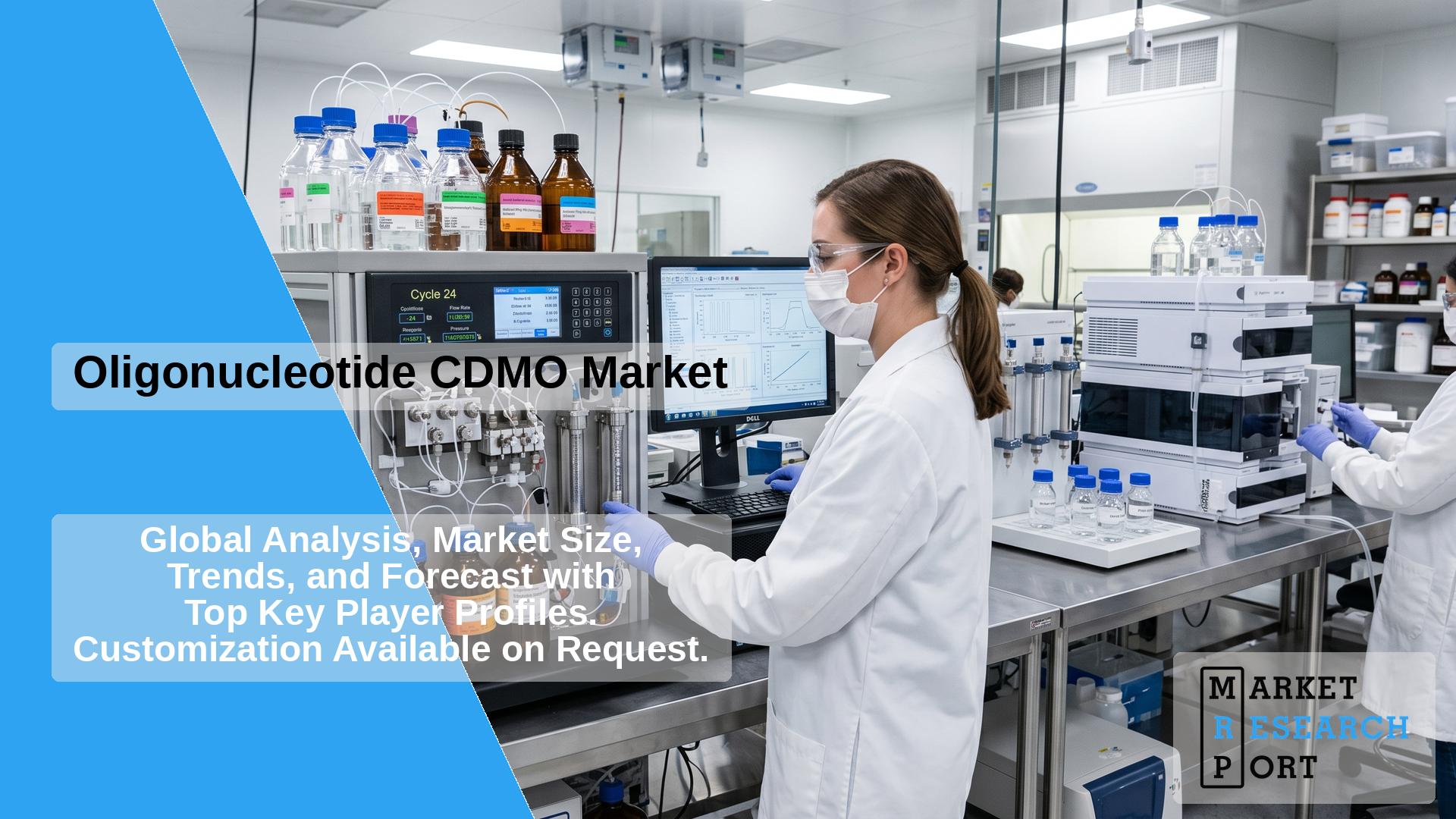
The global oligonucleotide CDMO market size was estimated at USD 4,250.5 million in 2026 and is projected to reach USD 16,840.2 million by 2036, growing at a CAGR of 14.7% from 2026 to 2036. This robust expansion is primarily driven by the accelerating pipeline of RNA-based therapeutics, the increasing prevalence of rare genetic disorders, and the strategic shift of pharmaceutical companies toward outsourcing complex manufacturing processes to specialized contract development and manufacturing organizations (CDMOs).
The evolution of the oligonucleotide CDMO market is intrinsically linked to the maturation of RNA interference (RNAi) and antisense technologies. For decades, the pharmaceutical industry focused on small molecules and large-protein biologics. However, the ability to target the genetic root of diseases rather than just the resulting proteins has opened a new frontier. Oligonucleotides, which are short DNA or RNA molecules, can modulate gene expression with high specificity. This precision has led to a surge in drug candidates targeting conditions that were previously considered undruggable. As these candidates move from discovery into large-scale clinical trials and commercialization, the need for specialized manufacturing expertise has skyrocketed. CDMOs provide the necessary infrastructure, including high-throughput synthesizers and sophisticated purification systems, allowing drug developers to mitigate the high capital expenditure associated with building in-house facilities.
Despite the optimistic growth trajectory, the market faces technical and regulatory hurdles. The synthesis of oligonucleotides, particularly at a large scale, is a complex chemical process involving multiple steps of deprotection, coupling, capping, and oxidation. Each step must be executed with near-perfect efficiency to ensure high yields of the final product. Furthermore, the purification of these molecules requires advanced chromatography techniques to remove truncated sequences and other impurities. Regulatory agencies, such as the FDA and EMA, have established stringent Chemistry, Manufacturing, and Controls (CMC) requirements for oligonucleotides, necessitating a high level of compliance and documentation from CDMOs. Additionally, the high cost of raw materials, such as phosphoramidites and specialized solvents, remains a challenge for cost-effective production.
The market is also witnessing a significant trend toward the development of conjugated oligonucleotides. To improve the delivery of these molecules to specific tissues, researchers are increasingly using ligands such as N-acetylgalactosamine (GalNAc). These modifications add another layer of complexity to the manufacturing process, requiring CDMOs to innovate in conjugation chemistry and analytical characterization. Furthermore, the rise of CRISPR-based gene editing has created a massive demand for high-quality guide RNAs (gRNAs), which are synthesized using similar oligonucleotide platforms. This diversification of the therapeutic landscape ensures that the demand for CDMO services will remain strong across various modalities, including ASOs, siRNA, aptamers, and synthetic mRNAs.
The global oligonucleotide CDMO market is characterized by a high degree of consolidation among a few tier-one players who possess the scale and regulatory track record to handle commercial-stage manufacturing. Major entities such as Agilent Technologies, Nitto Denko Avecia, and WuXi AppTec dominate the landscape, offering end-to-end services from early-stage process development to large-scale GMP production. These leaders have invested heavily in expanding their capacity, often through the construction of massive new facilities or the acquisition of smaller, specialized firms. While the top tier is consolidated, there is a vibrant ecosystem of mid-sized and niche CDMOs that focus on specific services, such as analytical testing or the synthesis of highly modified sequences for research and development.
Market dynamics are further influenced by the geographical distribution of biotech innovation. The United States remains the primary hub for oligonucleotide research, leading to a high demand for domestic CDMO services to ensure proximity and ease of collaboration. However, the high cost of labor and facilities in the West has prompted many developers to look toward the Asia Pacific region. CDMOs in China and South Korea are rapidly upgrading their quality systems to meet international standards, offering competitive pricing and massive scalability. This shift is creating a more globalized supply chain, where early-stage work might happen in the U.S. or Europe, while large-scale commercial production is increasingly distributed across multiple regions to ensure supply chain resilience.
The synthesis segment accounted for the largest revenue share in 2026. This dominance is due to the fundamental nature of the service; every oligonucleotide therapeutic begins with the assembly of nucleotide monomers into a specific sequence. The phosphoramidite method remains the gold standard for synthesis, but CDMOs are constantly refining this process to improve coupling efficiency and reduce solvent waste. High-throughput synthesis is essential for the rapid production of screening libraries, while large-scale solid-phase synthesis is required for late-stage clinical and commercial batches. The ability of a CDMO to handle various scales and complex modifications, such as phosphorothioate linkages or 2′-O-methyl substitutions, is a key differentiator in this segment.
The purification segment is expected to grow at a significant CAGR through 2036. As therapeutic doses increase and regulatory scrutiny intensifies, the need for ultra-high-purity oligonucleotides has never been greater. Purification typically involves Reversed-Phase High-Performance Liquid Chromatography (RP-HPLC) or Ion-Exchange Chromatography (IEX). These processes are technically demanding and require significant quantities of specialized resins and solvents. CDMOs are increasingly adopting automated, large-scale chromatography systems to improve throughput and consistency. Furthermore, the development of continuous chromatography and other advanced separation technologies is expected to drive efficiency and growth in this segment as the industry seeks to lower the overall cost of goods.
Analytical testing and quality control represent another critical service area. Given the complexity of oligonucleotides and their potential for impurities, comprehensive characterization is mandatory. This includes sequence verification via Mass Spectrometry (MS), purity analysis using Capillary Electrophoresis (CE), and testing for endotoxins and residual solvents. CDMOs that offer integrated analytical services provide a significant advantage to drug developers by streamlining the path to regulatory filing. The increasing use of Liquid Chromatography-Mass Spectrometry (LC-MS) for detailed impurity profiling is a major trend, as it allows for the identification and quantification of even minor side products that could affect the safety or efficacy of the drug.
Antisense Oligonucleotides (ASOs) currently lead the market in terms of revenue. ASOs are single-stranded molecules that bind to messenger RNA (mRNA) to trigger its degradation or block its translation. The success of therapies for Spinal Muscular Atrophy (SMA) and Duchenne Muscular Dystrophy (DMD) has proven the commercial viability of this class. Because ASOs often require high doses and chronic administration, they generate substantial manufacturing volumes for CDMOs. The ongoing development of ASOs for more common conditions, such as cardiovascular disease and neurological disorders like Alzheimer’s, suggests that this segment will remain a cornerstone of the market for the foreseeable future.
Small interfering RNA (siRNA) is the fastest-growing segment within the oligonucleotide type outlook. siRNA molecules utilize the natural RNA interference pathway to silence specific genes. The approval of several siRNA drugs for rare metabolic and hepatic diseases has validated the platform. A major driver for this segment is the advancement in delivery technologies, particularly GalNAc conjugation, which allows for highly efficient targeting of the liver. This has expanded the therapeutic window and reduced the required dose, making siRNA an attractive modality for a wide range of indications. CDMOs are responding by building specialized suites for the synthesis and conjugation of double-stranded RNA molecules, which require different handling and stabilization techniques compared to single-stranded ASOs.
Neurological disorders represent a primary application for oligonucleotide therapeutics. The blood-brain barrier has historically limited the effectiveness of many small molecules and proteins, but oligonucleotides can be delivered directly into the cerebrospinal fluid or engineered for better penetration. CDMOs are seeing a surge in projects related to Amyotrophic Lateral Sclerosis (ALS), Huntington’s disease, and various forms of epilepsy. The complexity of these targets often requires highly modified oligonucleotides to ensure stability and uptake in the central nervous system, driving demand for high-end CDMO expertise and specialized manufacturing protocols.
Oncology is another significant application area, with numerous oligonucleotide-based vaccines and therapies in clinical development. These include antisense molecules targeting oncogenes and CpG oligonucleotides used as adjuvants in cancer immunotherapy. The personalized nature of some cancer vaccines, which require the rapid synthesis of patient-specific neoantigen sequences, is creating a new niche for CDMOs capable of ultra-fast turnaround times and small-batch GMP production. As the understanding of the tumor microenvironment improves, the role of oligonucleotides in modulating the immune response is expected to expand, further contributing to market growth.
North America held the largest market share in 2026, primarily due to the presence of a mature biotechnology sector and a favorable regulatory environment. The United States is home to many of the pioneers in RNA therapeutics, and the proximity of CDMOs to these innovators facilitates rapid iteration and process development. Furthermore, the availability of venture capital and government funding for life sciences research ensures a steady stream of new candidates entering the clinic. Major CDMOs in the region are continuously expanding their footprints in biotech hubs like Boston, San Diego, and the San Francisco Bay Area to maintain their competitive edge.
Europe is the second-largest market, driven by strong pharmaceutical industries in Germany, Switzerland, and the United Kingdom. European CDMOs are known for their high quality standards and technical expertise in complex chemistry. The region also benefits from a well-established regulatory framework and a strong emphasis on orphan drug development. Strategic collaborations between European academic institutions and CDMOs are fostering innovation in next-generation oligonucleotide chemistries, such as bridged nucleic acids (BNAs) and locked nucleic acids (LNAs), which offer enhanced binding affinity and stability.
The Asia Pacific region is poised for the highest growth rate during the forecast period. This is driven by massive government investments in biotechnology in China and the emergence of South Korea as a global hub for biologics manufacturing. Companies in this region are leveraging their experience in large-scale chemical synthesis to offer cost-effective oligonucleotide production. Additionally, the rising incidence of chronic diseases in the region’s large population is driving local demand for advanced therapeutics. As regional CDMOs achieve international GMP certifications, they are increasingly being selected by global pharmaceutical companies for large-scale commercial supply contracts.
The following are the leading companies in the oligonucleotide CDMO market. These companies possess extensive manufacturing capacities and provide comprehensive services from discovery to commercialization.
Agilent Technologies is a global leader in the oligonucleotide CDMO space, particularly known for its large-scale GMP manufacturing capabilities. The company has made significant investments in its Colorado facilities to meet the growing demand for ASOs and siRNA. Agilent’s expertise spans the entire value chain, including the production of high-quality phosphoramidites, which ensures a stable supply of raw materials for its CDMO operations. Their focus on quality and regulatory compliance makes them a preferred partner for major pharmaceutical companies launching commercial RNA therapeutics.
Nitto Denko Avecia is another dominant player, offering a wide range of services from pre-clinical development to commercial supply. With facilities in the U.S. and Japan, Avecia has a long history in the oligonucleotide field and was one of the first CDMOs to achieve commercial-scale production. They provide specialized services in conjugation chemistry and analytical development, helping clients navigate the complexities of modern oligonucleotide drug design. Their integrated approach allows for seamless scaling as drug candidates progress through the clinical pipeline.
WuXi AppTec, through its subsidiary WuXi STA, has rapidly expanded its oligonucleotide and peptide manufacturing platform. By leveraging its massive infrastructure in China, WuXi offers highly scalable and cost-effective solutions for global clients. Their ‘CRDMO’ model (Contract Research, Development, and Manufacturing Organization) emphasizes the integration of discovery and manufacturing, allowing for faster transition times. WuXi’s commitment to international quality standards has enabled it to secure numerous partnerships with Western biotech and pharma firms.
| Report Attribute | Details |
| Market size value in 2026 | USD 4,250.5 million |
| Revenue forecast in 2036 | USD 16,840.2 million |
| Growth rate | CAGR of 14.7% from 2026 to 2036 |
| Base year for estimation | 2025 |
| Historical data | 2020 – 2024 |
| Forecast period | 2026 – 2036 |
| Quantitative units | Revenue in USD million and CAGR from 2026 to 2036 |
| Report coverage | Revenue forecast, competitive landscape, growth factors, and trends |
| Segments covered | Service, Type, Application, Region |
| Regional scope | North America; Europe; Asia Pacific; Latin America; Middle East & Africa |
| Country scope | U.S.; Canada; Germany; UK; France; China; India; Japan; South Korea; Brazil |
| Key companies profiled | Agilent Technologies; Nitto Denko Avecia; Thermo Fisher Scientific; Merck KGaA; WuXi AppTec; Danaher; Eurofins Scientific; LGC Biosearch; Kaneka Eurogentec; Syngene; Bachem; CordenPharma; Ajinomoto Bio-Pharma; Biospring; Hongene Biotech; ST Pharm |
This report forecasts revenue growth at global, regional, and country levels and provides an analysis of the latest industry trends in each of the sub-segments from 2026 to 2036.
Service Outlook (Revenue, USD Million, 2026 – 2036)
Type Outlook (Revenue, USD Million, 2026 – 2036)
Application Outlook (Revenue, USD Million, 2026 – 2036)
Region Outlook (Revenue, USD Million, 2026 – 2036)
The global oligonucleotide CDMO market size was estimated at USD 4,250.5 million in 2026 and is expected to reach USD 4,875.3 million in 2027.
The global market is expected to grow at a compound annual growth rate of 14.7% from 2026 to 2036 to reach USD 16,840.2 million by 2036.
North America dominated the global landscape with a revenue share of over 42% in 2026. This is due to the high concentration of biotech companies, advanced manufacturing facilities, and significant R&D investment in the United States.
Leading players include Agilent Technologies, Nitto Denko Avecia, WuXi AppTec, Thermo Fisher Scientific, Merck KGaA, and Bachem Holding AG. These companies offer specialized services for the synthesis and purification of DNA and RNA molecules.
The market is driven by the rising number of RNA-based drug approvals, the expansion of clinical pipelines for rare diseases, and the increasing trend of pharmaceutical companies outsourcing complex manufacturing to specialized CDMOs.
siRNA is the fastest-growing segment because of its high specificity in gene silencing and the successful development of delivery platforms like GalNAc, which have made these molecules viable for a wide range of therapeutic indications.
Key challenges include achieving high coupling efficiency during synthesis, the high cost of raw materials (phosphoramidites), and the difficulty of purifying large-scale batches to meet stringent regulatory standards.
Asia Pacific is the fastest-growing region, driven by lower production costs, increasing government support for biotechnology in China and South Korea, and the rapid expansion of local CDMO infrastructure to meet global demand.
CRISPR technology requires high-purity guide RNAs (gRNAs), which are synthesized using oligonucleotide platforms. This has created a significant new revenue stream for CDMOs capable of producing high-quality synthetic RNA at scale.
The most common methods are Reversed-Phase High-Performance Liquid Chromatography (RP-HPLC) and Ion-Exchange Chromatography (IEX), which are essential for removing truncated sequences and ensuring the safety of the final drug product.