
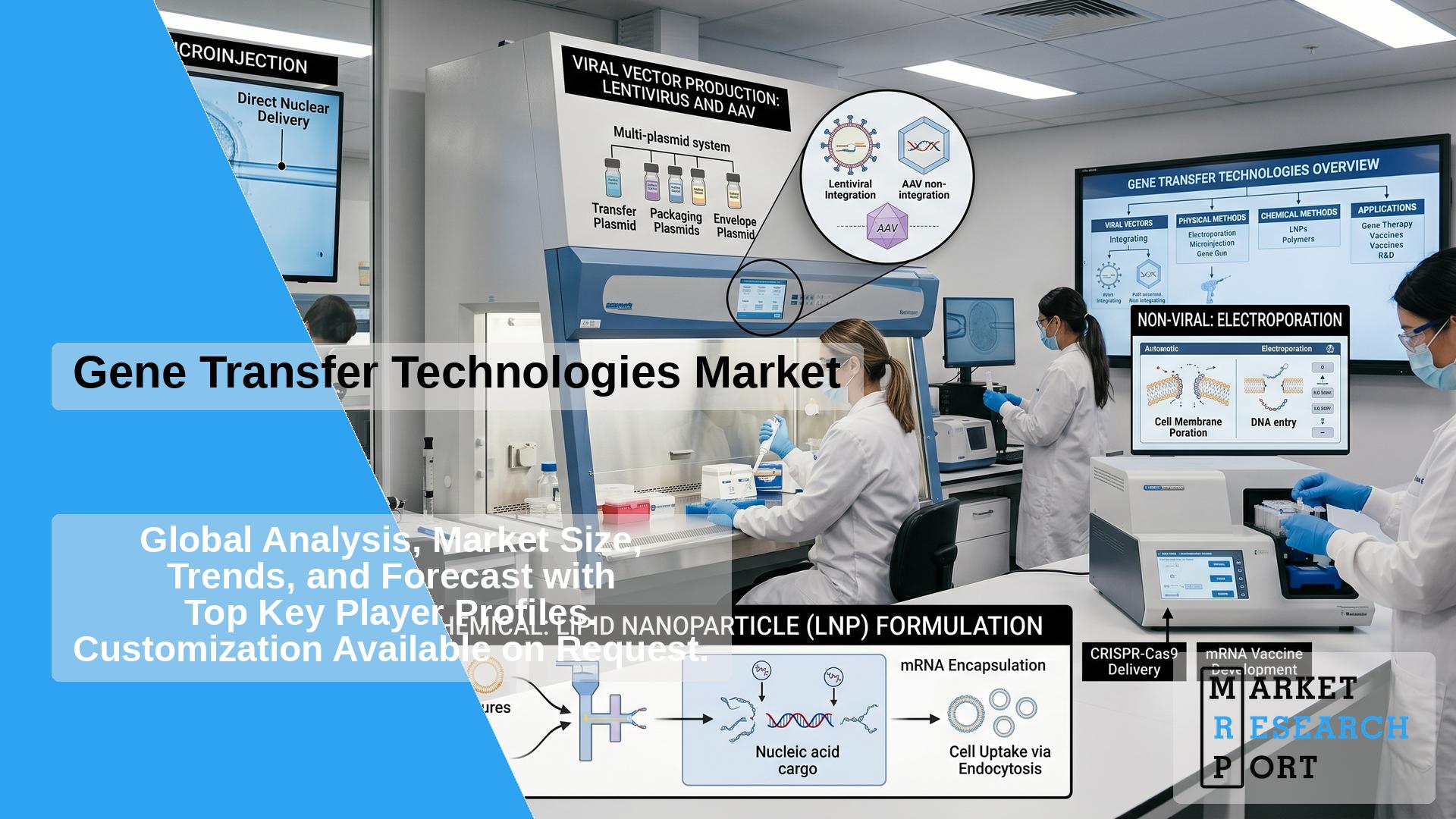
The global gene transfer technologies market size is estimated to be valued at USD 6,845.2 million in 2026 and is projected to reach USD 34,350.8 million by 2036, growing at a CAGR of 17.5% during the forecast period. The expansion of this sector is primarily driven by the increasing prevalence of genetic disorders, significant advancements in genomic research, and a robust pipeline of gene-based therapies currently in clinical trials. Furthermore, the rising investment from both public and private sectors into biotechnology and personalized medicine is creating a fertile ground for technological innovation in delivery systems.
The global landscape of medical science is undergoing a paradigm shift from symptomatic treatment to curative genetic interventions. Gene transfer technologies, which involve the introduction of foreign genetic material into cells to achieve a therapeutic effect, are at the heart of this revolution. The market is benefiting from the convergence of high-throughput sequencing, CRISPR-based editing, and sophisticated delivery vehicles. As regulatory bodies like the FDA and EMA streamline approval pathways for orphan drugs and regenerative medicines, the commercial viability of gene transfer products has reached an all-time high. However, the complexity of manufacturing these biological products remains a significant hurdle, necessitating specialized facilities and highly skilled personnel.
Despite the optimistic growth trajectory, the industry faces several structural challenges. The high cost of gene therapies, often reaching millions of dollars per dose, poses a significant burden on healthcare systems and limits patient access. Additionally, the technical difficulties associated with large-scale production of viral vectors, such as adeno-associated viruses (AAV) and lentiviruses, lead to supply chain bottlenecks. Safety concerns, including potential immunogenicity and off-target effects, also remain critical areas of focus for researchers and regulators. Addressing these issues through improved non-viral delivery methods and automated manufacturing processes will be essential for the market to reach its full potential.
Opportunities for expansion are abundant in the realm of non-viral gene delivery. Technologies such as lipid nanoparticles (LNPs) and electroporation are gaining traction due to their lower immunogenicity and ease of manufacturing compared to viral counterparts. The success of mRNA vaccines during the global pandemic has validated the use of LNPs on a massive scale, providing a blueprint for future gene transfer applications. Moreover, the expansion of gene transfer technologies into chronic diseases like cardiovascular ailments and neurodegenerative disorders represents a massive untapped market. Strategic collaborations between academic institutions and large pharmaceutical companies are expected to accelerate the translation of laboratory breakthroughs into clinical realities.
The global gene transfer technologies market is characterized by a high degree of consolidation among a few major life sciences and biotechnology firms. Leading players such as Thermo Fisher Scientific, Merck KGaA, and Lonza Group dominate the supply chain, providing essential tools, reagents, and contract manufacturing services. These companies have established their positions through aggressive acquisition strategies, absorbing smaller innovative firms to enhance their intellectual property portfolios. While the market is consolidated at the infrastructure level, the therapeutic developer space is highly fragmented, with hundreds of startups working on niche genetic targets. This creates a dynamic ecosystem where large-scale providers support a diverse array of clinical-stage developers.
Innovation in this market is rapid and continuous. The shift from first-generation viral vectors to more targeted and safer delivery systems is a primary focus. Characteristics of the market include a heavy reliance on intellectual property rights, stringent regulatory oversight, and a high capital requirement for entry. The market is also seeing a trend toward vertical integration, where therapeutic companies are building their own internal manufacturing capabilities to mitigate supply chain risks. Furthermore, the integration of artificial intelligence in vector design and optimization is beginning to reduce the time and cost associated with early-stage development.
The viral vector segment accounted for the largest revenue share in 2025. This dominance is attributed to the inherent ability of viruses to infect cells and deliver genetic payloads with high precision. Among viral vectors, Adeno-associated virus (AAV) has emerged as the preferred vehicle for in vivo gene therapy due to its low pathogenicity and ability to infect both dividing and non-dividing cells. Lentiviral vectors are also widely used, particularly in ex vivo applications like CAR-T cell therapy, where they provide stable integration of the transgene into the host genome. The established regulatory framework and extensive clinical history of these vectors provide a level of confidence that currently surpasses non-viral alternatives.
The non-viral vector segment is projected to grow at the fastest CAGR from 2026 to 2036. This growth is fueled by the need for safer, more scalable, and cost-effective delivery solutions. Physical methods such as electroporation and microinjection are becoming standard in laboratory settings for cell engineering. Chemical methods, particularly lipid-based and polymer-based nanoparticles, are seeing increased adoption in clinical applications. Non-viral methods offer the advantage of carrying larger genetic payloads and can be redosed without triggering the severe immune responses often associated with viral vectors. As nanotechnology continues to evolve, the efficiency of non-viral gene transfer is expected to approach that of viral systems, making them highly attractive for mass-market applications.
The gene therapy segment led the market in terms of revenue in 2025. This is primarily due to the increasing number of approved products for rare genetic disorders and certain types of blindness and muscular dystrophy. Gene therapy aims to treat or prevent diseases by correcting the underlying genetic problem, offering a potential one-time cure for previously untreatable conditions. The high price points of these therapies contribute significantly to the segment’s revenue. Ongoing research into systemic delivery and tissue-specific targeting is expected to further broaden the scope of gene therapy applications, moving beyond rare diseases into more common indications.
The cell therapy segment is another major contributor to market growth, particularly in the field of oncology. Technologies that enable the genetic modification of immune cells, such as T-cells and Natural Killer (NK) cells, are revolutionizing cancer treatment. The success of CAR-T therapies has spurred a wave of investment in gene transfer tools that can efficiently engineer cells ex vivo. Beyond oncology, cell therapy is being explored for regenerative medicine, including the treatment of diabetes and autoimmune diseases. The integration of gene editing tools like CRISPR/Cas9 with gene transfer technologies is enhancing the precision and efficacy of these cellular interventions.
North America dominated the global gene transfer technologies market in 2025. The region’s leadership is a result of a highly developed biotechnology sector, significant R&D investment from the National Institutes of Health (NIH), and a favorable regulatory environment that encourages innovation. The United States, in particular, is home to the majority of the world’s gene therapy developers and contract manufacturing organizations. High healthcare spending and a strong emphasis on personalized medicine further support the adoption of advanced genetic technologies. The presence of major industry players and a robust venture capital ecosystem ensure that North America remains at the forefront of the market.
Europe represents the second-largest market, driven by strong academic research and a growing number of biotech clusters in the UK, Germany, and France. The European Medicines Agency (EMA) has been proactive in establishing pathways for Advanced Therapy Medicinal Products (ATMPs), facilitating the entry of gene transfer technologies into the clinical space. However, the market in Europe is somewhat fragmented due to varying reimbursement policies across different member states, which can impact the commercial success of expensive gene therapies.
The Asia Pacific region is expected to experience the highest growth rate during the forecast period. This is due to increasing government support for biotechnology, a massive patient pool, and rising investments in healthcare infrastructure. China has emerged as a global leader in gene therapy clinical trials, particularly in oncology. Furthermore, the lower cost of conducting clinical research and manufacturing in countries like India and South Korea is attracting global companies to establish a presence in the region. Regulatory reforms aimed at harmonizing local standards with international guidelines are also expected to boost market growth in Asia Pacific.
The competitive landscape of the gene transfer technologies market is defined by a mix of diversified life science conglomerates and specialized biotechnology firms. These companies focus on providing the essential tools, vectors, and services required for genetic modification.
This report provides a detailed analysis of the global gene transfer technologies market, segmenting it by technology, application, end-user, and region. The study covers historical trends and provides revenue forecasts from 2026 to 2036.
Technology Outlook (Revenue, USD Million, 2026 – 2036)
Application Outlook (Revenue, USD Million, 2026 – 2036)
End-user Outlook (Revenue, USD Million, 2026 – 2036)
Region Outlook (Revenue, USD Million, 2026 – 2036)
The global gene transfer technologies market is estimated to be valued at USD 6,845.2 million in 2026 and is expected to grow significantly over the next decade.
The market is expected to grow at a compound annual growth rate (CAGR) of 17.5% from 2026 to 2036, reaching a projected value of USD 34,350.8 million.
The viral vector segment currently leads the market due to its high efficiency and established clinical use, though non-viral technologies are growing rapidly.
Key drivers include the rising prevalence of genetic diseases, advancements in CRISPR and genomic research, and increased funding for personalized medicine.
North America held the largest revenue share in 2025, supported by its advanced biotech infrastructure and significant R&D investments.
Leading companies include Thermo Fisher Scientific, Merck KGaA, Lonza, Danaher, Sartorius, Takara Bio, and Oxford Biomedica, among others.
Oncology is expected to be the fastest-growing application as gene and cell therapies become more integrated into cancer treatment protocols.
Challenges include the high cost of therapies, manufacturing complexities for viral vectors, and stringent regulatory requirements for safety and efficacy.
Asia Pacific is the fastest-growing region, driven by rapid industrialization in the biotech sector and favorable government policies in China and India.
Non-viral methods like lipid nanoparticles are expected to see massive growth due to their safety profile and scalability, particularly following the success of mRNA vaccines.