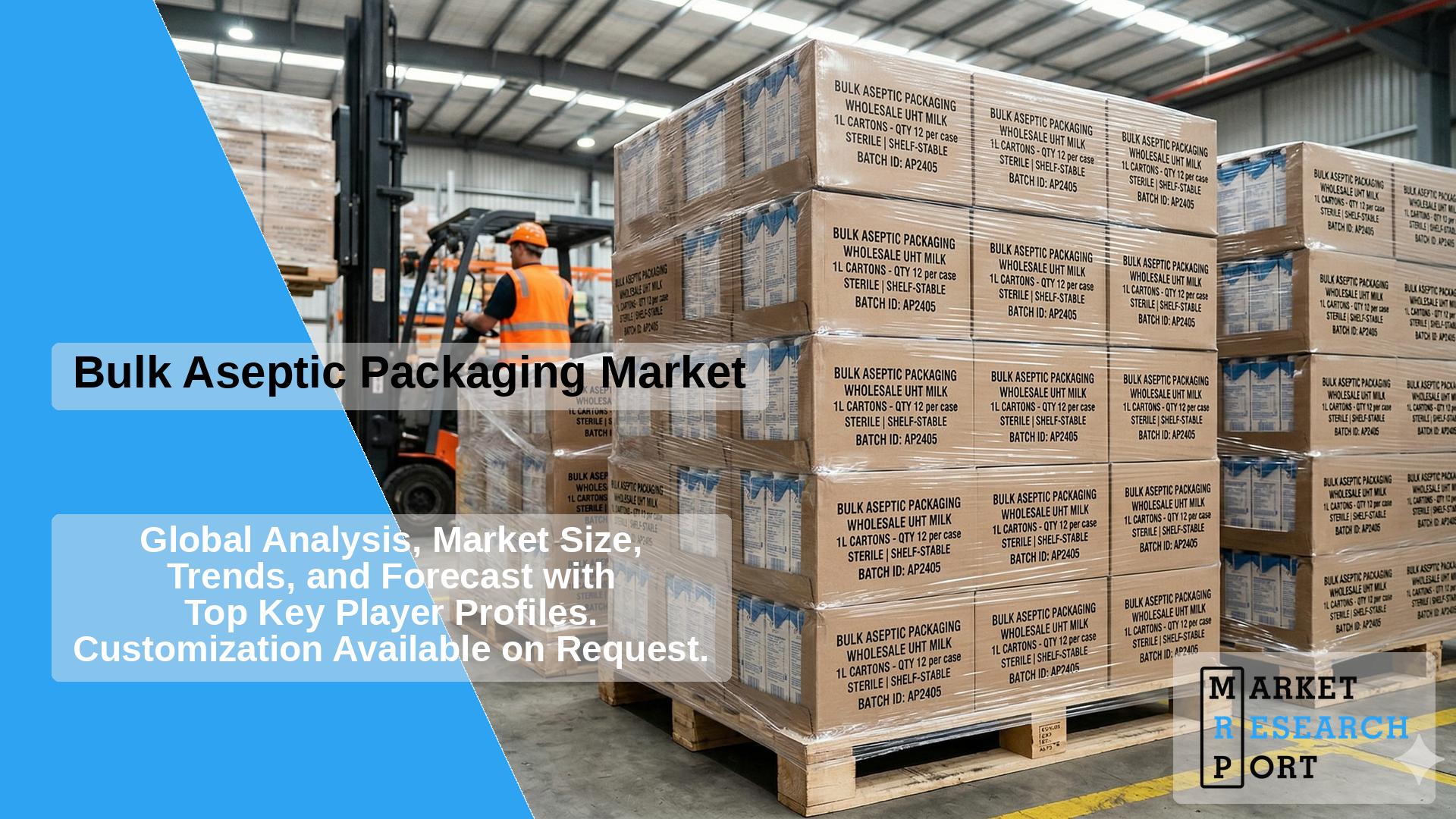
The global bulk aseptic packaging market size was estimated at USD 14,520.4 million in 2026 and is projected to reach USD 25,760.8 million by 2036, growing at a CAGR of 5.9% from 2026 to 2036. This expansion is primarily driven by the escalating demand for shelf-stable food products, the globalization of the food supply chain, and the increasing need for cost-effective transportation of perishable liquids without the requirement for cold chain logistics.
The global shift toward sustainable and efficient logistics has placed bulk aseptic packaging at the forefront of the industrial food and beverage sector. This packaging methodology involves the independent sterilization of the product and the container, followed by filling in a sterile environment. This process ensures that products like fruit purees, dairy, and pharmaceutical liquids remain uncontaminated and shelf-stable for extended periods without preservatives. The elimination of the cold chain for bulk transport significantly reduces carbon footprints and operational costs, making it a preferred choice for international trade.
Technological innovations in multi-layer barrier films, such as those incorporating Ethylene Vinyl Alcohol (EVOH) and aluminum, have enhanced the protection against oxygen and light. Furthermore, the rise of the ‘Bag-in-Box’ and ‘Bag-in-Drum’ systems has revolutionized how ingredients are moved from processors to secondary manufacturers. As global food security becomes a more pressing issue, the ability to store seasonal harvests in bulk for year-round processing provides a vital buffer for the industry.
However, the market is not without its hurdles. The high initial capital expenditure required for aseptic filling machinery and the complexity of maintaining a sterile environment pose challenges for smaller enterprises. Additionally, the reliance on multi-layer plastics raises environmental concerns regarding recyclability, prompting a surge in R&D for mono-material or bio-based barrier films. Fluctuations in raw material prices, particularly for polymers and aluminum, can also impact the profit margins of packaging manufacturers.
Despite these challenges, the market is poised for robust growth. The expansion of the pharmaceutical industry, especially in the wake of global health initiatives, has increased the demand for bulk aseptic containers for vaccines and biological ingredients. Moreover, the trend toward clean-label products—those free from artificial preservatives—is a direct tailwind for aseptic technology. Government initiatives promoting food waste reduction and the modernization of agricultural supply chains in emerging economies are expected to unlock new revenue streams over the next decade.
The global bulk aseptic packaging market is characterized by a high degree of consolidation. A few major players, including Tetra Pak, SIG, and Amcor, dominate the landscape through extensive patent portfolios and global service networks. These companies often provide integrated solutions that include both the packaging materials and the specialized filling equipment, creating high switching costs for customers. While the market is consolidated at the top, there is a growing tier of regional players focusing on specific niches such as wine transport or chemical-grade aseptic liners.
Innovation is a core characteristic of this industry. Manufacturers are increasingly focusing on ‘smart packaging’ features, such as RFID tags and QR codes, to provide real-time tracking and quality assurance throughout the supply chain. Sustainability has also become a non-negotiable requirement, with industry leaders committing to fully recyclable or compostable bulk packaging solutions by 2030. The market is also seeing a shift toward larger formats, such as 1000-liter Intermediate Bulk Containers (IBCs), to maximize shipping efficiency.
The bags and liners segment accounted for the largest revenue share in 2026. These products are essential for Bag-in-Box and Bag-in-Drum applications. Their popularity stems from their ability to collapse when empty, saving significant space during return logistics or disposal. High-barrier aseptic bags are typically constructed from multiple layers of polyethylene and specialized barrier resins, ensuring the integrity of high-acid and low-acid foods alike. The 200-liter and 1000-liter formats are the industry standards for the global trade of fruit concentrates and tomato paste.
The IBCs (Intermediate Bulk Containers) segment is expected to grow at the fastest rate through 2036. As industrial food processing scales up, the need for larger, more durable aseptic vessels has increased. Aseptic IBCs, often made of stainless steel or reinforced plastic with a sterile liner, offer superior protection and ease of mechanical handling. They are increasingly used for the transport of high-value dairy bases and pharmaceutical intermediates, where the risk of contamination must be zero.
Plastic remains the dominant material in the bulk aseptic packaging market due to its versatility, lightweight nature, and cost-effectiveness. Advanced polymers like EVOH provide exceptional oxygen barrier properties, which are critical for maintaining the nutritional value and flavor profile of aseptic products. The industry is currently transitioning toward high-density polyethylene (HDPE) and polypropylene (PP) grades that offer better heat resistance during the sterilization process.
Metal, particularly stainless steel, is used for reusable bulk containers and drums. While the initial cost is higher, the longevity and superior physical protection offered by metal containers make them ideal for high-frequency loops in the dairy and beverage industries. Paperboard, often used in conjunction with plastic and aluminum layers (as seen in large-format aseptic cartons), is favored for its sustainability profile and ease of branding, though its use in ‘bulk’ formats is more specialized compared to bags and drums.
The food segment, specifically fruit and vegetable processing, led the market in 2026. This is driven by the global demand for purees, pulps, and concentrates. Aseptic bulk packaging allows processors to capture the freshness of seasonal harvests and ship them across continents for use in juices, baby foods, and confectionery. Tomato paste, in particular, represents a massive volume for the bulk aseptic bag market, as it is a primary ingredient for global food service and retail brands.
The beverage segment is projected to expand rapidly, with a focus on dairy and dairy-alternative products. The rise of plant-based milks (oat, almond, soy) has created a need for bulk aseptic transport of bases from extraction facilities to bottling plants. Furthermore, the wine industry is increasingly adopting bulk aseptic bags for the international transport of ‘bulk wine,’ which is then bottled locally to reduce shipping costs and carbon emissions. The pharmaceutical and chemical sectors are also emerging as vital applications, utilizing aseptic bulk containers for sensitive reagents and biological fluids.
Europe dominated the market in 2026, with countries like Italy, Germany, and Spain being major hubs for aseptic technology. The region’s leadership is underpinned by a mature food processing sector and a strong emphasis on reducing food waste. European manufacturers are also at the forefront of developing sustainable packaging materials, driven by the EU’s Circular Economy Action Plan. The presence of industry giants like SIG Group and Tetra Pak provides the region with a competitive edge in R&D and machinery innovation.
In North America, the market is driven by the demand for convenience and the expansion of the processed food industry. The United States is a major consumer of bulk aseptic packaging for the dairy and beverage sectors. There is a significant trend toward the adoption of aseptic technology in the pharmaceutical industry to ensure the sterile transport of bulk drug substances. Additionally, the growth of the organic food market in the U.S. has boosted the need for aseptic solutions that do not require chemical preservatives.
The Asia Pacific region is set to experience the highest growth rate over the forecast period. China and India are the primary engines of this growth, fueled by rising disposable incomes and a shift toward packaged dairy products. The expansion of the organized retail sector and the development of food processing parks in India are creating a massive demand for bulk aseptic storage and transport solutions. Furthermore, the region’s role as a global exporter of tropical fruit pulps necessitates high-quality aseptic bulk packaging to reach Western markets.
Latin America is a critical market for bulk aseptic packaging, primarily due to its massive agricultural output. Brazil, as a leading global producer of orange juice and fruit concentrates, relies heavily on aseptic bulk bags and drums for export. The region is seeing increased investment in aseptic filling lines to modernize the supply chain and reduce the reliance on expensive refrigerated shipping. Argentina is also a key player, particularly in the export of grape juice concentrates and wine bases.
In the Middle East and Africa, the market is growing due to the need for long-term food storage in arid climates. Aseptic technology is vital for ensuring the availability of milk and juices in regions where cold chain infrastructure may be inconsistent. Saudi Arabia and the UAE are investing in local food processing capabilities, which includes the adoption of bulk aseptic systems for ingredient storage. In Africa, the technology is being used to reduce post-harvest losses in the fruit and dairy sectors, supporting regional food security goals.
The following are the leading companies in the bulk aseptic packaging market. These entities are responsible for the majority of technological advancements and market share.
Amcor plc is a global leader in developing and producing responsible packaging for food, beverage, pharmaceutical, and other industries. Their aseptic division focuses on high-barrier films that extend shelf life and reduce waste. Tetra Pak International S.A. is perhaps the most recognized name in aseptic technology, providing end-to-end solutions from processing to packaging. Their bulk solutions are designed to integrate seamlessly with their industrial-scale filling machines, ensuring maximum efficiency and safety.
SIG Group AG, following its acquisition of Scholle IPN, has become a powerhouse in the Bag-in-Box and bulk aseptic bag market. This strategic move allowed SIG to offer a wider range of flexible packaging solutions for liquids. Goglio S.p.A. is another key innovator, particularly known for its high-performance valves and fitments that are essential for maintaining sterility during the dispensing of bulk liquids. These companies are increasingly collaborating with food tech startups to develop the next generation of bio-based aseptic barriers.
| Report Attribute | Details |
|---|---|
| Market size value in 2026 | USD 14,520.4 million |
| Revenue forecast in 2036 | USD 25,760.8 million |
| Growth rate | CAGR of 5.9% from 2026 to 2036 |
| Base year for estimation | 2025 |
| Historical data | 2020 – 2024 |
| Forecast period | 2026 – 2036 |
| Quantitative units | Revenue in USD million and CAGR from 2026 to 2036 |
| Segments covered | Product Type, Material, Application, Region |
| Regional scope | North America; Europe; Asia Pacific; Latin America; Middle East & Africa |
| Country scope | U.S.; Canada; Mexico; Germany; UK; France; Italy; Spain; China; India; Japan; Brazil; Argentina; Saudi Arabia; South Africa |
This report provides a detailed analysis of the bulk aseptic packaging market by segmenting it based on product, material, application, and geography.
Product Outlook (Revenue, USD Million, 2026 – 2036)
Material Outlook (Revenue, USD Million, 2026 – 2036)
Application Outlook (Revenue, USD Million, 2026 – 2036)
Region Outlook (Revenue, USD Million, 2026 – 2036)
The global bulk aseptic packaging market is estimated to be valued at USD 14,520.4 million in 2026.
The market is expected to grow at a compound annual growth rate (CAGR) of 5.9% from 2026 to 2036, reaching a value of USD 25,760.8 million.
Europe currently holds the largest market share, accounting for over 36% of global revenue, due to its advanced food processing infrastructure.
The Asia Pacific region is projected to be the fastest-growing market, driven by rapid industrialization and increasing demand for dairy and beverage products in China and India.
Key drivers include the demand for preservative-free food, the need for cost-effective long-distance transport without refrigeration, and the expansion of the global beverage industry.
Major players include Tetra Pak, SIG Group, Amcor, Scholle IPN, and Smurfit Kappa, among others.
Aseptic bags and liners (particularly in 200L and 1000L sizes) and Intermediate Bulk Containers (IBCs) are the most widely used products.
It reduces food waste by extending shelf life and eliminates the need for energy-intensive cold chain logistics during bulk transport.
Challenges include high initial costs for filling machinery and environmental concerns regarding the recyclability of multi-layer plastic films.