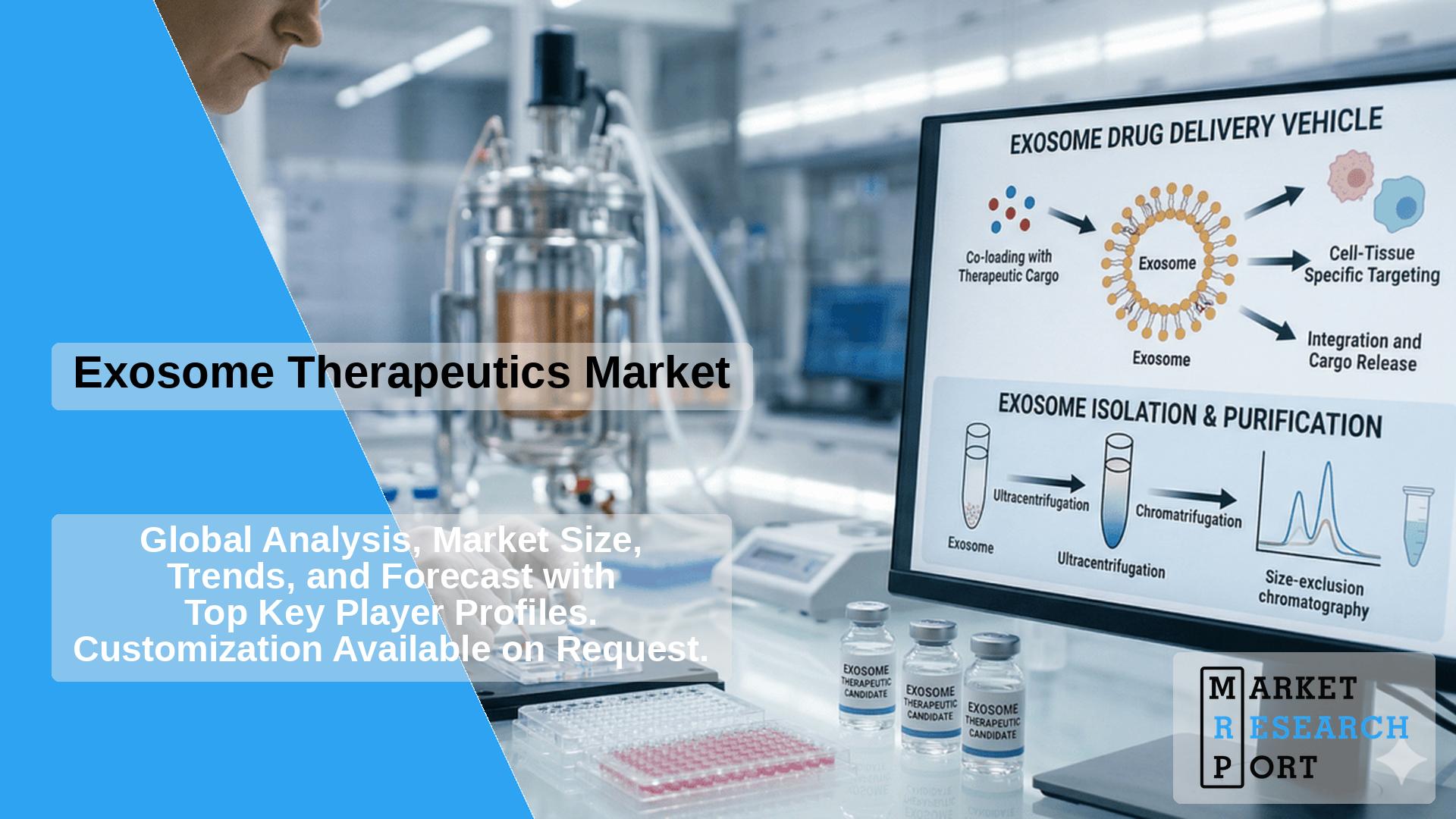
The global Exosome Therapeutics Market is entering a transformative era, transitioning from early-stage laboratory research to robust clinical development. As of the base year 2026, the market is characterized by a significant influx of venture capital and strategic partnerships between specialized biotech firms and large pharmaceutical entities. Exosomes, or extracellular vesicles (EVs), are increasingly recognized for their innate ability to facilitate intercellular communication and deliver complex molecular cargoes, including proteins, lipids, and nucleic acids, across biological barriers such as the blood-brain barrier (BBB). This report provides a comprehensive analysis of the market trajectory from 2026 to 2035, highlighting the shift toward cell-free regenerative medicine. The primary drivers of this market include the rising prevalence of chronic diseases, the limitations of traditional cell therapies, and the superior biocompatibility of exosome-based delivery systems. We anticipate a compound annual growth rate (CAGR) that reflects the maturation of the pipeline, with several lead candidates expected to reach late-stage clinical trials or commercialization by the end of the forecast period. The executive summary underscores the strategic importance of manufacturing scalability and regulatory standardization as the industry moves toward large-scale production. By 2035, the market is projected to be a cornerstone of the precision medicine landscape, offering targeted therapies for oncology, neurology, and cardiovascular disorders that were previously considered difficult to treat with conventional modalities.
The Exosome Therapeutics Market encompasses the development and commercialization of therapeutic products derived from or utilizing exosomes. Exosomes are a subset of extracellular vesicles, typically ranging from 30 to 150 nanometers in diameter, secreted by almost all cell types. They play a critical role in physiological and pathological processes by transferring functional molecules between cells. Unlike traditional cell therapies, exosome therapeutics offer a ‘cell-free’ approach, which mitigates risks associated with immune rejection, tumorigenicity, and complex storage requirements. The market is categorized into natural exosomes, which leverage the inherent properties of the source cell, and engineered exosomes, which are modified to carry specific therapeutic payloads or display targeting ligands on their surface. The following table summarizes the key market metrics for the forecast period.
| Metric | Details |
|---|---|
| Base Year | 2026 |
| Forecast Period | 2026-2035 |
| Market Drivers | Rising Chronic Diseases, Advances in Drug Delivery, Cell-Free Therapy Advantages |
| Key Segments | Source, Application, Type, End-User |
| Primary Regions | North America, Europe, Asia-Pacific, LAMEA |
In terms of definitions, Mesenchymal Stem Cell (MSC)-derived exosomes are the most extensively studied, known for their anti-inflammatory and regenerative properties. Dendritic cell-derived exosomes (dexosomes) are primarily explored in immuno-oncology for their ability to trigger immune responses. The market also includes plant-derived exosomes, which are gaining traction due to their low toxicity and high yield. As we progress through the forecast period, the definition of the market continues to expand to include exosome-based diagnostics (liquid biopsies) that are integrated with therapeutic interventions, creating a ‘theranostic’ ecosystem. The technological landscape is defined by innovations in isolation techniques, such as ultracentrifugation, size-exclusion chromatography (SEC), and tangential flow filtration (TFF), which are essential for ensuring product purity and potency.
The dynamics of the Exosome Therapeutics Market are shaped by a complex interplay of scientific breakthroughs, regulatory shifts, and economic factors.
Drivers: The foremost driver is the increasing global burden of chronic conditions like cancer, Alzheimer’s disease, and cardiovascular ailments. Traditional drug delivery systems often fail to reach target tissues effectively or induce systemic toxicity; exosomes provide a solution by offering high specificity and low immunogenicity. Furthermore, the shift from autologous to allogeneic ‘off-the-shelf’ therapies favors exosomes, as they can be standardized and mass-produced more easily than whole cells.
Restraints: Despite the potential, the market faces significant hurdles. The lack of standardized protocols for exosome isolation and characterization remains a primary restraint. Regulatory bodies like the FDA and EMA have yet to establish specific guidelines for EV-based products, leading to uncertainty in the approval process. Additionally, the high cost of R&D and the technical challenges of loading large therapeutic cargoes without compromising vesicle integrity pose significant barriers to entry.
Opportunities: The rise of engineered exosomes represents a massive opportunity. By using techniques like electroporation or sonication, researchers can load exosomes with siRNA or CRISPR/Cas9 components, opening new frontiers in gene therapy. Furthermore, the integration of artificial intelligence (AI) in predicting exosome-cargo interactions is expected to accelerate drug discovery.
Macro Factors: On a macro level, government funding for regenerative medicine and the expansion of healthcare infrastructure in emerging economies are providing a tailwind for market growth. However, geopolitical tensions affecting supply chains for specialized laboratory equipment and reagents could impact the pace of development.
Micro Factors: At the micro level, the availability of skilled personnel and the presence of specialized Contract Development and Manufacturing Organizations (CDMOs) are critical for the success of small-to-mid-sized biotech firms. The competitive intensity is increasing as established pharmaceutical companies acquire exosome platforms to diversify their biologics portfolios. The market is also sensitive to the success or failure of early-phase clinical trials, which can significantly influence investor sentiment and the availability of series funding.
The Exosome Therapeutics Market is segmented based on source, application, type, and end-user to provide a granular view of the growth opportunities.
By Source:
By Application:
By Type:
By End-User:
This segmentation highlights that while MSC-derived exosomes currently lead, the engineered exosome segment for neurological applications is expected to be the most disruptive force by 2035.
The Exosome Therapeutics Market exhibits diverse growth patterns across different geographies.
North America: Currently holds the largest market share, driven by a robust ecosystem of biotech startups, high healthcare expenditure, and significant NIH funding for extracellular vesicle research. The presence of major players like Codiak BioSciences and Capricor Therapeutics in the United States solidifies this region’s leadership. Furthermore, the FDA’s proactive engagement with the industry through the INTERACT program helps streamline early development.
Europe: Follows closely, with Germany, the UK, and France being the primary contributors. The European market is characterized by strong academic-industrial collaborations and a supportive regulatory environment for advanced therapy medicinal products (ATMPs). The Horizon Europe program continues to fund cross-border exosome research projects, fostering innovation in isolation and purification technologies.
Asia-Pacific: Expected to be the fastest-growing region during the forecast period (2026-2035). Countries like China, Japan, and South Korea are investing heavily in stem cell research and regenerative medicine. China, in particular, has seen a surge in clinical trials involving MSC-derived exosomes for various indications. The increasing prevalence of age-related diseases in Japan is also driving demand for novel therapeutic modalities.
LAMEA: The market in Latin America, the Middle East, and Africa is in its nascent stages but shows promise. Growth in this region is linked to improving healthcare infrastructure and an increasing focus on localized manufacturing of biologics to reduce costs. Brazil and Israel are emerging as localized hubs for biotech innovation, with several startups exploring exosome-based diagnostics and therapeutics. By 2035, we expect a more balanced global distribution as manufacturing technologies become more accessible and regulatory frameworks harmonize across regions.
The competitive environment of the Exosome Therapeutics Market is highly dynamic, featuring a mix of pioneering biotechnology firms and large-scale pharmaceutical companies. The strategy for most players involves the development of proprietary platforms for exosome engineering and large-scale production.
Codiak BioSciences has been a leader with its engEx platform, focusing on oncology and rare diseases.
Evox Therapeutics is another key player, utilizing its DeliverEX platform to target the central nervous system and multi-organ diseases through protein and RNA delivery.
Capricor Therapeutics is leveraging its cardiosphere-derived cell (CDC) technology to produce exosomes for Duchenne muscular dystrophy.
The market is also seeing increased activity from Big Pharma; companies like Takeda, Eli Lilly, and Roche have entered into multi-billion dollar licensing agreements to access exosome delivery technologies. The following table compares key players based on their strategic focus.
| Company | Core Platform | Primary Therapeutic Area | Strategic Approach |
|---|---|---|---|
| Codiak BioSciences | engEx™ | Oncology, Rare Diseases | Internal Pipeline & Partnerships |
| Evox Therapeutics | DeliverEX™ | Neurology, Metabolic Diseases | Platform Licensing & R&D |
| Capricor Therapeutics | CDC-Exosomes | Cardiology, Muscular Dystrophy | Clinical Trial Advancement |
| Anjarium Biosciences | Hybrisome™ | Gene Therapy | Next-gen Synthetic EVs |
| Kimera Labs | MSC-Exosomes | Regenerative Medicine | Direct-to-Clinic/Research |
As the market matures toward 2035, we expect a wave of consolidation. Smaller firms with validated platforms but limited capital will likely be acquired by larger entities seeking to integrate exosome delivery into their existing drug portfolios. Success in this competitive landscape will be determined by the ability to demonstrate clinical efficacy, ensure batch-to-batch consistency, and navigate the evolving regulatory requirements for biological products.
1. What are exosome therapeutics?
Exosome therapeutics are a class of medicines that use small, cell-derived vesicles called exosomes to deliver therapeutic agents like proteins, RNA, or small molecules to specific cells in the body. They are considered a cell-free alternative to stem cell therapy.
2. Why are exosomes preferred over traditional drug delivery systems?
Exosomes offer several advantages, including high biocompatibility, low immunogenicity, the ability to cross biological barriers (like the blood-brain barrier), and the capacity to protect their cargo from degradation in the bloodstream.
3. What is the expected growth of the Exosome Therapeutics Market by 2035?
While specific numbers vary, the market is expected to grow at a high double-digit CAGR from 2026 to 2035, driven by the transition of multiple candidates from Phase II to Phase III clinical trials and eventual commercialization.
4. What are the main challenges in manufacturing exosome therapeutics?
The primary challenges include achieving high purity during isolation, ensuring consistency in cargo loading, and scaling up production to meet clinical and commercial demand while maintaining GMP (Good Manufacturing Practice) standards.
5. Are there any FDA-approved exosome therapies?
As of the mid-2020s, most exosome therapeutics are in clinical trials (Phase I and II). However, the regulatory pathway is becoming clearer, and the first wave of approvals is anticipated within the 2026-2035 forecast period.
6. How do engineered exosomes differ from natural ones?
Natural exosomes carry the cargo of their parent cell and are used for their innate healing properties. Engineered exosomes are synthetically modified to carry specific drugs or have surface proteins that target specific tissues, making them more precise.
7. Which diseases are the primary targets for these therapies?
Oncology (cancer) is the leading area, followed by neurological disorders (Alzheimer’s, Parkinson’s), cardiovascular diseases, and inflammatory conditions.
8. What is the role of CDMOs in this market?
Contract Development and Manufacturing Organizations (CDMOs) are vital for providing the specialized infrastructure and expertise needed to produce clinical-grade exosomes, especially for smaller biotech companies that lack in-house manufacturing capabilities.