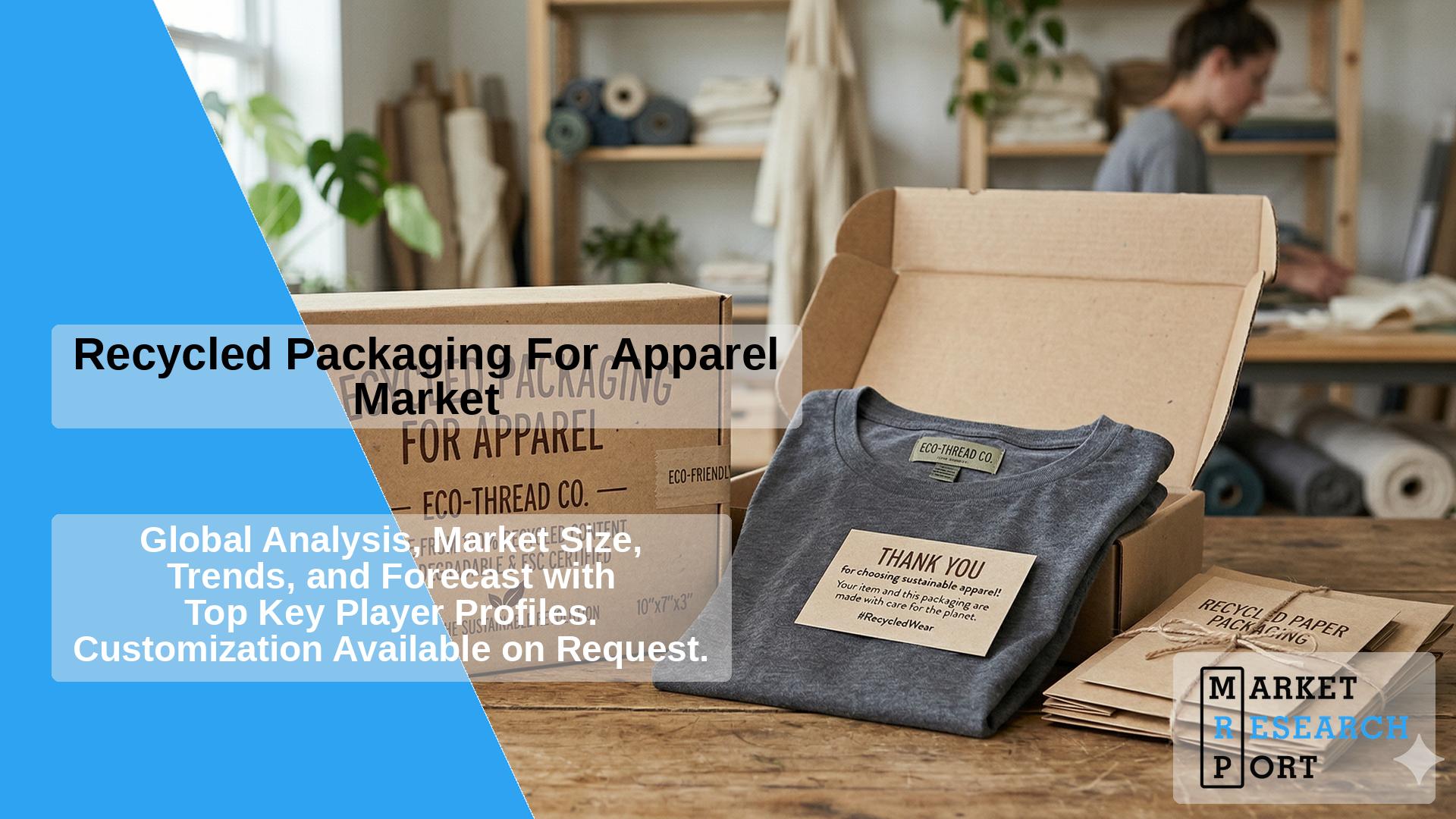
The global recycled packaging for apparel market size was estimated at USD 12,450.5 million in 2026 and is projected to reach USD 24,800.2 million by 2036, growing at a CAGR of 7.1% from 2026 to 2036. The market’s expansion is primarily driven by the escalating transition toward a circular economy within the fashion industry, increasing legislative pressure to reduce single-use plastics, and a significant shift in consumer behavior favoring brands with transparent sustainability credentials. As the apparel sector remains one of the largest contributors to global waste, the adoption of recycled corrugated boxes, mailers, and polybags has become a strategic necessity for both high-street and luxury retailers.
The global shift toward environmental stewardship has fundamentally altered the packaging landscape for the apparel industry. Brands are moving away from virgin petroleum-based plastics toward post-consumer recycled (PCR) materials and FSC-certified paper products. This transition is not merely cosmetic; it is driven by rigorous environmental regulations such as the Extended Producer Responsibility (EPR) schemes being implemented across various jurisdictions. Furthermore, the rise of e-commerce has increased the volume of secondary packaging, making the use of recycled content essential to mitigate the carbon footprint of logistics. Technological innovations in material science, such as the development of high-strength recycled kraft paper and transparent recycled polyethylene, have ensured that sustainability does not come at the cost of product protection or brand aesthetics.
However, the market does face structural challenges, particularly regarding the consistency of supply for high-quality recycled feedstocks. The collection and sorting infrastructure for flexible plastics remains underdeveloped in many regions, leading to contamination issues that can render recycled materials unsuitable for high-end apparel packaging. Additionally, the cost of recycled resins and specialized paper can sometimes exceed that of virgin materials due to the intensive processing required. Small and medium-sized enterprises (SMEs) in the apparel sector may find it difficult to absorb these higher costs without passing them on to consumers. Despite these hurdles, the long-term trajectory remains positive as economies of scale and improved recycling technologies continue to drive down production costs and enhance material performance.
The integration of digital tracking and smart packaging with recycled materials offers a significant opportunity for market players. By utilizing QR codes and blockchain technology on recycled hangtags and boxes, brands can provide consumers with a transparent view of the packaging’s lifecycle. There is also a growing trend toward reusable packaging systems where recycled materials are used to create durable mailers intended for multiple return trips. As the global community moves toward a net-zero future, the recycled packaging for apparel market is set to benefit from increased investment in green infrastructure and a unified global effort to eliminate plastic pollution from the fashion supply chain.
The global recycled packaging for apparel market is characterized by a moderate level of concentration, with a mix of large-scale international packaging conglomerates and specialized sustainable packaging startups. Major players like Mondi, Smurfit Kappa, and Amcor dominate the landscape through their extensive R&D capabilities and global distribution networks. These companies have successfully integrated recycled content into their core product lines, offering everything from recycled corrugated shippers to bio-based polybags. The market is also seeing a surge in niche players focusing on innovative materials like mushroom-based packaging or seaweed-derived films, which are gaining traction in the luxury apparel segment. This competitive environment fosters continuous innovation as companies vie to provide the most sustainable yet cost-effective solutions to global fashion brands.
Market characteristics are defined by a high degree of sensitivity to regulatory changes and consumer sentiment. The apparel industry is under intense scrutiny for its environmental impact, leading to a rapid adoption of ‘green’ packaging as a core component of brand identity. We are seeing a move toward ‘mono-material’ packaging designs that simplify the recycling process for the end consumer. For instance, replacing plastic windows in garment boxes with translucent paper allows the entire package to be recycled in a single stream. Furthermore, the market is influenced by the volatility of raw material prices in the recycling sector, which is often tied to the availability of high-quality waste streams and the fluctuating costs of energy used in processing plants.
The paper and paperboard segment accounted for the largest revenue share of 48.5% in 2026. This dominance is attributed to the material’s inherent sustainability profile, ease of recyclability, and the well-established infrastructure for paper collection worldwide. Apparel brands extensively use recycled corrugated boxes for shipping and recycled kraft paper for inner wrapping and hangtags. The versatility of paper allows for high-quality printing and branding without the need for toxic inks or coatings. Advances in coating technologies have also improved the moisture resistance of paper-based packaging, making it a viable alternative to plastic mailers in many scenarios. The push for plastic-free packaging by major retailers has further solidified the position of paper as the primary material in the apparel packaging ecosystem.
The recycled plastic segment is expected to grow at the fastest CAGR of 7.5% from 2026 to 2036. This growth is driven by the increasing availability of post-consumer recycled (PCR) resins such as rPET and rPE. Many apparel brands still require the protective qualities of plastic, such as transparency and waterproofness, particularly for high-performance sportswear and delicate fabrics. The development of high-clarity recycled films has allowed brands to maintain the ‘unboxing experience’ while reducing their reliance on virgin fossil fuels. Furthermore, the implementation of plastic taxes in several European countries has incentivized manufacturers to incorporate at least 30% recycled content into their plastic packaging, creating a massive demand for high-quality recycled polymers. Innovations in chemical recycling, which break down plastics to their molecular level to remove impurities, are expected to further boost the quality and adoption of recycled plastics in the coming decade.
The casual wear segment led the market and accounted for the largest revenue share of 42.1% in 2026. This is due to the sheer volume of casual apparel sold globally through both brick-and-mortar and e-commerce channels. Casual wear brands, ranging from mass-market retailers to mid-tier labels, are increasingly adopting recycled mailers and corrugated boxes to align with the sustainability expectations of their broad consumer base. The high frequency of purchases in this segment means that even small changes in packaging material can lead to a significant reduction in overall waste. Manufacturers are focusing on cost-effective recycled solutions that can be produced at scale to meet the demands of this high-volume sector.
The luxury apparel segment is expected to grow at a significant CAGR of 7.3% during the forecast period. Luxury brands are redefining the concept of ‘premium’ by incorporating sustainability into their core values. Recycled packaging in this segment is not just about waste reduction; it is about craftsmanship and innovation. High-end brands are using recycled specialty papers with unique textures, embossed logos, and sophisticated designs that prove recycled materials can be as elegant as virgin ones. The use of recycled silk ribbons, FSC-recycled certified boxes, and biodegradable inserts is becoming standard in the luxury space. As affluent consumers increasingly prioritize ethical and environmental considerations, luxury houses are investing heavily in bespoke recycled packaging solutions that enhance their brand prestige while minimizing their ecological footprint.
Europe dominated the recycled packaging for apparel market with a revenue share of 36.4% in 2026. The region’s leadership is a direct result of stringent environmental policies, such as the EU’s Packaging and Packaging Waste Directive, which sets ambitious targets for recycling and the use of recycled content. European consumers are among the most environmentally conscious globally, frequently demanding plastic-free or fully recyclable packaging from their favorite brands. Germany, the UK, and France are the key contributors to this market, with numerous fashion tech startups and established packaging giants collaborating to develop closed-loop systems. The presence of major fashion groups that have pioneered sustainability initiatives further drives the regional demand for recycled packaging solutions.
The North American market is driven by the massive e-commerce sector and the growing corporate social responsibility (CSR) initiatives of major US-based apparel brands. In 2026, the region accounted for a substantial share of the market, with the United States being the primary revenue generator. The shift is particularly visible in the rise of ‘sustainable fashion’ hubs in cities like New York and Los Angeles. While federal regulations are less stringent than in Europe, state-level initiatives in California and Washington are pushing for reduced plastic use and increased recycled content. The presence of major tech-driven packaging companies that offer customized recycled solutions for D2C (direct-to-consumer) brands is a key characteristic of the North American landscape.
Asia Pacific is projected to be the fastest-growing region with a CAGR of 7.9% from 2026 to 2036. This growth is underpinned by the region’s status as the world’s garment manufacturing hub. Countries like China, India, Vietnam, and Bangladesh are increasingly adopting recycled packaging to meet the export requirements of Western brands. Additionally, the domestic e-commerce markets in China and India are exploding, leading to a massive increase in packaging waste and subsequent government interventions to promote green logistics. The investment in recycling infrastructure in these countries is accelerating, providing a steady supply of recycled materials for the local packaging industry. The transition from traditional packaging to recycled alternatives is seen as a vital step in maintaining the competitiveness of Asian apparel exports in a sustainability-focused global market.
The market features a mix of global leaders and innovative specialists. The following companies are instrumental in shaping the industry through material innovation and strategic partnerships.
|
Report Attribute |
Details |
| Market size value in 2026 | USD 12,450.5 million |
| Revenue forecast in 2036 | USD 24,800.2 million |
| Growth rate | CAGR of 7.1% from 2026 to 2036 |
| Base year for estimation | 2026 |
| Historical data | 2020 – 2025 |
| Forecast period | 2026 – 2036 |
| Quantitative units | Revenue in USD million and CAGR from 2026 to 2036 |
| Report coverage | Revenue forecast, company ranking, competitive landscape, growth factors, and trends |
| Segments covered | Material, Application, Region |
| Regional scope | North America; Europe; Asia Pacific; Latin America; Middle East & Africa |
| Country scope | U.S.; Canada; Mexico; Germany; UK; France; Italy; Spain; China; India; Japan; South Korea; Brazil; Argentina; Saudi Arabia; South Africa |
This report forecasts revenue growth at global, regional, and country levels and provides an analysis of the latest industry trends in each of the sub-segments from 2026 to 2036.
Material Outlook (Revenue, USD Million, 2026 – 2036)
Application Outlook (Revenue, USD Million, 2026 – 2036)
Region Outlook (Revenue, USD Million, 2026 – 2036)
1. How big is the recycled packaging for apparel market?
The global recycled packaging for apparel market size was estimated at USD 12,450.5 million in 2026 and is expected to reach USD 13,334.5 million in 2027.
2. What is the recycled packaging for apparel market growth?
The global market is expected to grow at a compound annual growth rate of 7.1% from 2026 to 2036 to reach USD 24,800.2 million by 2036.
3. Which region accounted for the largest recycled packaging for apparel market share?
Europe dominated the global market with a revenue share of 36.4% in 2026. This is due to strict environmental regulations and high consumer demand for sustainable products.
4. Who are the key players in the recycled packaging for apparel market?
Leading players include Mondi Group, Smurfit Kappa, Amcor plc, DS Smith, Avery Dennison, WestRock, and International Paper, among others.
5. What are the factors driving the recycled packaging for apparel market?
The market is driven by the rise of e-commerce, government bans on single-use plastics, corporate sustainability goals, and increasing consumer preference for eco-friendly brands.
6. Which material segment is expected to grow the fastest?
The recycled plastic segment is projected to grow at the fastest CAGR of 7.5% due to improvements in chemical recycling and the need for protective, transparent packaging.
7. What is the role of e-commerce in this market?
E-commerce has significantly increased the demand for secondary packaging like mailers and boxes. Brands are using recycled materials to reduce the environmental impact of shipping high volumes of apparel.
8. Are there any cost challenges associated with recycled packaging?
Yes, recycled materials can sometimes be more expensive than virgin materials due to the costs of collection, sorting, and processing. However, as infrastructure improves, these costs are expected to stabilize.
9. How is the luxury apparel segment adopting recycled packaging?
Luxury brands are using high-quality recycled specialty papers and innovative bio-based materials to create premium, sustainable unboxing experiences that align with their brand prestige.
10. What is the impact of the circular economy on this market?
The circular economy encourages brands to design packaging that is not only made from recycled content but is also easily recyclable, creating a closed-loop system that minimizes waste.