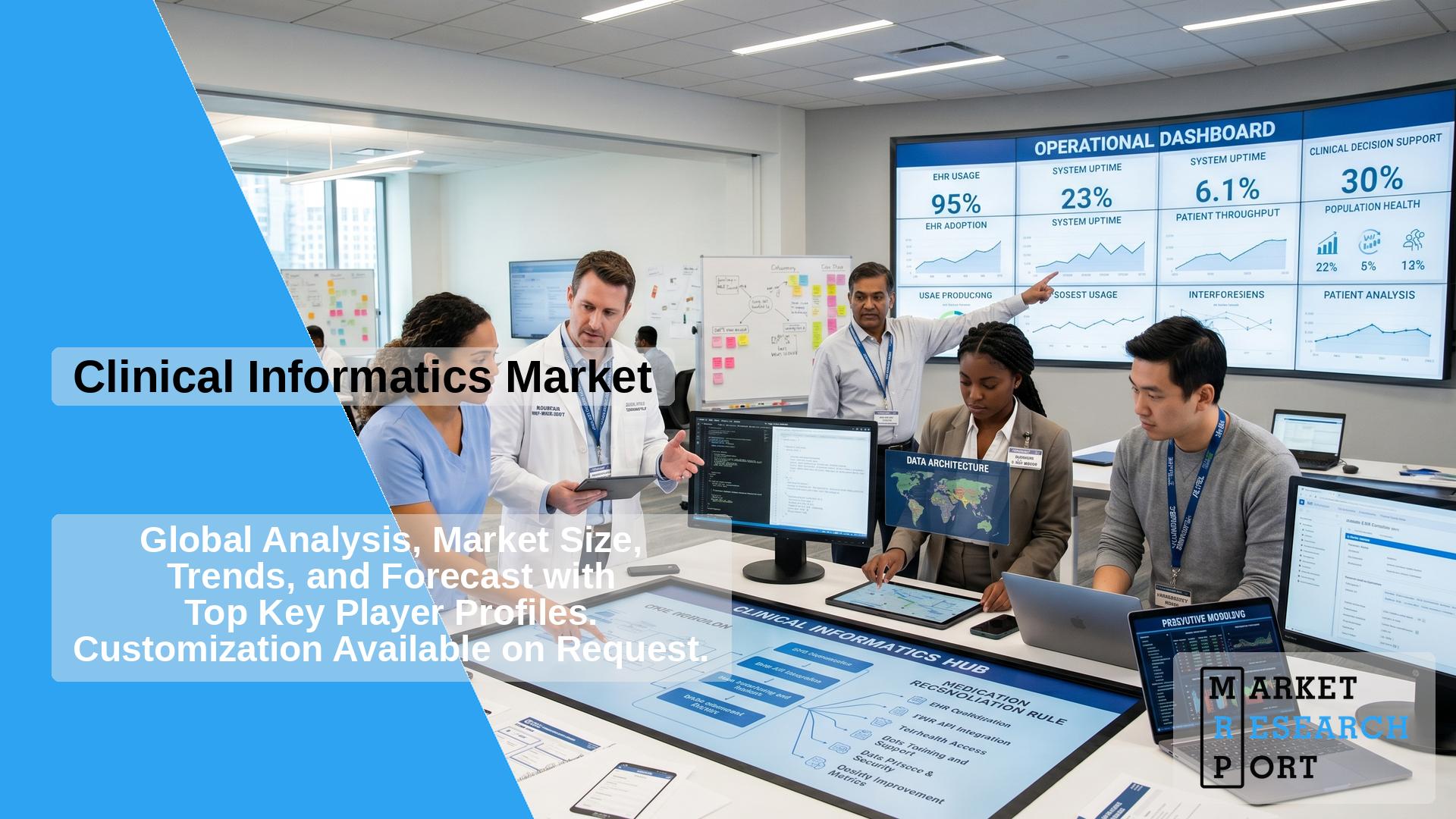
The global clinical informatics market size was valued at USD 25.2 billion in 2024 and is projected to reach USD 32.4 billion by 2026. It is further anticipated to expand to USD 114.8 billion by 2036, exhibiting a compound annual growth rate (CAGR) of 13.5% during the forecast period from 2026 to 2036. This robust expansion is primarily driven by the global transition toward digital healthcare ecosystems, the increasing necessity for data-driven clinical decision-making, and government initiatives promoting the adoption of electronic health records (EHRs).
The evolution of clinical informatics represents a fundamental shift in how medical data is collected, analyzed, and utilized to improve patient outcomes. The integration of advanced analytics, artificial intelligence (AI), and machine learning (ML) into clinical workflows has enabled healthcare providers to predict disease outbreaks, personalize treatment plans, and streamline administrative tasks. As healthcare systems worldwide face increasing pressure to reduce costs while improving the quality of care, the demand for sophisticated informatics solutions that offer real-time insights and interoperability has surged. Furthermore, the rise of precision medicine and the growing volume of genomic data require robust informatics platforms capable of handling complex datasets, further propelling market growth.
However, the market is not without its hurdles. High initial implementation costs and the ongoing maintenance expenses of advanced informatics systems can be prohibitive for smaller healthcare facilities and clinics in developing regions. Data security and patient privacy remain paramount concerns, as the digitization of health records increases the risk of cyberattacks and data breaches. Additionally, the lack of standardized data formats often leads to interoperability challenges, preventing the seamless exchange of information between different healthcare providers and systems. Resistance to change among clinical staff and the need for extensive training to operate complex software can also slow down the adoption rate in certain segments.
Despite these challenges, the clinical informatics sector is ripe with opportunities. The shift toward cloud-based informatics solutions offers scalability and cost-efficiency, making these technologies more accessible to a broader range of healthcare providers. The integration of telehealth and remote patient monitoring with clinical informatics platforms is creating new avenues for growth, especially in the wake of the global pandemic which accelerated digital health adoption. Moreover, the emergence of blockchain technology for secure health data exchange and the increasing focus on patient engagement through personal health records (PHRs) are expected to open significant growth prospects. As emerging economies in Asia and Latin America invest heavily in healthcare infrastructure, the global footprint of clinical informatics is set to expand dramatically.
The global clinical informatics market is characterized by a high degree of concentration, with a few major technology and healthcare firms holding substantial market shares. Companies such as Oracle (Cerner), Epic Systems, and McKesson dominate the landscape through extensive product portfolios and established relationships with large hospital networks. These leaders focus on strategic acquisitions and partnerships to integrate specialized informatics tools, such as AI-driven diagnostic aids and population health analytics, into their core platforms. While the market is consolidated at the top, there is a vibrant ecosystem of niche players focusing on specific areas like nursing informatics, dental informatics, and specialized imaging systems, which adds a layer of competitive dynamism.
The market’s characteristics are defined by rapid technological innovation and a strong emphasis on regulatory compliance. The transition from simple data storage to advanced predictive analytics is a key feature of modern informatics solutions. There is also a growing trend toward ‘open’ systems that facilitate better interoperability, driven by both market demand and government mandates. Geographically, while developed markets are focusing on optimizing existing systems and integrating AI, developing markets are in the phase of foundational infrastructure building, creating a two-tiered growth story across the globe.
The Electronic Medical Records (EMR) segment dominated the market in 2024, accounting for over 35% of the total revenue. This leadership is attributed to the widespread adoption of digital record-keeping systems mandated by various national health policies. EMRs serve as the foundational layer of clinical informatics, enabling the digital capture of patient history, medications, and lab results. The ongoing trend toward ‘meaningful use’ and the integration of clinical decision support systems (CDSS) within EMR platforms have enhanced their value proposition, making them indispensable for modern clinical practice. As healthcare providers seek to consolidate their IT stacks, the demand for comprehensive EHR/EMR solutions that offer seamless integration with billing and scheduling remains high.
The Population Health Management (PHM) segment is anticipated to witness the fastest growth rate, with a CAGR of 14.2% from 2026 to 2036. This growth is fueled by the global shift from volume-based to value-based care, where providers are incentivized to keep patient populations healthy rather than just treating illnesses. PHM tools allow healthcare organizations to aggregate data from multiple sources, identify high-risk patient groups, and implement proactive interventions. The increasing prevalence of chronic diseases and the rising geriatric population are significant drivers for this segment, as they necessitate more efficient management of long-term health outcomes. Advances in big data analytics are further enhancing the capabilities of PHM platforms, allowing for more precise risk stratification and resource allocation.
Hospitals emerged as the primary end-use segment in 2024, generating the largest share of market revenue. The complexity of hospital operations, which involve managing vast amounts of clinical, administrative, and financial data, necessitates the use of integrated informatics solutions. Large-scale implementations of EMRs, Radiology Information Systems (RIS), and Picture Archiving and Communication Systems (PACS) are standard in modern hospital settings. Furthermore, the need to reduce medical errors and improve patient safety through automated alerts and clinical guidelines has driven the adoption of informatics in acute care settings. The ongoing consolidation of hospital groups also facilitates the deployment of enterprise-wide informatics platforms, further solidifying this segment’s market position.
The ambulatory care centers segment is expected to experience significant growth during the forecast period. As more medical procedures shift from inpatient to outpatient settings, ambulatory centers are increasingly adopting informatics tools to manage patient workflows and maintain digital records. These centers often require more agile and cost-effective solutions compared to large hospitals, leading to a surge in demand for cloud-based and software-as-a-service (SaaS) informatics models. The focus on improving patient throughput and the need for better coordination with primary care physicians are also driving informatics adoption in this segment. Specialized clinics, including oncology and cardiology centers, are also contributing to market growth by implementing tailored informatics solutions that address specific clinical needs.
North America led the clinical informatics market in 2024, a position it is expected to maintain through 2036. The region’s dominance is underpinned by a highly developed healthcare infrastructure, high levels of IT spending, and a supportive regulatory environment. In the United States, the implementation of the 21st Century Cures Act and the focus on data interoperability are major market drivers. The presence of leading informatics vendors and a strong culture of innovation also contribute to the region’s market share. Additionally, the rapid adoption of AI and cloud computing in the U.S. healthcare sector is setting the stage for the next generation of informatics solutions.
The European market is driven by national digital health strategies and the increasing need for cross-border health data exchange. Countries like Germany, the UK, and France are investing heavily in digitizing their healthcare systems. Germany’s Hospital Future Act (KHZG) is a notable example, providing billions in funding for digital infrastructure and informatics. The region also places a high emphasis on data privacy, with the General Data Protection Regulation (GDPR) shaping how informatics systems are designed and implemented. The growing focus on integrated care models across Europe is further boosting the demand for informatics platforms that can connect various stakeholders in the healthcare ecosystem.
The Asia Pacific region is projected to be the fastest-growing market for clinical informatics, with a CAGR exceeding 15% from 2026 to 2036. This rapid expansion is fueled by massive investments in healthcare IT by governments in China, India, and Southeast Asia. The region is witnessing a leapfrogging effect, where healthcare providers are moving directly to advanced mobile and cloud-based informatics solutions. Rising healthcare awareness, an expanding middle class, and the need to manage large and diverse patient populations are key drivers. China, in particular, is integrating AI and big data into its public health systems at an unprecedented scale, while India’s Ayushman Bharat Digital Mission is creating a massive framework for digital health records.
In Latin America, the clinical informatics market is gaining momentum as countries like Brazil, Mexico, and Colombia modernize their healthcare systems. The adoption of EMRs is increasing in both public and private sectors to improve operational efficiency and patient care quality. While the market faces challenges such as economic volatility and fragmented healthcare systems, the growing trend toward private health insurance and the entry of international hospital groups are driving the demand for standardized informatics solutions. Regional players are also emerging, offering localized software that addresses the specific regulatory and linguistic needs of the Latin American market.
The Middle East and Africa region is seeing a steady rise in informatics adoption, particularly in the Gulf Cooperation Council (GCC) countries. Nations like Saudi Arabia and the UAE are positioning themselves as hubs for digital health innovation as part of their broader economic diversification plans (e.g., Saudi Vision 2030). The development of ‘smart hospitals’ and the implementation of national e-health records are central to these initiatives. In Africa, informatics is being leveraged to improve public health management and track infectious diseases, with mobile health (mHealth) playing a crucial role in reaching underserved populations. International aid and government partnerships are key factors driving the deployment of informatics tools across the continent.
The competitive landscape is dominated by established technology giants and specialized healthcare IT firms. These companies are focusing on creating end-to-end platforms that combine clinical, financial, and operational data. Innovation in user interface (UI) and user experience (UX) is also a major focus area to reduce clinician burnout and improve system adoption.
Other significant participants include GE Healthcare, Philips Healthcare, and Siemens Healthineers, who are integrating informatics deeply into their medical imaging and diagnostic equipment. Emerging players like Athenahealth and eClinicalWorks are gaining ground in the ambulatory care and physician office segments by offering cloud-native, user-friendly platforms.
| Report Attribute | Details |
| Market size value in 2026 | USD 32.4 billion |
| Revenue forecast in 2036 | USD 114.8 billion |
| Growth rate | CAGR of 13.5% from 2026 to 2036 |
| Base year for estimation | 2024 |
| Historical data | 2020 – 2023 |
| Forecast period | 2026 – 2036 |
| Quantitative units | Revenue in USD million/billion and CAGR from 2026 to 2036 |
| Report coverage | Revenue forecast, competitive landscape, growth factors, and trends |
| Segments covered | Product, End-use, Region |
| Regional scope | North America; Europe; Asia Pacific; Latin America; Middle East & Africa |
| Country scope | U.S.; Canada; UK; Germany; France; Italy; Spain; China; India; Japan; South Korea; Brazil; Saudi Arabia; UAE; South Africa |
| Key companies profiled | Oracle (Cerner); Epic Systems; McKesson; GE Healthcare; Philips; Siemens Healthineers; IBM; NextGen; Athenahealth; eClinicalWorks; InterSystems; Meditech |
This report forecasts revenue growth at global, regional, and country levels and provides an analysis of the latest industry trends in each of the sub-segments from 2026 to 2036.
Product Outlook (Revenue, USD Million, 2026 – 2036)
End-use Outlook (Revenue, USD Million, 2026 – 2036)
Region Outlook (Revenue, USD Million, 2026 – 2036)
The global clinical informatics market size was estimated at USD 25.2 billion in 2024 and is expected to reach USD 32.4 billion by 2026.
The market is expected to grow at a compound annual growth rate (CAGR) of 13.5% from 2026 to 2036, reaching a valuation of USD 114.8 billion by 2036.
North America dominated the market in 2024 with a revenue share of 42.1%, driven by advanced healthcare infrastructure and regulatory mandates for digital health records.
Key players include Oracle (Cerner), Epic Systems, McKesson, Allscripts, GE Healthcare, Philips, and Siemens Healthineers, among others.
The main drivers include the global shift toward digital healthcare, the need for improved patient safety, government incentives for EHR adoption, and the rising demand for data analytics in healthcare.
Population Health Management (PHM) is expected to be the fastest-growing segment due to the transition toward value-based care and the increasing focus on managing chronic diseases.
Key challenges include high implementation costs, concerns over data security and patient privacy, and interoperability issues between different healthcare systems.
AI is significantly enhancing the market by enabling predictive analytics, automating clinical documentation, and providing advanced decision support tools that improve diagnostic accuracy and operational efficiency.
In hospitals, clinical informatics is used to manage patient data, streamline clinical workflows, reduce medical errors, and coordinate care across different departments and specialties.