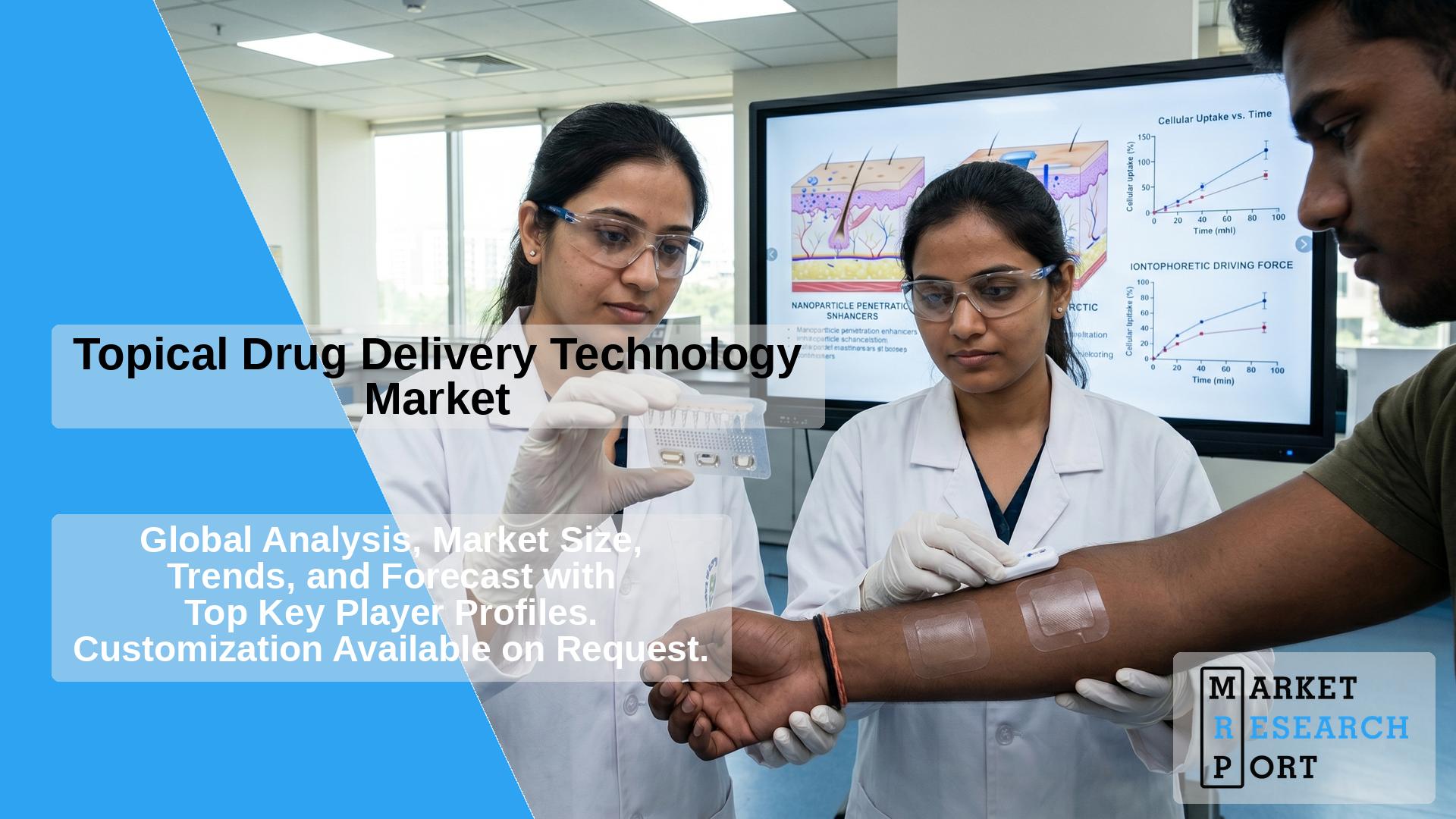
The global topical drug delivery technology market is undergoing a significant transformation, driven by advancements in pharmaceutical formulations and an increasing preference for non-invasive treatment options. In 2026, the market value is estimated at USD 138.2 billion, and it is projected to expand to USD 315.7 billion by 2036, exhibiting a compound annual growth rate (CAGR) of 8.6% during the forecast period. This growth is underpinned by the rising prevalence of skin disorders, chronic pain conditions, and the aging global population, which requires more manageable and localized therapeutic interventions.
Topical drug delivery involves the application of pharmaceutical agents directly to a particular spot on the body, typically the skin or mucous membranes. This method is highly valued for its ability to provide localized effects while minimizing systemic side effects often associated with oral or injectable medications. The integration of nanotechnology and the development of sophisticated transdermal patches have further enhanced the efficacy of these delivery systems, allowing for controlled release and better patient compliance. As healthcare systems worldwide shift toward patient-centric care, the demand for user-friendly topical solutions continues to surge.
The expansion of the topical drug delivery sector is largely attributed to the escalating incidence of dermatological conditions such as psoriasis, eczema, and skin cancer. Furthermore, the global rise in diabetic patients has led to an increased need for topical treatments for diabetic foot ulcers and other related skin complications. The shift from traditional oral medications to topical alternatives is also motivated by the desire to avoid first-pass metabolism in the liver, which often reduces the bioavailability of drugs. By bypassing the gastrointestinal tract, topical delivery ensures that a higher concentration of the active ingredient reaches the target site.
However, the market does face certain technical challenges. The primary barrier to effective topical delivery is the skin’s natural protective layer, the stratum corneum, which limits the penetration of many large-molecule drugs. Developing penetration enhancers that are both effective and non-irritating remains a key focus for researchers. Additionally, the high cost of developing advanced delivery systems like liposomes or nanoparticles can be a deterrent for smaller pharmaceutical companies. Regulatory requirements for proving the safety and bioequivalence of new topical formulations also add to the time and expense of bringing products to market.
Despite these hurdles, the future of the market looks promising as bio-based and organic ingredients are increasingly incorporated into topical formulations. The move toward ‘clean’ and ‘green’ pharmaceuticals mirrors trends in the cosmetic industry, where consumers are more conscious of the ingredients they apply to their skin. Moreover, the emergence of smart patches equipped with sensors to monitor drug release and patient vitals represents the next frontier in personalized medicine, offering significant opportunities for market players to differentiate their offerings.
The topical drug delivery technology market is characterized by a moderate to high level of concentration, with several global pharmaceutical giants holding substantial market shares. Companies such as Johnson & Johnson, Novartis, and GlaxoSmithKline have established themselves as leaders through extensive product portfolios and global distribution networks. These major players often engage in strategic mergers and acquisitions to acquire innovative delivery technologies and expand their therapeutic reach. For instance, the acquisition of specialized dermatological firms allows larger companies to quickly enter niche segments like advanced wound care or rare skin disease treatments.
Innovation is a primary driver of competition in this space. Companies are heavily investing in proprietary delivery platforms that can improve the solubility and stability of active pharmaceutical ingredients (APIs). The market is also seeing a rise in contract development and manufacturing organizations (CDMOs) that specialize in topical formulations, providing smaller biotech firms with the expertise needed to scale up production. This collaborative ecosystem fosters a steady stream of new product launches, keeping the market dynamic and responsive to changing clinical needs.
The semi-solid formulations segment, comprising creams, ointments, and gels, accounted for the largest revenue share in the base year. Their dominance is rooted in their long-standing use in treating common skin conditions and their high level of consumer acceptance. Gels, in particular, are gaining popularity due to their non-greasy texture and rapid absorption rates, making them ideal for sports injuries and inflammatory conditions. The versatility of semi-solids allows for the incorporation of a wide range of APIs, from antibiotics to corticosteroids.
The transdermal patches segment is projected to grow at the highest CAGR through 2036. This growth is fueled by the increasing use of patches for systemic drug delivery in areas such as smoking cessation, motion sickness, and cardiovascular diseases. Patches offer the advantage of providing a steady, controlled dose of medication over an extended period, which significantly improves patient adherence compared to multiple daily doses of oral medication. Innovations in patch technology, such as reservoir and matrix designs, have expanded the types of drugs that can be delivered via this route.
Liquid formulations, including lotions and sprays, also hold a significant market share. Sprays are increasingly favored for their ‘touch-free’ application, which is particularly beneficial for painful or sensitive areas of the skin. They are widely used for topical anesthetics and antiseptic treatments. Meanwhile, the solid formulations segment, although smaller, is finding niche applications in specialized wound dressings and medicated powders for fungal infections.
Dermal administration is the primary route within the topical drug delivery market. It encompasses treatments for a vast array of conditions, from acne and rashes to deep-tissue inflammation. The growth of this segment is closely linked to the rising awareness of skin health and the availability of over-the-counter (OTC) topical treatments. The development of sophisticated skin-penetration enhancers has allowed for the dermal delivery of drugs that were previously only available via injection.
Ophthalmic drug delivery is another critical segment, focusing on treatments for glaucoma, dry eye syndrome, and infections. The challenge in this area is the rapid clearance of medication by tears, leading to the development of long-acting gels and inserts that provide sustained release. Nasal and rectal routes also contribute to the market, with nasal sprays being a preferred method for rapid systemic absorption of certain medications, such as those used for migraines or allergic rhinitis.
Hospitals and clinics represent the largest end-user segment, as they are the primary points of care for acute skin conditions, surgical wounds, and chronic disease management. The availability of specialized dermatologists and advanced diagnostic tools in these settings ensures a high volume of prescriptions for topical medications. Furthermore, the use of topical anesthetics and antiseptics is a standard part of most clinical procedures.
The home care segment is expected to witness substantial growth as the trend toward self-administration of medication continues. The convenience of applying creams or patches at home, combined with the rising prevalence of chronic conditions that require long-term management, is driving this shift. Telehealth services are also playing a role, as patients can receive consultations and prescriptions for topical treatments without visiting a physical clinic, further boosting the home care market.
North America dominated the global topical drug delivery technology market in 2026. This dominance is attributed to the presence of major pharmaceutical companies, a well-established regulatory framework, and high healthcare spending. The United States, in particular, has a high prevalence of skin diseases and a strong consumer preference for advanced medical technologies. The region also benefits from a high level of awareness regarding early diagnosis and treatment of dermatological issues.
Europe follows North America in terms of market share, with countries like Germany, France, and the UK leading the way. The European market is characterized by a strong emphasis on safety and efficacy, with the European Medicines Agency (EMA) maintaining strict standards for topical products. The region’s aging population is a significant driver for the demand for topical pain relief and hormone replacement therapies.
The Asia Pacific region is poised for the fastest growth during the forecast period. Rapid urbanization, a growing middle class, and improving healthcare infrastructure are key factors. Countries like China and India are seeing an increase in the production of generic topical medications, making treatments more affordable for a larger segment of the population. Additionally, the rising awareness of aesthetic dermatology in these countries is boosting the demand for topical treatments for aging and skin rejuvenation.
The competitive landscape of the topical drug delivery technology market is populated by a mix of diversified pharmaceutical companies and specialized technology providers. These organizations focus on R&D to create differentiated products that offer superior clinical outcomes. Key players are also expanding their manufacturing capacities to meet the growing global demand, particularly in emerging markets.
| Report Attribute | Details |
| Market size value in 2026 | USD 138.2 Billion |
| Revenue forecast in 2036 | USD 315.7 Billion |
| Growth rate | CAGR of 8.6% from 2026 to 2036 |
| Base year for estimation | 2025 |
| Historical data | 2020 – 2024 |
| Forecast period | 2026 – 2036 |
| Quantitative units | Revenue in USD million/billion and CAGR from 2026 to 2036 |
| Report coverage | Revenue forecast, company ranking, competitive landscape, growth factors, and trends |
| Segments covered | Product, Route of Administration, End-user, Region |
| Regional scope | North America; Europe; Asia Pacific; Latin America; Middle East & Africa |
| Country scope | U.S.; Canada; Mexico; Germany; UK; France; Italy; Spain; China; India; Japan; South Korea; Brazil; Argentina; Saudi Arabia; South Africa |
Product Outlook (Revenue, USD Billion, 2026 – 2036)
Route of Administration Outlook (Revenue, USD Billion, 2026 – 2036)
End-user Outlook (Revenue, USD Billion, 2026 – 2036)
Region Outlook (Revenue, USD Billion, 2026 – 2036)
1. What is the projected market size of the topical drug delivery technology market by 2036?
The market is expected to reach approximately USD 315.7 billion by 2036, driven by technological advancements and an aging population.
2. What is the expected CAGR for the market from 2026 to 2036?
The market is projected to grow at a compound annual growth rate (CAGR) of 8.6% during the forecast period.
3. Which region currently holds the largest share of the market?
North America holds the largest revenue share due to its advanced healthcare infrastructure and high adoption of innovative drug delivery systems.
4. What are the primary factors driving the growth of this market?
Key drivers include the rising prevalence of skin diseases, the need for non-invasive drug delivery, and the development of advanced formulations like nano-emulsions and transdermal patches.
5. Which product segment is expected to grow the fastest?
The transdermal patches segment is anticipated to grow at the highest CAGR due to their ability to provide controlled, long-term drug release.
6. Who are the leading players in the topical drug delivery technology market?
Major players include Johnson & Johnson, Novartis, GlaxoSmithKline, Bayer, and Bausch Health, among others.
7. What are the main challenges facing the market?
Challenges include the skin’s natural barrier properties, high development costs for advanced delivery platforms, and stringent regulatory requirements.
8. How is nanotechnology impacting the market?
Nanotechnology is enhancing the penetration of drugs through the skin, improving the stability of active ingredients, and allowing for more targeted therapy.
9. What role does the home care segment play in this market?
The home care segment is growing rapidly as more patients prefer self-administration of topical treatments for chronic conditions, supported by the rise of telehealth.
10. Which route of administration is most common for topical drugs?
Dermal administration is the most common route, used for a wide variety of local and systemic treatments.