
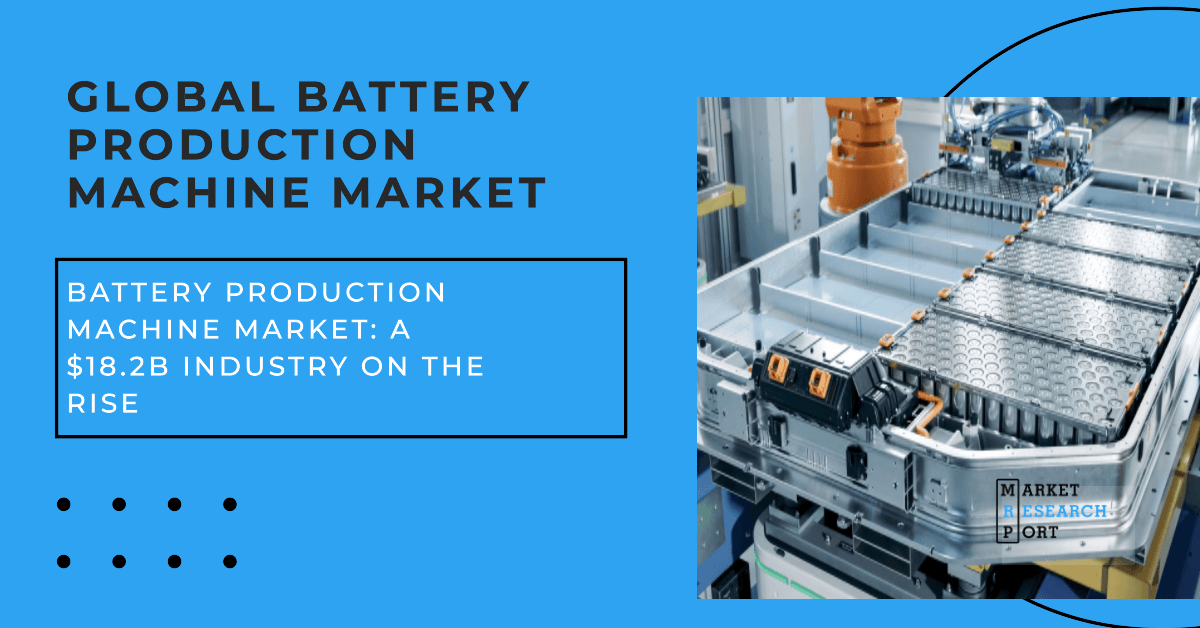
Global Gigafactory Expansion Drives Rising Demand for Battery Production Machines

Global battery manufacturing capacity is expanding at an accelerated pace as electric vehicle (EV) adoption and large-scale energy storage deployments gain momentum worldwide. The continued rollout of new gigafactories across North America, Europe, and Asia-Pacific is significantly increasing demand for advanced battery production machines, particularly automated and high-precision manufacturing equipment.

Major automotive OEMs, battery manufacturers, and energy storage providers are investing heavily in new production facilities and capacity expansions to secure long-term supply, creating strong demand for equipment used in electrode processing, cell assembly, formation, and quality inspection.

Gigafactory Investments Strengthen Equipment Demand

Over the past year, multiple global battery manufacturers have announced large-scale capacity additions aimed at supporting EV production targets and grid-scale storage projects. These investments typically involve multi-gigawatt-hour facilities that rely on highly automated battery production machines to ensure consistent quality, cost efficiency, and scalability.

As battery plants transition toward higher throughput and larger cell formats, manufacturers are increasingly prioritizing advanced coating systems, high-speed winding machines, automated stacking equipment, and intelligent testing solutions. This shift is reinforcing the role of production machinery as a critical enabler of battery manufacturing competitiveness.

Automation and Smart Manufacturing Gain Importance

With battery demand rising across multiple end-use industries, manufacturers are accelerating the adoption of automation, robotics, and digital monitoring systems within production lines. Smart battery production machines equipped with real-time data analytics and process control capabilities are helping producers improve yield rates, reduce material waste, and maintain strict quality standards.

This growing focus on intelligent manufacturing is particularly evident in regions where labor costs are high and production efficiency is a strategic priority, including Europe and North America.

Regional Outlook: Asia-Pacific, Europe, and North America

Asia-Pacific continues to dominate global battery manufacturing capacity, supported by strong investments in EV supply chains and established battery ecosystems. However, Europe and North America are rapidly closing the gap as governments and private investors push for localized battery production to reduce supply chain risks.

These regional developments are expected to drive sustained demand for battery production machines across all major markets, benefiting equipment suppliers with global service and support capabilities.

Market Outlook and Industry Implications

As global battery manufacturing capacity continues to scale, demand for advanced battery production machines is expected to remain robust through the next decade. Equipment suppliers offering flexible, high-efficiency, and automation-ready solutions are likely to gain a competitive edge as manufacturers seek to optimize production costs and meet rising demand.

According to Market Research Port’s Battery Production Machine Market Research Report 2025–2035, ongoing gigafactory expansions, technological advancements, and increasing EV and energy storage adoption will collectively support long-term growth in the global battery production machine market.
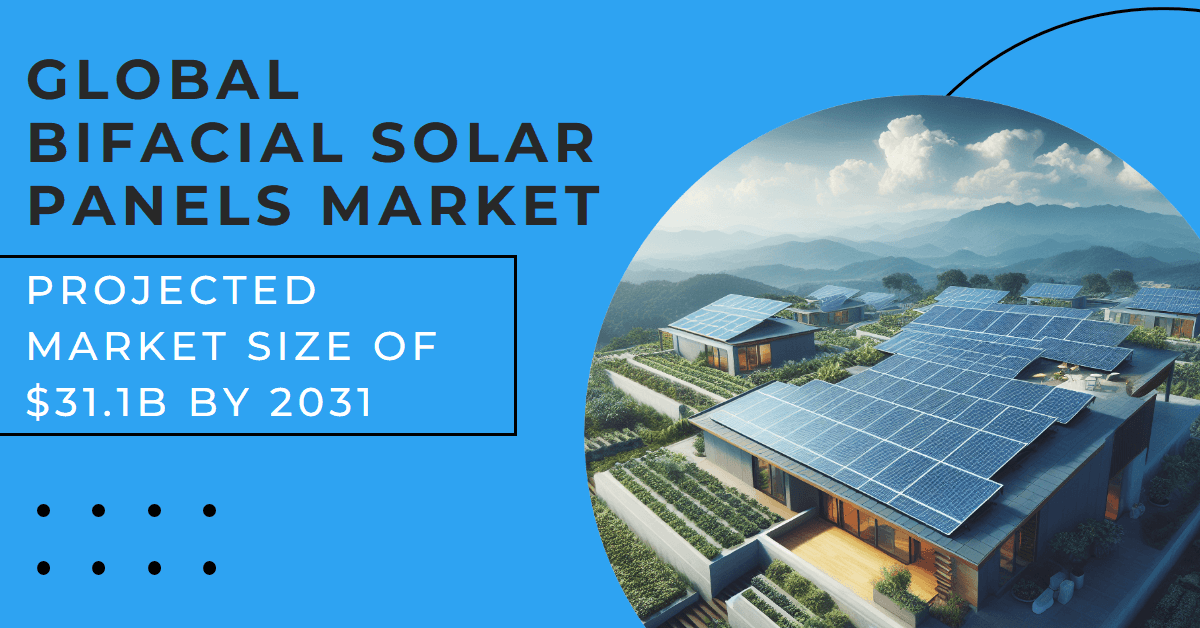
The Rise of Bifacial Solar Panels: Market Trends and Growth Prospects

Bifacial solar panels have been taking the renewable energy industry by storm, offering a more efficient and flexible solution for harnessing solar power. In this blog, we will delve into the growing popularity of bifacial solar panels and explore their market trends and growth prospects.

1. Introduction to Bifacial Solar Panels

Bifacial solar panels are a breakthrough technology that can capture sunlight from both sides of the panel, significantly enhancing energy generation compared to traditional monofacial panels. They consist of a transparent back sheet, allowing sunlight to pass through and bounce off surfaces, making them ideal for various applications.

2. Major Companies and Their Roles in the Industry

Several key players have played instrumental roles in the growth of the bifacial solar panel market. Companies like JinkoSolar, LONGi Solar, Trina Solar, and Canadian Solar have been at the forefront of manufacturing and innovation, driving the industry forward. Their research and development efforts have contributed to increased efficiency and cost-effectiveness.

3. Segmentation by Applications and Types

Bifacial solar panels find application in a wide range of industries, from residential and commercial installations to large-scale utility projects. They are available in different types, including glass-glass and glass-back sheet configurations. The choice of type depends on specific project requirements and budgets.

4. Most Demanding Regions

The demand for bifacial solar panels is not uniform worldwide. Regions with abundant sunlight, such as the Middle East, North America, and parts of Asia, have witnessed significant growth. The demand is also influenced by local incentives and government policies promoting solar energy.

5. Market Driving Factors

Several factors are driving the adoption of bifacial solar panels. These include:

– Increased efficiency: Bifacial panels can capture more sunlight, leading to higher energy production.
– Cost reduction: As production scales up and technology advances, the cost of bifacial panels is decreasing.
– Environmental benefits: Bifacial panels contribute to reducing carbon footprints and offer a more sustainable energy solution.
– Government incentives: Subsidies, tax credits, and policies supporting renewable energy have fueled the demand.

6. Current Trends in the Industry

Some of the current trends in the bifacial solar panel industry include:

– Integration with solar tracking systems to maximize energy capture.
– Research into new materials and technologies to further improve efficiency.
– Customization and flexible designs to cater to unique project requirements.

7. Forecast of the Industry

The future of the bifacial solar panel market looks promising. The industry is expected to witness substantial growth over the coming years, with an increasing number of applications in the residential and commercial sectors. The continuous innovation and investments in research and development will likely lead to even higher energy efficiency and cost-effectiveness.

In conclusion, the rise of bifacial solar panels in the renewable energy landscape is a testament to the industry’s commitment to more efficient and sustainable energy sources. As the market continues to evolve, it promises a brighter, cleaner, and more sustainable future for all.

FAQs:

1. What is the market share of the bifacial module?

The market share of bifacial solar modules can vary from year to year and by region. Major players in the solar industry, such as JinkoSolar, Trina Solar, Canadian Solar, and LONGi Solar, have been actively manufacturing bifacial solar panels. Market share would depend on the specific time frame and market conditions.

2. Who manufactures Bifacial solar?

Several companies manufacture bifacial solar panels, including the ones mentioned above, JinkoSolar, Trina Solar, Canadian Solar, and LONGi Solar. Additionally, many other manufacturers have entered the market, leading to a variety of options for consumers.

3. How big is the solar market in Europe?

The size of the solar market in Europe has been growing steadily. The total installed solar capacity in Europe has surpassed many gigawatts. However, specific figures and market size can vary by country and year, with European countries like Germany, Spain, and Italy historically having significant solar capacity.

4. Which EU country has the most solar panels?

Germany was one of the EU countries with the most solar panels installed. However, the distribution of solar panels can change over time, and other countries may have caught up or surpassed Germany in terms of installed solar capacity.